The good, bad and ugly sides to visiting Petra – one of the wonders of the world
Go before it gets too hot and try not to miss the Petra by Night show, but be prepared for the steep entrance fee and the mistreatment of animals at the site

The good
The approach to some of the world’s wonders is distinctly underwhelming. Getting to the Taj Mahal, for example, involves negotiating the chaotic and polluted Indian city of Agra while the Egyptian pyramids are reached via the sprawling, unattractive Cairo suburb of Giza. By contrast, entry to the ancient city of Petra, in Jordan, is through a rocky ravine that narrows to a couple of metres in places. If you are not breathless after walking along the snaking passageway known as the Siq, you will be when it suddenly opens out to reveal the magnificent, 2,000-year-old Treasury building. And if the salmon-coloured sandstone facade looks vaguely familiar, that’s because it appeared in the 1989 Hollywood blockbuster Indiana Jones and the Last Crusade, starring Harrison Ford and Sean Connery.
Petra’s pockmarked tombs and temples, cave dwellings and 3,000-spectator amphitheatre were carved out of the rock with chisels and pickaxes by nomadic Arab traders known as the Nabataeans. The desert fortress they created became a busy merchant caravan crossroads that at its height was home to as many as 30,000 people. Changing trade routes and an earthquake in AD363 led to Petra’s demise and it was uninhabited when Swiss explorer Johann Ludwig Burckhardt rediscovered “the lost city” in 1812.
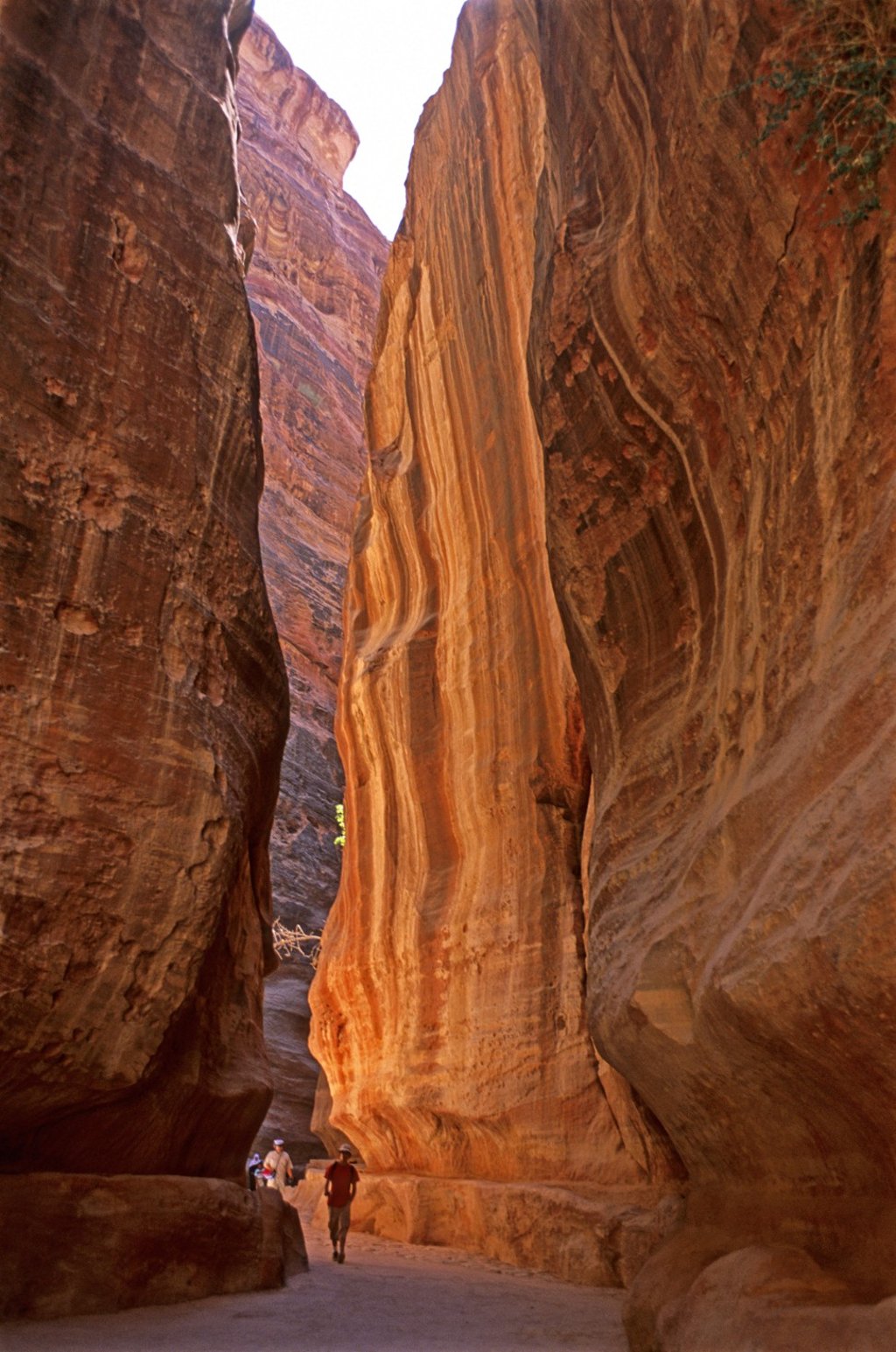
A predawn start from your hotel in Wadi Musa – Petra’s accommodation, feeding and watering service town – means you stand a good chance of having one of the world’s great archaeological treasures to yourself for an hour or so. Gradually, the plum-coloured half-light is replaced by shafts of sunshine, which convert Petra into what Anglican clergyman John William Burgon described as “A rose red city, half as old as time.” Spend the next few hours exploring the ancient settlement but be sure to include distant figures in your photos to show scale, or no one will believe just how enormous the monuments are.
After that first spine-tingling glimpse of the Treasury, huff and puff up the 800 steps that lead to the Monastery, which offers sweeping views of the 264 sq km city. Inspect the ruins of the Byzantine Church and marvel at the Roman street paved with cut stone and lined with columns.
April is a good time to visit Petra as the winter rains that transformed the desert into an oasis of wildflowers will have abated and the mild spring temperatures are preferable to viewing the site in the searing high-season heat. In fact, summer visitors should take the opportunity to return to their hotel during the hottest part of the day, if only to recharge batteries in readiness for the magical Petra by Night show, which sees the Treasury illuminated with thousands of candles.