Destinations knownWith more tourists than China’s population by 2020, can global tourism ever be sustainable?
Plus, why cracking a bomb joke on a plane is never a good idea – a lesson one Portuguese tourist in Indonesia learned the hard way

In 1950, 25 million tourists travelled internationally, according to the United Nations World Tourism Organisation (UNWTO), equivalent to the current population of North Korea. By 2016, that number had risen to 1.2 billion, and by 2020 is expected to reach 1.6 billion, or more people than live in China, the world’s most populous country.
As the fastest-growing source and recipient, Asia is uniquely placed to boom or bust – both economically and environmentally – something that industry representatives met to discuss at the 30th Joint Commission Meeting of the UNWTO, held last month in Fiji.
Unfortunately, poorly planned development and an increased strain on infrastructure are issues that afflict everywhere from Bali to Bangkok, while ill-informed travellers flock to the same, thinly stretched locations in ever greater numbers, raising the question: is sustainable tourism actually an oxymoron?
Unesco sees sustainability in “tourism that respects both local people and the traveller, cultural heritage and the environment”. The challenge lies in the implementation of strategies that support growth while respecting local economies, environments and populations. Cautious optimists, including Unesco and UNWTO, are hopeful that by working closely with tourism operators, heritage and environment managers, community groups and others affected by the industry, sustainable practices can, and indeed must, become the norm.
But the buck does not stop there. If we are to continue to travel with anything resembling a conscience, we, the border-crossing public, must also adapt. Changes can be as simple as eschewing all-inclusive deals and choosing instead to eat at local restaurants; taking with us a reusable bottle and purifying water to cut down on the reliance on plastic bottles, as many destinations do not have the facilities to properly dispose of waste; and buying locally made crafts and souvenirs. In many cases, an ethical approach to tourism means living more as the locals do.
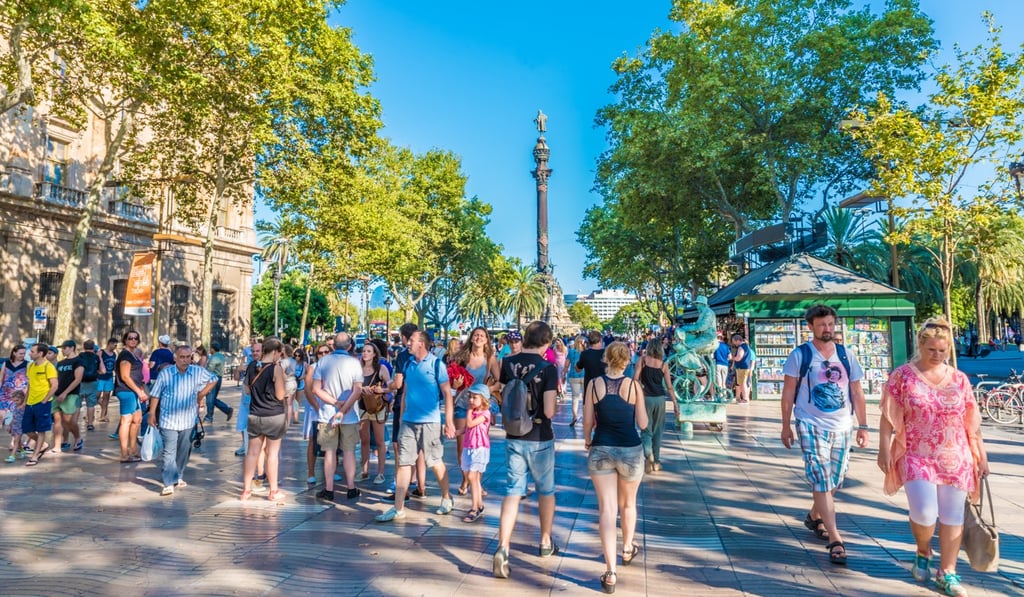
If not, tourists run the risk of seeing more resident populations react as Barcelonans have. According to a June 25 report in Britain’s The Guardian newspaper, the Spanish city now welcomes refugees, who are seen “as having a positive impact – people have integrated well”, while spurning tourism, which “takes something out of neighbourhoods […] making them more banal – the same as everywhere else.”