Climbing Kilimanjaro: the good, bad and ugly sides to conquering Africa’s highest peak
September is not only the best time to summit the 5,895-metre mountain, it is also the most popular, so choose your route carefully to avoid the crowds

The Good
You’ve collected the signatures, chosen a charity to support with your endeavours and booked flights for the holiday of a lifetime. You’ve studied Tanzanian sunshine and rainfall statistics and scheduled your trek to coincide with a full moon. The result of this meticulous preparation is an eight-day assault on Mount Kilimanjaro, culminating in a summit attempt on the moonlit evening of September 25, 2018.
The first thing to know about reaching the summit of the world’s highest free-standing mountain is that no mountaineering skills are required. Any reasonably fit adult should be able to walk up without experiencing anything more than the minor altitude sickness symptoms of fatigue, dizziness or shortness of breath.
The hike is best attempted over seven or eight days and there are numerous routes; some drier and busier, others wetter but spectacularly scenic. The landscape changes as the trails thread upwards through a range of climatic zones, from dense rainforest to heath and moorland, alpine desert and, finally, arctic ice cap. And if all goes to plan, you should easily end up with a treasured selfie atop the Roof of Africa.
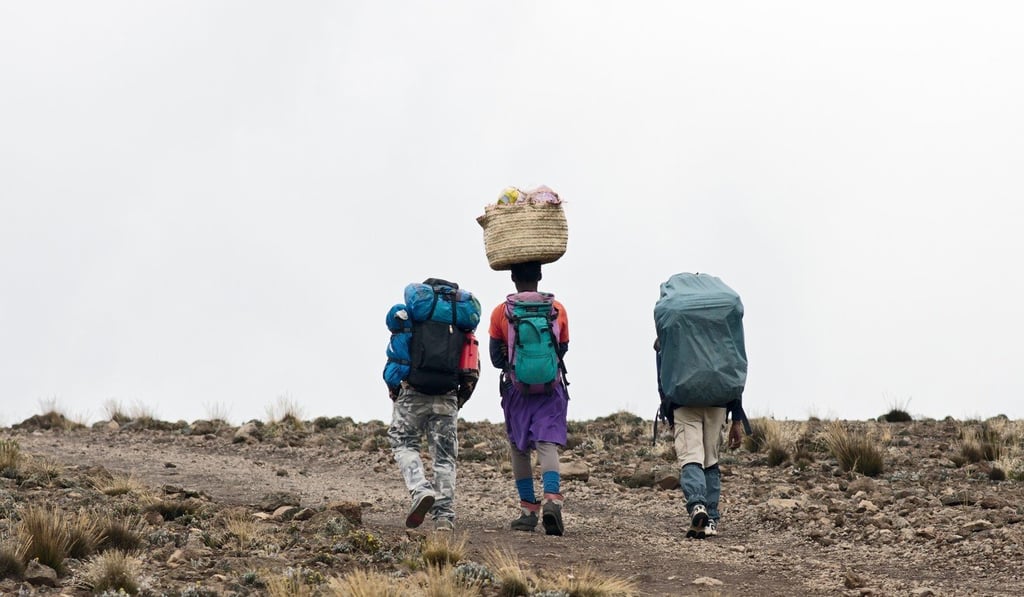
The Tanzanian government requires trekkers to be accompanied by a registered, licensed guide. Porters and cooks make up the team and within minutes of commencing, you’ll realise how crucial they are to overall success. Who else did you think would be carrying the camping equipment, chairs and tables, purified water, cooking stoves and gas bottles, mobile toilet, oxygen cylinders and first aid kits? And if you find yourself gasping in the thin air, they will offer to balance your backpack on their head as well. Best of all, when you eventually reach camp after a gruelling day, the porters will already be there to greet you with a song and a hot meal.
About 50,000 people set out to climb Kilimanjaro annually (about 50 times the number attempting an ascent of Mount Everest’s 8,848 metres), and there are at least 200 licensed operators to choose from. Deciding whether to book with a local outfit or an international company comes down to personal preference but be sure to check the company’s success rate for reaching the summit.