Seven of the world’s best tunnel tours: explore the underground offerings of Argentina to Vietnam
From ‘coal mines’ beneath the Korean DMZ to the Viet Cong’s extensive network near Ho Chi Minh City, these subterranean must-sees reveal more about a destination’s history, or provide a useful way of getting there

When it opened in 1843, the Thames Tunnel was described as the eighth wonder of the world. On the first day alone, 50,000 people paid a penny to walk beneath London’s landmark river, inside what was the world’s first underwater tunnel. Fast forward 175 years and records are still being broken. Marmaray, in Istanbul, Turkey, is the first undersea tunnel connecting continents, and Switzerland’s 57km-long Gotthard Base rail tunnel, which runs under the Alps, is the world’s longest and deepest.
Not all underground digs are cause for celebration, however. Between 1941 and 1945, Japanese occupiers forced villagers to build air-raid tunnels on Lamma Island before executing the labourers to ensure the locations remained a secret. The following seven subterranean must-sees can all be visited on tours or used as a means of getting from A to B.
Cu Chi Tunnels, Vietnam
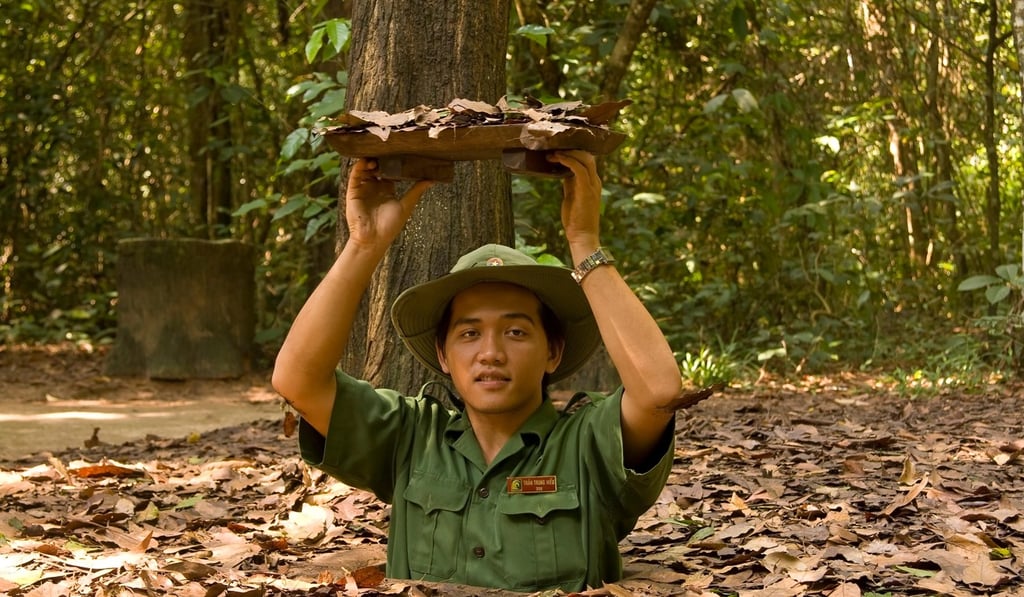
Viet Cong guerillas spent the daylight hours holed up in their carefully concealed lairs, emerging after dark to conduct military operations or scavenge for food. The underground maze connected villages and incorporated workshops, meeting rooms and clinics as well as sleeping and eating quarters. Conditions in the airless shafts were tough – besides living with the constant fear of being flushed out by the enemy, infections and disease were rife.
The tunnels have since been enlarged to accommodate generously proportioned foreign tourists, who must crawl through the enclosed space on hands and knees. Definitely not for claustrophobia sufferers or anyone in white clothing.