Travellers' ChecksWhen the first solo flight across the Atlantic made Charles Lindbergh the most famous man in the world
Plus, Singapore’s Raffles Hotel reopening faces further delays, with website saying hotel to open in mid-2019 – one year behind schedule

Charles Lindbergh’s 1927 solo flight across the Atlantic Ocean is said to have made the American aviator – for a time at least – the most famous man in the world. It also gave a significant boost to commercial aviation. As Bill Bryson notes in his 2013 book One Summer: America, 1927, “In the mid-1920s, Boeing, a small manufacturer of aeroplanes in Seattle, had so little work that it sometimes built furniture just to keep going. Within a year of Lindbergh’s flight it employed a thousand people.”
That record-breaking 5,809km flight from Long Island, New York, took 33 hours and 30 minutes, and when the 25-year-old pilot landed just outside Paris, France, on Saturday, May 21, there were an estimated 150,000 people there to meet him. Headlines appeared in Hong Kong the following Monday, with wire stories first noting that Lindbergh had “subsisted merely on a few sandwiches and water […] sometimes flying only a few feet from the waves, and at others soaring 10,000 feet”.
Hongkong Telegraph and The China Mail both carried more aviation news on the same page, but it was not good. “Hard Luck/British Airmen’s Forced Landing/Record Held for an Hour” ran the Mail’s introduction. In the air at about the same time as Lindbergh, flight lieutenants Roderick Carr and Leonard Gillman, of the Royal Air Force, had been attempting the first non-stop flight from England to India, but had run out of fuel over the Persian Gulf after flying 5,506km. Thought to have briefly held the flight-distance record just before Lindbergh landed in France (though apparently never officially recognised), they were rescued from their floating, shark-encircled aircraft by a passing ship.
It is estimated that 4 million people saw Lindbergh pass by in person on his celebratory ticker-tape parade through New York City on June 13. Carr and Gillman had quietly arrived at London’s Victoria Station a few days earlier, and were met by a dozen.
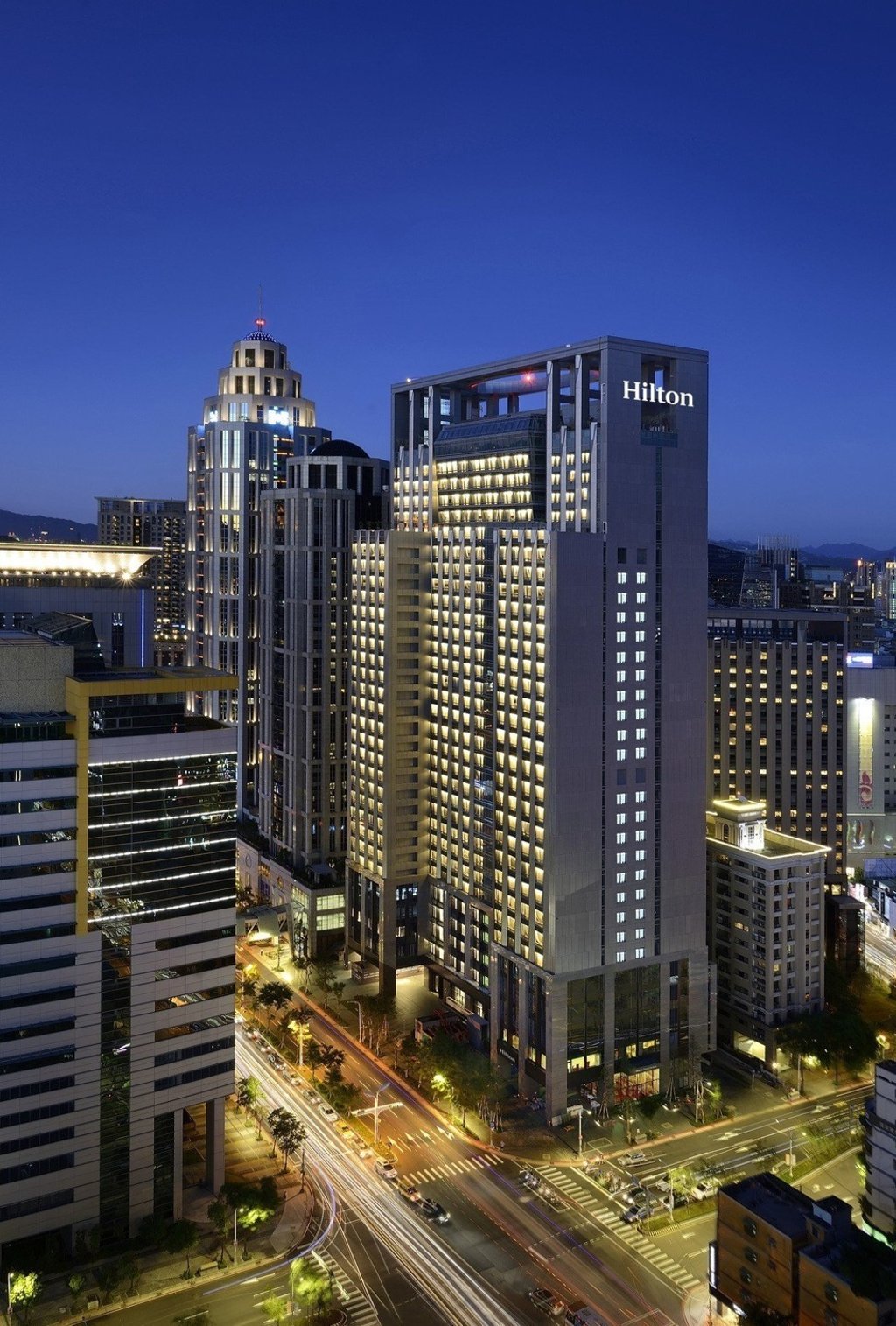
Capital return – the Hilton hotel brand returns to Taipei, in Taiwan