From temple to mosque, a heritage walk reveals secrets of Ahmedabad’s Unesco-listed old city
- The old walled city in Ahmedabad, in Gujarat, western India, is a labyrinth of lanes and alleys lined with exquisite traditional houses and courtyards
- Escape the muck, paws and hooves of the old city by cruising the streets in a vintage pink Chrysler. And how about eating lunch surrounded by tombs?

Devise the world’s hardest, knottiest maze and we’d not be impressed. Not now, while we are meandering through a fierce tangle of tight narrow lanes that twist and split into more tight narrow lanes. Not now, while we are negotiating muck and goo, paws and hooves, wheels and too-muchness. Not now, while we are absorbed in the charms of the … well … too-muchness.
A baffling web of alleys lined with traditional houses – some older than 300 years – bearing exquisite wooden facades and friezes, sprawling courtyards, canopied bird feeders, things of beauty: these are the pols of Ahmedabad, gated colonies from centuries ago, and right now we are getting vicarious pleasure from playing Mata Hari-cum-Holmes-Watson as we attempt to discern spy doors and cryptic passageways in an expansive blue house.
Naman, our joshing “heritage walk” guide, is breaking down the geography of the complicated neighbourhood – the baris (narrow doors) that connect the khadkis (narrow lanes) and the chowks (quadrangles) of the pols – and showing us the cellars, trapdoors, secret walkways and fortifications that all make for an unassailable security system. After picking out doors that appear to be dummies (“This?” one among the 12 of us asks; “Maybe, that,” surmises another), we give up; some secrets are best left that way.
It’s no secret, however, that the pols, “representing a masterpiece of human creative genius”, have propelled Ahmedabad, the most spirited city in the western Indian state of Gujarat, into the league of Unesco World Heritage Cities. They have become its new de facto tourism mascot, a mantle the hallowed Sabarmati ashram, home once to Mahatma Gandhi, had borne for decades. But much in the city of almost 10 million people is still waiting to be tapped, and thrust into the spotlight.
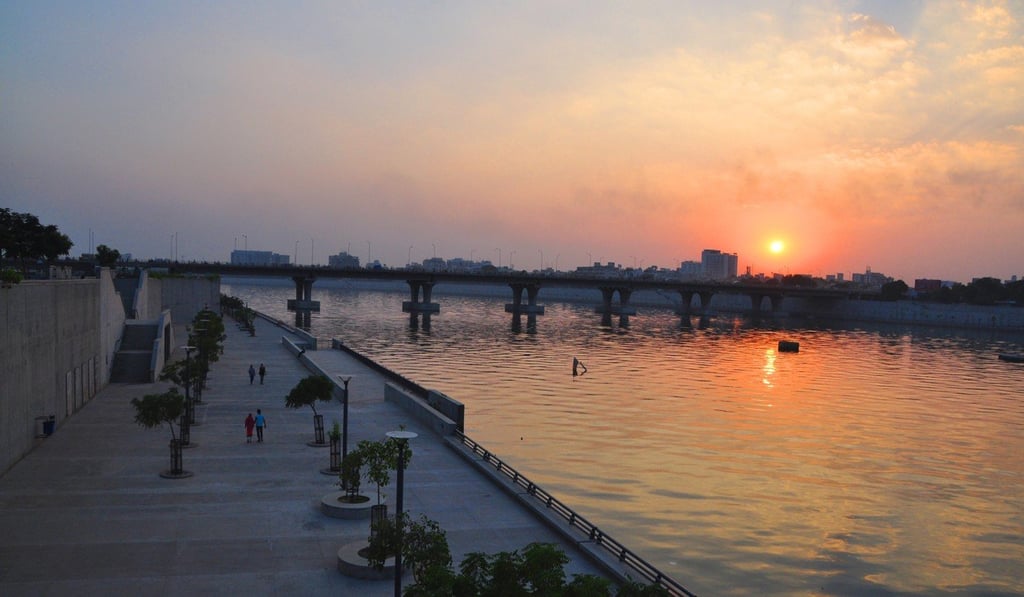
Less than 16km from the pols, the world’s largest cricket stadium is being readied. With a landscaped promenade, the river that lends its name to Gandhi’s ashram has morphed into a template for other Indian cities wishing to convert dirty slivers of living rivers into places of pleasure and leisure.