
Destinations knownJapanese attractions are refusing entry to tourists, and it’s easy to see why
- As the Land of the Rising Sun prepares for its annual cherry blossom season, a number of attractions are refusing entry to visitors from overseas after repeated reports of bad behaviour
- From Chinese tourists to Westerners, international arrivals have long pushed the limits of Japanese hospitality

Japan recorded 5.5 million international arrivals in March and April last year, numbers that are expected to increase as the nation tears towards a target of 40 million annual visitors in 2020. However, there is an issue; an increasing number of attractions (or should that be “repulsions”) are saying that they don’t want overseas tourists to visit.
The English-language version of national newspaper The Asahi recently reported that a “no-foreigners policy” was spreading as “a growing number of tourism facilities in Japan are refusing to accept non-Japanese group travellers because of the bad manners and abhorrent actions of some visitors from abroad”.
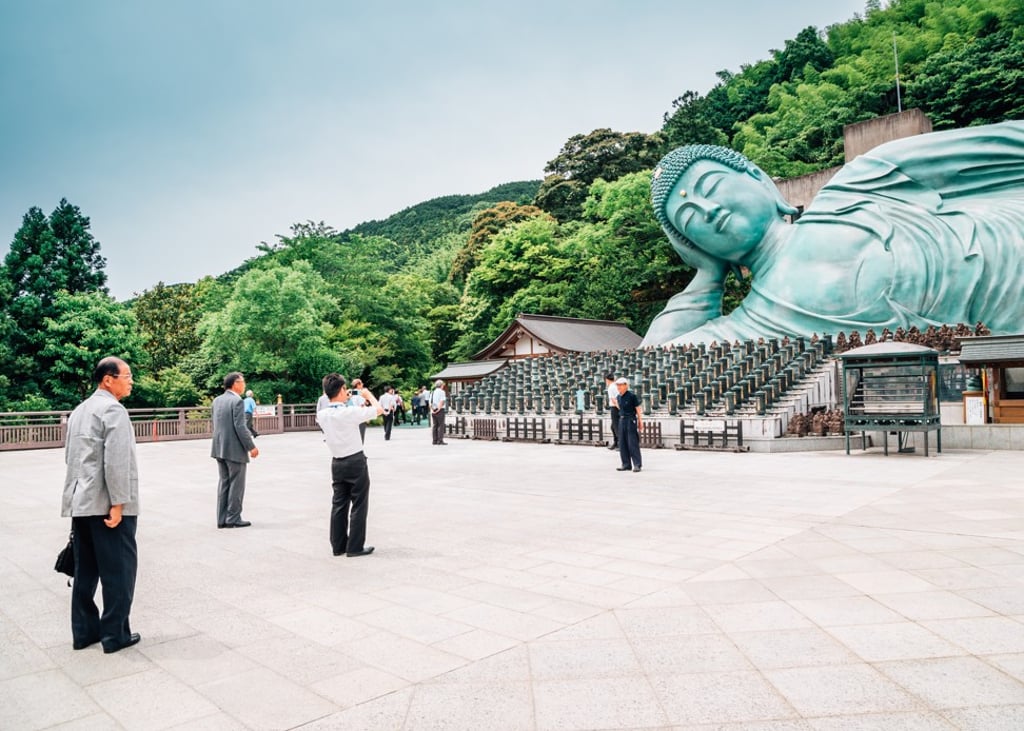
Nanzoin temple, in Fukuoka prefecture, is one such destination. Its priests have been complaining that an influx of tourists from cruise ships calling into Fukuoka has altered the atmosphere of the temple, famed for its 41-metre-long bronze reclining Buddha, with travellers splashing around in a waterfall within the grounds, blaring music from portable speakers and even climbing onto rooftops. By 2016, their transcendental patience had worn so thin that the priests asked a local tourism website to delete information on the temple. Visitors today will find signs in 12 languages telling non-Japanese groups that they are not welcome, according to The Asahi, although solo tourists are still allowed in, as they are believed to be better behaved.
In Kumamoto prefecture, the Yatsushiro shrine has suffered a similar fate, having been overrun with day-tripping cruise passengers, while an izakaya owner in the overcrowded city of Kyoto admitted that he would lie about his establishment being fully booked when groups of five or more foreigners showed up. “I want Kyoto to stop staging promotional campaigns targeting foreign sightseers,” he told The Asahi.