Travellers' ChecksHow three deadly Pan Am plane crashes in nine months changed airline’s safety culture
- Faulted by the FAA for its substandard airmen and inadequate training after spate of 1970s disasters in Pacific, Pan Am made sweeping changes
- A reminder of the Bali disaster, a hotel owned at the time by Pan Am, and still the tallest building on the Indonesian island, is soon to be redeveloped

The Grand Inna Bali Beach, which was the island’s first international luxury hotel when it opened in 1966, is about to undergo an extensive redevelopment from which it will emerge renewed and rebranded as the Hotel Indonesia Bali late next year.
The property was originally called Hotel Bali Beach Inter-Continental, and was, as it still is, the tallest building on the island. At the time, Inter-Continental Hotels (now InterContinental Hotels & Resorts) was owned by Pan Am, which, as well as giving Bali its first international hotel, also brought its first and so far its only fatal airline disaster.
To protect domestic carriers, the Indonesian government had begun closing Bali to foreign airlines in 1972 (including Cathay Pacific, which had started a service from Hong Kong the previous year and had a local office in the Hotel Bali Beach) and by 1974 Pan Am was one of only a few overseas carriers still flying to the island (Cathay eventually returned in 1986). Its twice-weekly Flight 812 originated in Hong Kong and flew to Los Angeles via Bali, Sydney, Fiji and Honolulu.
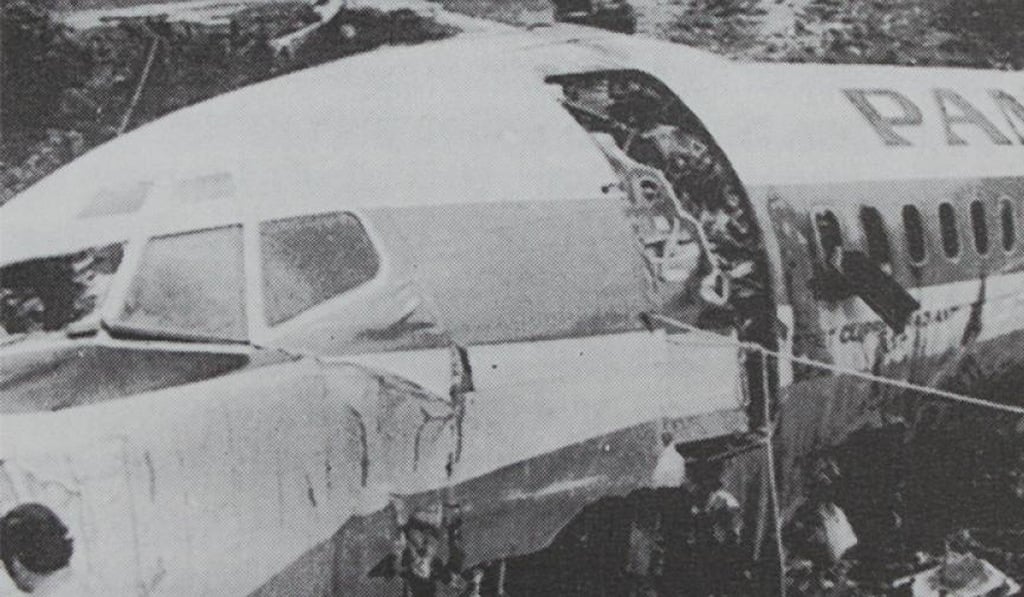
The April 22, 1974 departure – a Boeing 707-321B – crashed into a mountain on its approach to Bali’s Ngurah Rai International Airport. All 107 passengers and crew – mostly Japanese, American and Australian – were killed. Earlier that year, on January 30, another Pan Am Boeing 707-321B had crashed, on the approach to American Samoa’s Pago Pago International Airport, killing 97 of the 101 people on board.
Six months before that, on July 22, 1973, a Pan Am Boeing 707-321B had plunged into the sea just seconds after taking off from Tahiti International Airport, killing 78 of 79 passengers and crew.