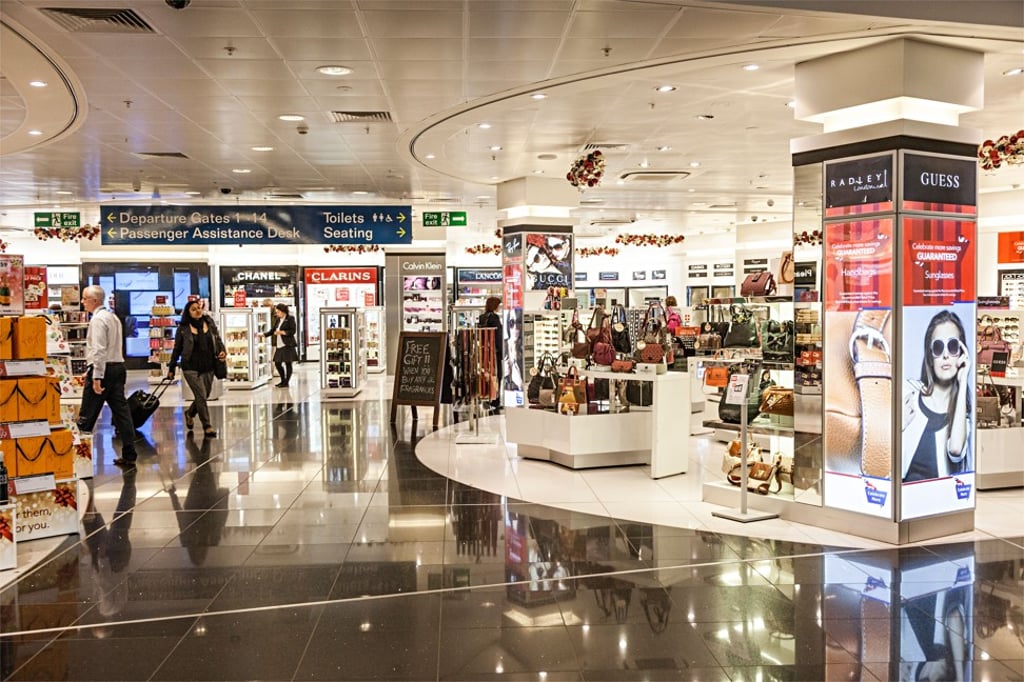
Five ways airports get us to spend money – they have been carefully designed that way
- Exhaustive studies have shaped the ‘airside’ environment into one that taps into our consumer subconscious
- Higher efficiency and less stress puts passengers in the holiday (spending) mood, even if those duty-free ‘bargains’ are cheaper at home

The decline in traditional brick-and-mortar retailing in favour of online shopping appears to be having little effect on airports. Premium brands have outstripped traditional souvenir and sundries stores – about 6 per cent of all global luxury purchases take place in departure lounges, with some well-known names reporting better turnover in the terminal than in their high-street outlets.
Airports offer an ideal environment for retailers: a captive audience with time on their hands, money to burn and nowhere else to go. For an hour or so, anyway. Dubbed “shopping malls with runways”, modern aviation hubs are seeing record numbers of passengers pass through, although a few nudges are still needed to lure all those potential consumers into spending their hard-earned cash.
Look carefully and you’ll notice how airports are designed to get us moving in a clearly defined direction to maximise revenue. Little is left to chance and much research has been undertaken to better understand the psychology of airport spending.
Data farmed from boarding passes, on-site surveys and old-fashioned questionnaires helps establish whether passengers arrive early intending to shop or make last-minute impulse purchases. The pros and cons of enticing travellers with shopping discounts and food and drink vouchers have been thoroughly analysed; as has the likelihood of customers visiting the airport website beforehand to take advantage of online-only deals.
Duty free