Destinations knownChinese tourists breaking rules ‘all over the place’ in Boracay
After a six-month closure, Boracay reopened in October with new rules that prohibit smoking, drinking, dining and littering on the beachfront. But the dos and don’ts seem to have escaped notice, especially among tourists from China and South Korea
Travel has changed a lot since the 19th century. Obviously. But attitudes towards travellers have not, if the diaries of Francis Kilvert are anything to go by.
“Of all noxious animals, the most noxious is a tourist,” the English clergyman wrote in the 1870s, and while Kilvert asserted that it was the British who were “the most vulgar, ill-bred, offensive and loathsome” of them all – a contention that might be challenged today – an increasing number of places across the globe have had their fill of imprudent outsiders, regardless of where they are from.
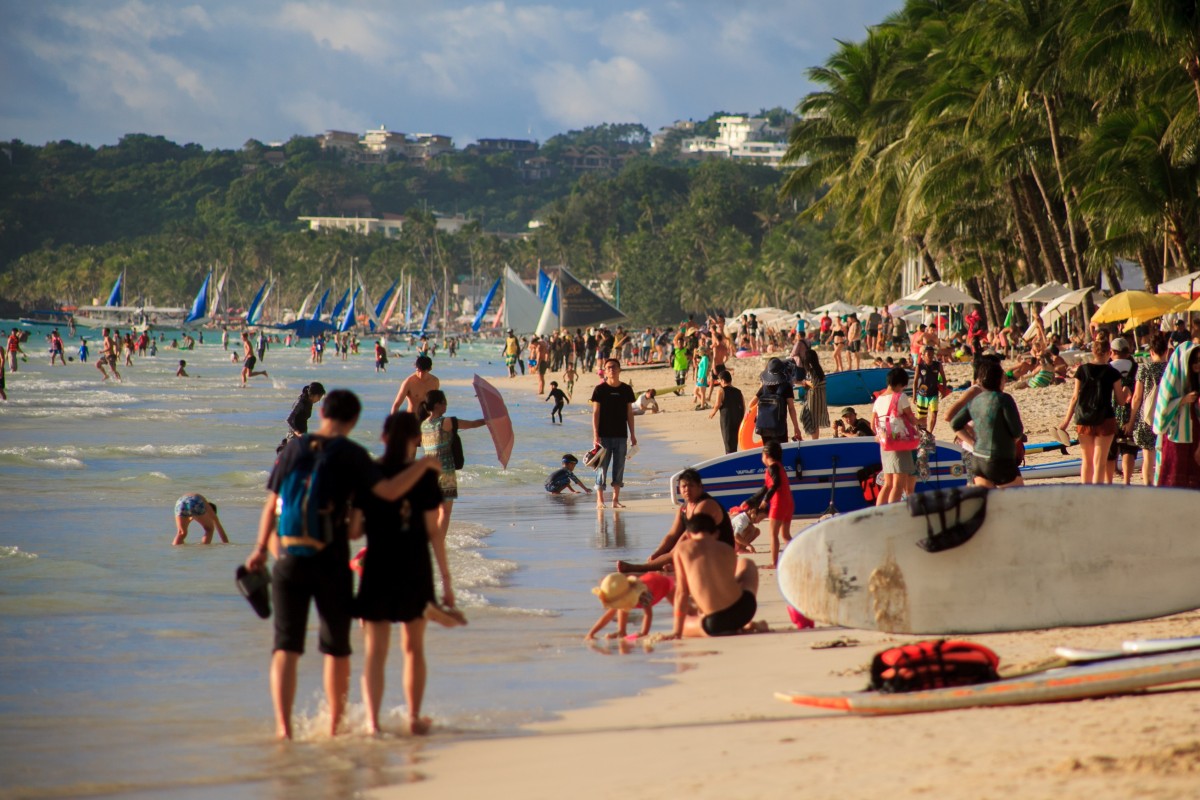
The island of Boracay, in the Philippines, the original face of overtourism in the region, is one of them. In February last year, Philippine President Rodrigo Duterte vowed to close the popular tourist hotspot, saying, “Boracay is a cesspool. It is destroying the environment of the Republic of the Philippines and creating a disaster.” The septic metaphor was no melodrama – a number of hotels, restaurants and other tourism-related businesses were dumping untreated sewage directly into the ocean, contaminating White Beach’s crystalline waters and tarnishing Boracay’s reputation. As Duterte decreed, the island shuttered for six months from April, during which time infrastructure was to be installed and new environmental requirements implemented.
Advertisement
When Boracay reopened, in October, it was heralded as a rare success in the ongoing fight against the tourist menace, despite the fact that thousands of islanders had been left without incomes, the nation’s economic growth had suffered and, heaven forfend, holidaymakers had been forced to cancel hard-earned vacations. And the rehabilitation is far from complete. In January, the Boracay Inter-Agency Task Force, the organisation overseeing the ecological overhaul, announced a 25.3 billion peso (US$485 million) action plan, which, if approved, will fund 233 projects related to the enforcement of laws and regulations, pollution control and prevention, rehabilitation and recovery of the ecosystem, and the sustainability of land activities, according to a report on Philippine news site Rappler.
But still the tourists come, albeit in smaller numbers than before, and just as in pre-closure times, not all of them are welcome; in particular those who pay little attention to the new rules, which prohibit smoking, drinking, dining, littering, partying and fire dancing on the beachfront.
Advertisement
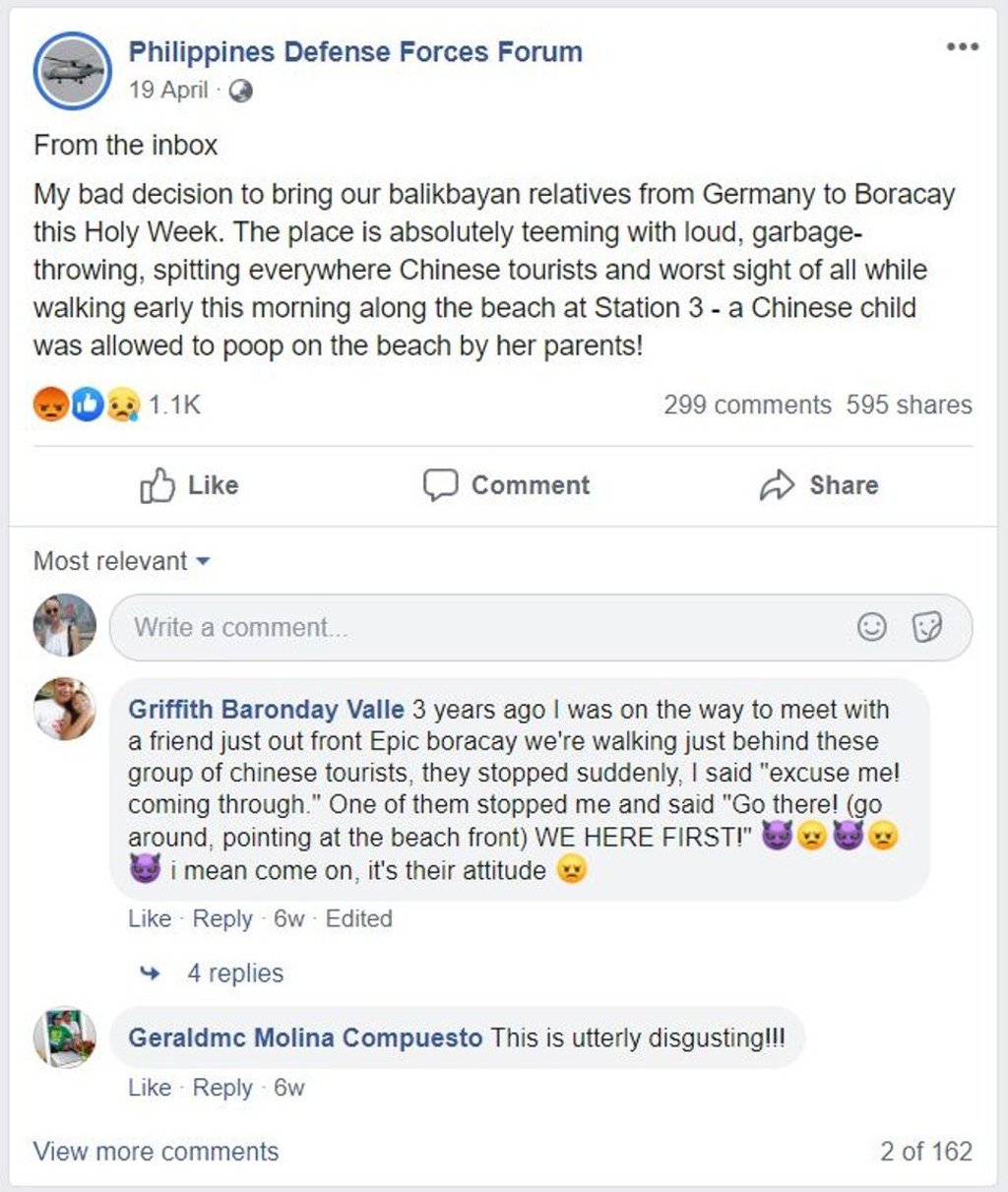
A complaint about Chinese tourists, posted to Facebook in April. Photo: Facebook / @philippinesdefense