
Travellers' ChecksMarriott enters glamping arena with tent resort on Bintan Island in Indonesia
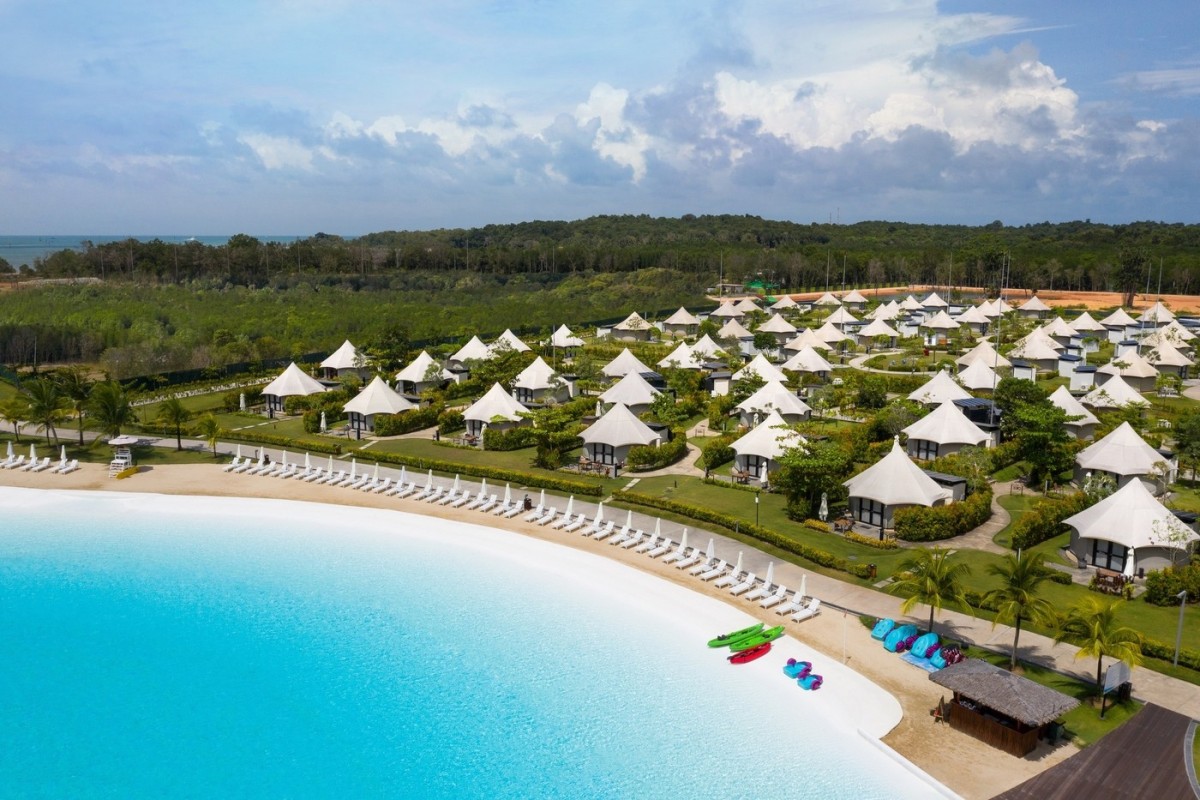
- Natra Bintan, handy for visitors from Singapore and Johor in Malaysia, has 100 air-conditioned tents with Wi-fi, LCD televisions and four-poster beds
- Plus, Soneva resorts bring in ex-England players to provide Rugby World Cup commentary, and Mandarin Oriental, Bangkok launches a photography tour with Leica
The rather unappealing portmanteau word “glamping” was officially adopted by the Oxford English Dictionary in 2016, and described as a blend of either glamour or glamorous, and camping. A February 2005 report in the The Guardian newspaper was given as the earliest example of its usage: “These days it’s more ‘glamping’ than camping, with the best companies offering state-of-the-art pre-erected tents and luxe mobile homes with ensuite bathrooms that feel like an Oscar-winner’s trailer.”
Luxury tented camps (or glampsites, as some sadly prefer to call them) seem to have been set up all over the world in recent years, but glamping has generally remained the preserve of smaller, boutique companies.
Earlier this year, however, the world’s largest hotel chain, Marriott International, announced its “first glamping experience” when it took over the running of The Canopi Resort, on the Indonesian island of Bintan, southeast of Singapore. Operated by Marriott’s “colourful and quirky” Tribute Portfolio brand, the resort became The Canopi Bintan, A Tribute Portfolio Resort, and glamping went mainstream.
Last month, the name was shortened to the more exclusive-sounding Natra Bintan. Still part of the Tribute Portfolio, it now promises 100 large, safari-themed tents offering “a personification of the glamping experience that brings to life the concept of being one with nature”, albeit with LCD televisions and Wi-fi, and “made complete with a lush garden and outdoor patio, four-poster bed and air-conditioning.”
The property recalls its humbler origins (it first opened in 2015 with 40 tents) with a single all-day-dining restaurant, and an enlarged tent area now evoking a 19th-century military encampment.