Tracking pangolins, the world’s most-trafficked animal, in the Central African Republic
- In the Congo Basin, a conservation project is working with the local Pygmy people to save the scaly mammal
- Sangha Lodge rehabilitates wildlife, including owls, genets and pangolins, brought in by Ba’Aka people

The forest is so humid I can taste the moisture in the air. Barely any light penetrates the rainforest canopy in this part of the Central African Republic.
The pangolin project is run from the Sangha Lodge, eight simple wooden chalets tucked into the trees on the jungle-clad banks of the Sangha River, in Djomo, in the far southwest of the Central African Republic. It has recently partnered with the Congo Conservation Company, which operates three high-end camps in the Republic of the Congo’s Odzala-Kokoua National Park, where the western lowland gorillas are a highlight.
The resulting itinerary affords visitors an intimate, immersive experience in the vitally important Congo Basin. Guests fly from Odzala to the riverside village of Kabo and then embark on a six-hour boat trip up the wide Sangha River towards the lodge, across the border, passing fishermen on wooden dugout canoes and children waving from the banks.
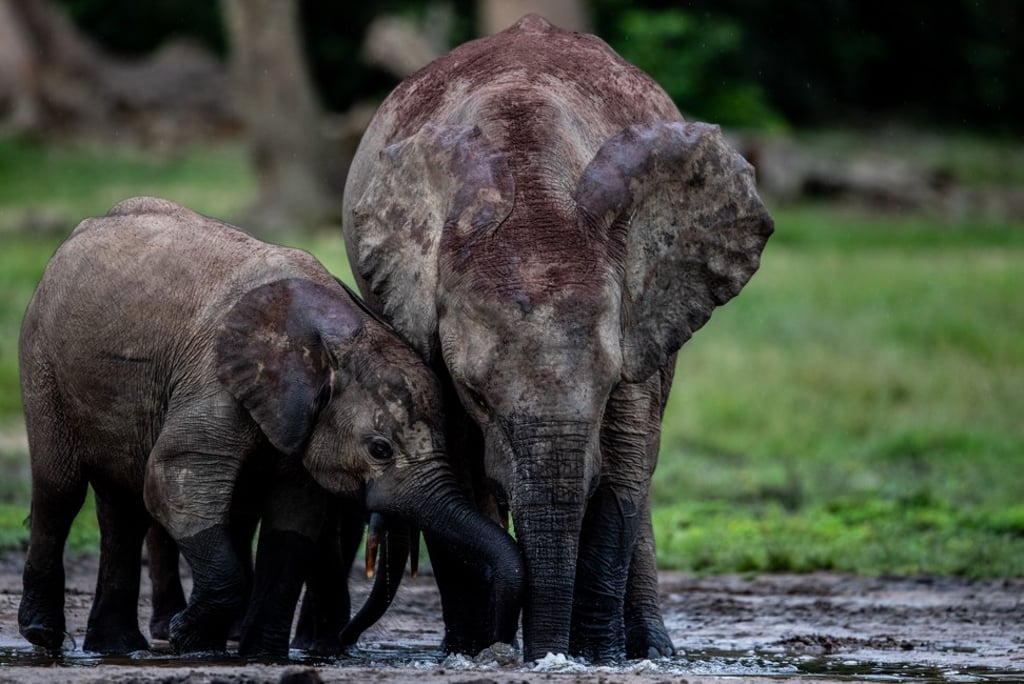
On our first morning as guests at the Sangha Lodge we go in search, not of pangolins, but of elephants. After an hour’s drive, we continue on foot, wading through streams and trekking along narrow, muddy paths cut through the forest, until we arrive at Dzanga Bai (a “bai” is a marshy forest clearing) in Dzanga-Sangha National Park, widely considered to be the best place in Africa in which to see forest elephants. Up to 150 gather here every day, sometimes accompanied by rare bongo antelopes and forest buffaloes.