
The NomadRemembrance Day: the horrors of World War II still scar Papua New Guinea’s Kokoda Trail
- The 96-km route played host to a series of bloody battles fought between the Japanese and Australian forces

With my head down I push on, concentrating on a step at a time because the mud has been made slippery by the early morning rains. After landing yesterday in Kokoda village, on a jungle airstrip, we’ve climbed straight up from the steamy jungle in Papua New Guinea’s far east. There is not much time to rest as our guides and porters press forward, pointing out locations of interest along the route. The caravan comes to a stop at the head of a path leading deep into the rainforest, towards a large, flat, table-like rock surrounded by foliage and smaller stones.
Pink flowers lay on top; local villagers place a fresh bunch here every morning, a show of respect for its horrific history. Sweaty and tired from a tough morning on the Kokoda Trail, I try to calm myself and take in the atmosphere. A sombreness overcomes us all as Chris, our professional guide, explains what occurred on this flat rock in the forest. My eyes well up, lower lip trembles. Standing over Surgeon’s Rock I try to fight back the tears but, like everyone else in the team, I lose the battle.
The heat and humidity are suffocating, and yet a chill runs through my body. It is only the second day of a nine-day trek along the Kokoda Trail – some call it the Kokoda Track – as we film an episode of my Extreme Treks series for BBC Earth, but this journey has already become so much more than just a hike through the jungle.
Surgeon’s Rock, also known as Con’s Rock after Australian orderly Con Vapp, who treated wounded soldiers and is thought to have conducted an amputation on the stone, was a forward medical station during some of the heaviest fighting between Japanese and Australian forces in World War II. During the Kokoda Trail Campaign, injured soldiers would be carried back from the front lines to Surgeon’s Rock for medical procedures before being moved back further, which often meant a journey of 20 or 30 kilometres.
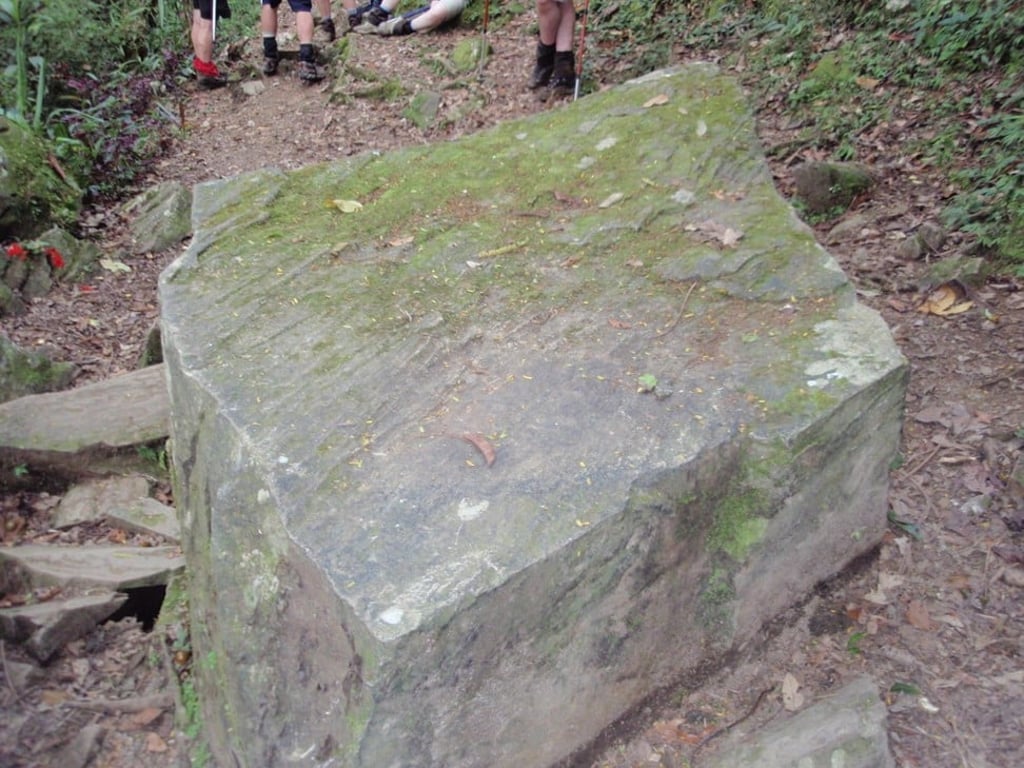
The Japanese, and their more sophisticated weaponry, ensured that Surgeon’s Rock was busy. Standing over it, now surrounded by pink and red flowers, it’s difficult to imagine the horror that enveloped this site towards the end of 1942.
As the Japanese advanced rapidly through Asia they had Australia in their sights, and Papua New Guinea, sitting just off northeastern Australia, was the perfect island from which to launch an invasion. Canberra mobilised to defend Papua New Guinea, then an Australian territory. The series of battles that would become known as the Kokoda Trail Campaign were fought between July and November 1942.