Sukhothai: could Thailand’s answer to Angkor Wat be the nation’s most overlooked attraction?
- The ancient capital has been given Unesco Creative City status for its crafts and folk art
- Dating back several centuries, Sukothai architecture has had a lasting legacy on Thai style

I am surrounded by splendour reduced by time and the elements – broken statues, eroded stupas and once mighty walls that have crumbled. A grand civilisation existed in Sukhothai eight centuries ago. The capital of the first independent Thai kingdom, this is where the country was born and its artistic style forged.
Sukhothai was one of 66 sites dubbed a Creative City by Unesco in October. The United Nations body picks these cities based on their achievements in, and commitment to, the arts, split into specific fields. Sukhothai was chosen in the crafts and folk art category, reflecting the city’s impact on Thai art, architecture and urban planning.
The provincial hub, Sukhothai Thani, gives away little of its regal heritage, appearing much like any other Thai town. Its streets are quiet and activity is concentrated around a few wet markets and a cluster of Buddhist temples.
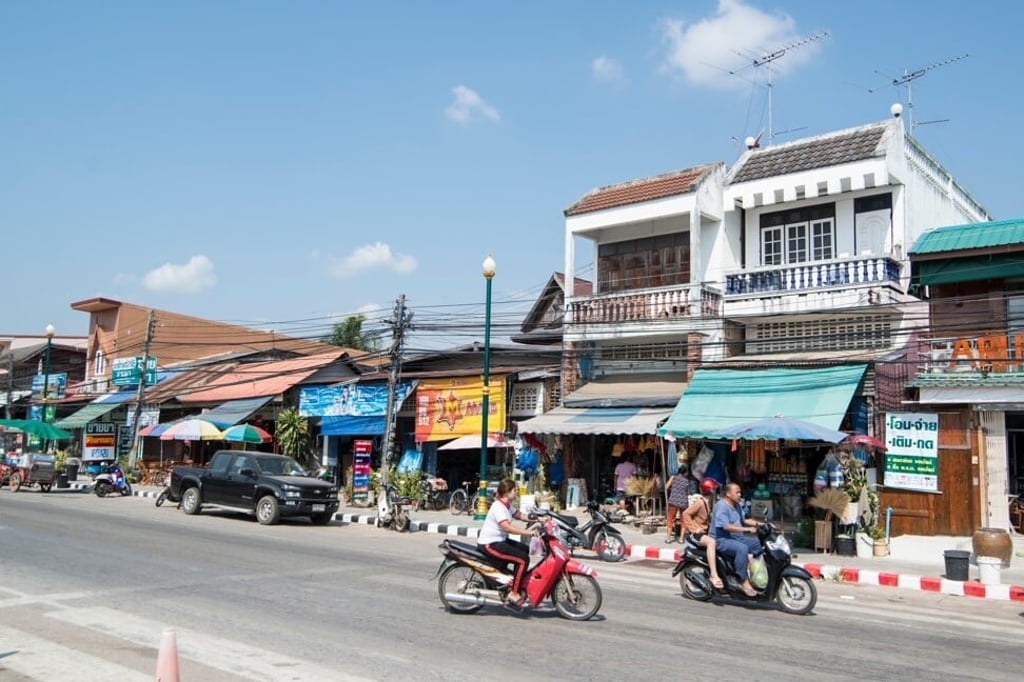
Prominent, though, are shops selling Sukhothai’s renowned crafts: handcrafted silver jewellery embellished with Buddhist motifs; woven silk pha sinh (sarongs), worn by women for special events; and nok khum birds carved from teak, for display in homes to bring good luck. Most important among the handicrafts, however, are Sangkhalok ceramics.