The Okura Tokyo lives twice: remaking Japan’s iconic hotel
- Elements of the historic property return in its glamorous new incarnation, , including parts of its beloved lobby
- Memories of the original live on in James Bond film You Only Live Twice and Walk, Don’t Run, starring Cary Grant

The Okura? Don’t I recall it making headlines a few years ago?And not necessarily for the right reasons. The announcement in 2014 that the venerable Hotel Okura Tokyo was going to be demolished – to make way for a state-of-the-art property with all the facilities and comfort associated with modern luxury accommodation – was met with howls of protest.
The Okura was an icon, said outraged opponents of the plan, a landmark that had defined the design and cultural essence of the Japanese capital since 1962. This was where royalty stayed, where every American president since Richard Nixon had laid his head. In the 1966 film Walk, Don’t Run, Cary Grant tries to check in – unsuccessfully, admittedly – a couple of days before the 1964 Olympic Games. James Bond had better luck in 1967, in You Only Live Twice. Five years after the Save the Okura campaign was launched – one poster on the movement’s Facebook page described the demolition as a “crime against art” – the rebranded Okura Tokyo has reopened.
So they went ahead anyway? They did. And while it is unlikely purists will be completely satisfied, the redesigned and rebuilt Okura is unquestionably an upgrade on its slightly scuffed predecessor.
“There was a petition against replacing the old hotel with this one, with a lot of people strongly opposed to us changing the lobby, in particular,” general manager Shinji Umehara says. “We took many of those comments on board and we believe we have kept the traditions that made the hotel what it was and gave it that unique atmosphere.”
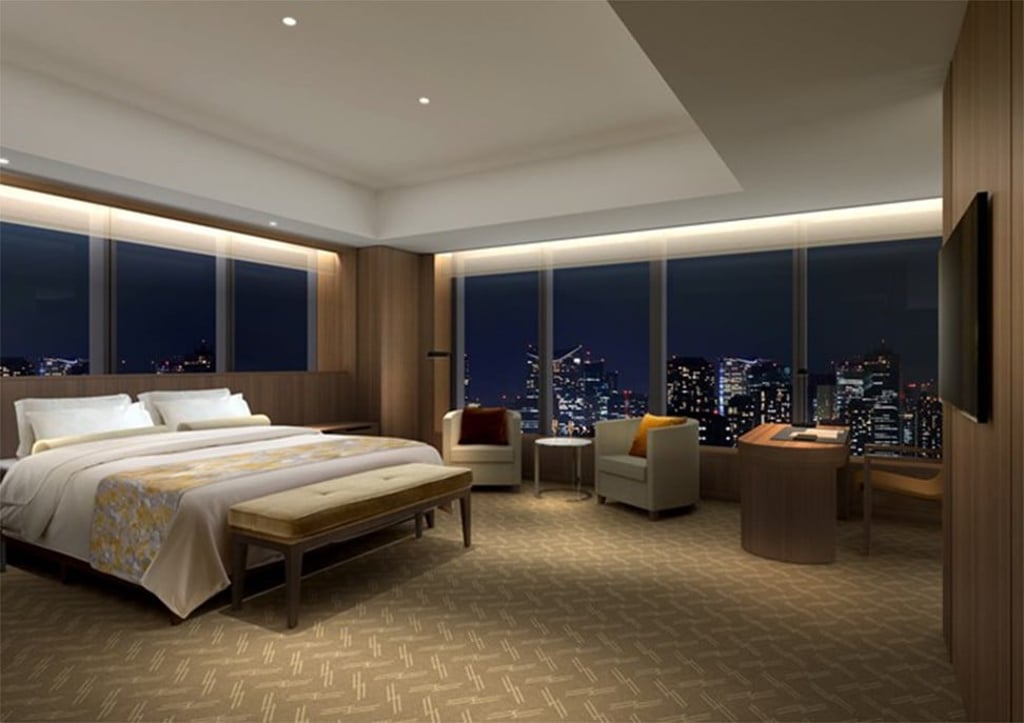
And a lick of paint wouldn’t have been enough? Not at all. For starters, the building no longer satisfied regulations drawn up to ensure structures are able to withstand earthquakes, and guest rooms were too small for a property that prided itself on its luxury accommodation. With some of the biggest names in the international hotel sector opening in Tokyo in recent years, the Okura was losing its edge.