A traveller’s ‘Marco Polo’ moment on the Xinjiang–Qinghai border, in search of historic route round the Lop Desert
- This remote corner of western China is a long way off the beaten track; it was even more so in 1995
- Our writer encounters hazards in towns with such evocative names such as ‘Asbestos Deposit’ and ‘Oil Sand Mountain’

Wind-blown dunes snuggle up to the road and threaten to engulf it, and on both sides the flat, toneless scrub and sand seem limitless. This is everyone’s idea of a desert, with water mirages and dust devils that seem to follow the bus. Occasional slight curves in the road are a welcome novelty.
In November 1995, I had travelled eastward from Kashgar along the desert’s then rarely visited southern side. At its eastern end this ancient Silk Route once continued around the edge of the salt desert of Lop up to Dunhuang and China’s most extensive and intact cave-temple site. But as Lop was now China’s nuclear test centre, and off-limits, I was looking for an alternative route on the south side of the mountains that border Lop, mentioned by travellers in the early 1800s.
The starting point for these investigations was the unprepossessing town of Ruoqiang, in the desert’s southeast, better known as Charklik to the region’s majority Uygur people. Stickers in the reception of the barracks-like Ruoqiang Guesthouse announced that the 1993 Anglo-Chinese Taklamakan crossing team had stayed there, but its reaction to less illustrious foreigners was far from welcoming.
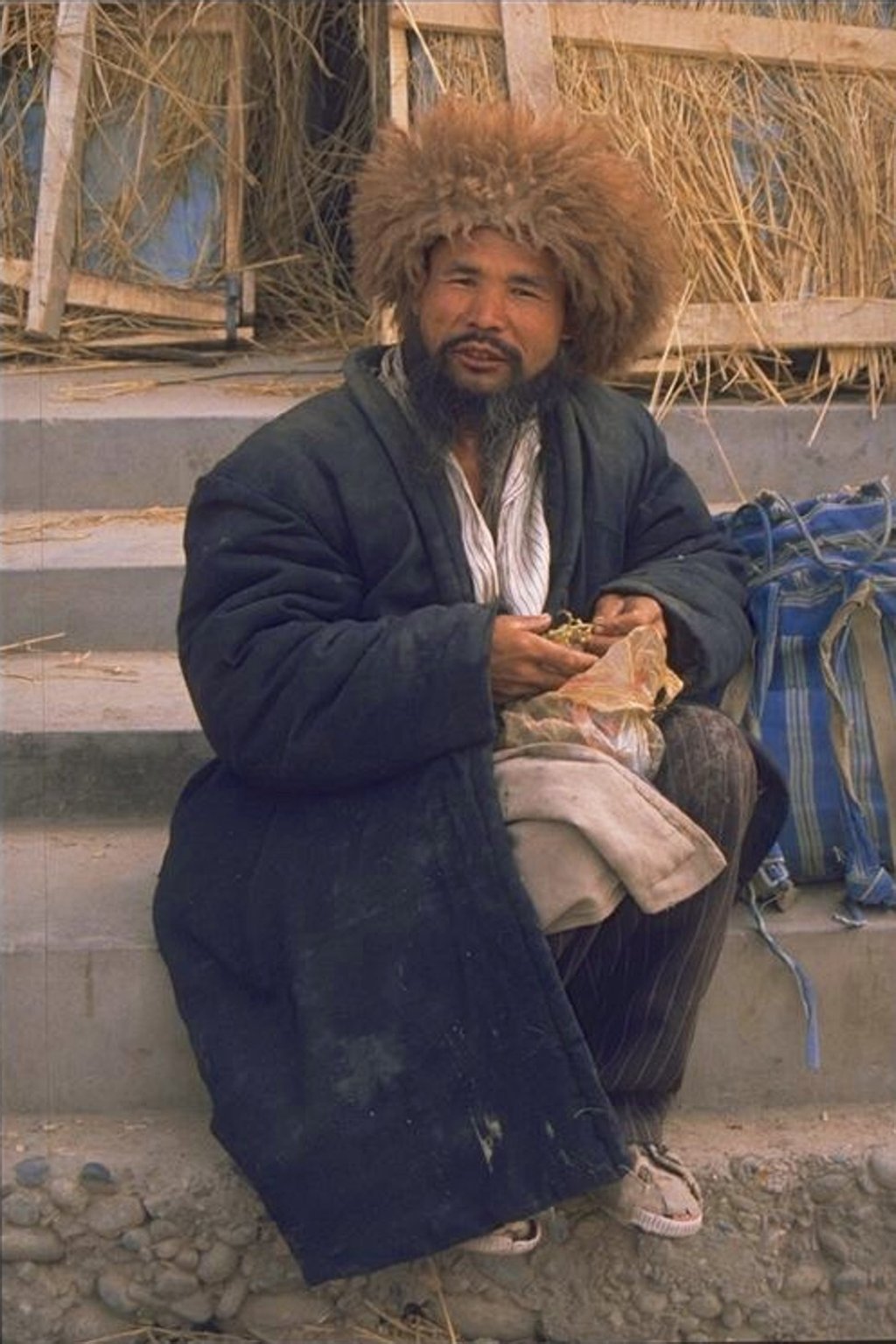
The reception staff announced they would sell nothing except the highest priced suite, at about 15 times my usual daily accommodation budget. Eventually I found a dilapidated Uygur-run hostel, where an immediate doubling of prices was justified by the manager on the grounds that a bribe had to be paid to the police to turn a blind eye.