Elephant baby boom, drop in ivory poaching in Kenya’s Amboseli National Park offer hope for the future
- Drought-busting rain, a crackdown on the illegal trade in ivory and education in Asia to stem demand for it has seen new life blossom on the African savannah
- A record-breaking 248 baby elephants were born in the Amboseli National Park last year, and its thousands-strong herds can roam in greater safety

The noise the twin baby elephants make while suckling at their mother’s teats is part grunt, part contented sigh. Occasionally, they break away from their lunch to prod each other with their trunks or partake in some gentle headbutting, and after they have had their fill, their eyelids droop and they collapse on the ground for a nap. Their mother, Angelina – recognisable by her long, slightly misshapen tusks – stands, swaying, over her babies’ sleeping bodies for nearly an hour to protect them from a nearby pride of lions.
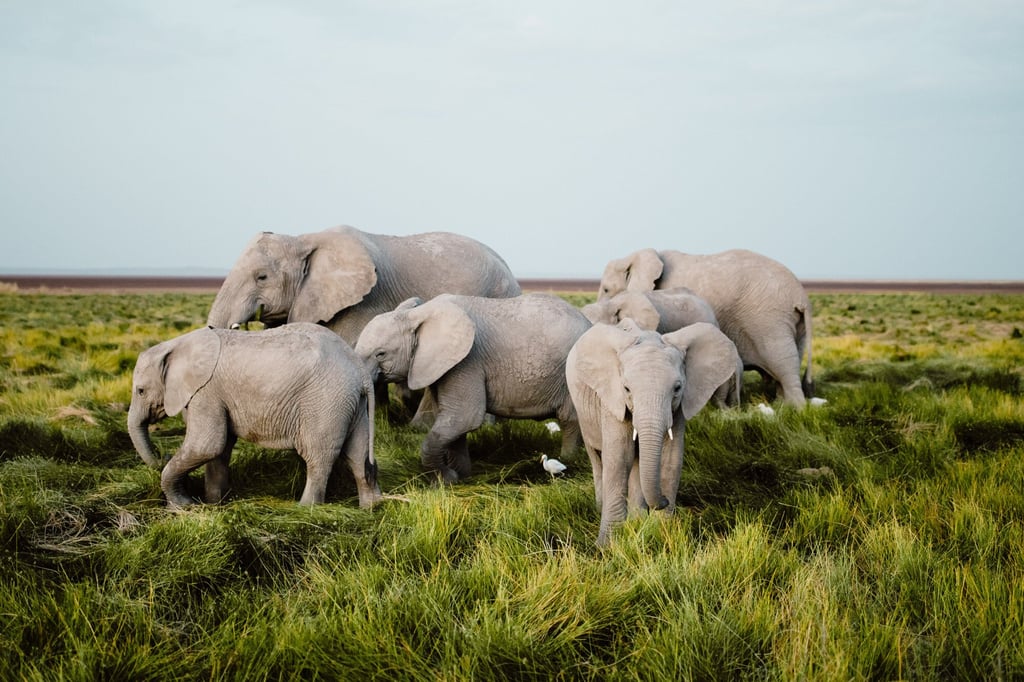
Behind her, the snowy cap of Mount Kilimanjaro drifts in and out of sight as clouds break around it, and all about are the steamy emerald-green plains of Amboseli National Park. It has been raining for months and the abundance of grass has fed both the plump-bottomed zebras to the right of Angelina and huge herds of jittery Thomson’s gazelles in the distance. It has also helped fuel a baby boom among the elephants that congregate in this part of Kenya.
African savannah elephants are endangered, so it is undeniably good news (how rare nowadays!) that a record-breaking 248 babies were born in Amboseli last year. All but eight survived infancy – impressive given that elephants are not named by conservationists until they are four years old, as too few reach adulthood. Twins are extremely rare, as mothers generally cannot produce enough milk to sustain two such hungry animals; the last recorded surviving Kenyan elephant twins were born in the 1990s, but in this group, two sets have lived past the crucial six-month mark.
Watching Angelina feed her offspring (one male and one female) is one of those perfect East African moments that draw people from the relative comfort of their home countries to live in this extraordinarily beautiful, occasionally chaotic part of the world. Cynthia Moss is one of them. The 80-year-old American conservationist is a legend in the world of elephant research and has been based in Amboseli since 1972.
“Some of the reason for this baby boom is drought,” she says, after I drive up to meet her at her tented camp. “Whenever there is a drought, females stop cycling – in 2017, there was a terrible drought, and so in 2018 they all started mating and breeding again. Elephants are pregnant for nearly two years, which is partly why there have been so many babies born in the last year – it has been wonderful for me to see, particularly knowing what was going on in the human world at the same time. I call it the elephant effect.”