Advertisement
From Venice, pioneer of quarantine against disease, to Seville and Marseilles, former isolation hospitals – lazarettos – to visit and even stay in
- Venice built the world’s first isolation hospital, in 1423, and another, on the tiny island of Lazzaretto Nuovo; is now a museum
- A former isolation hospital in Seville, Spain, houses a regional parliament, while one, in Marseilles, France, has been turned into a five-star hotel
6-MIN READ6-MIN

To arrive in Venice by train is to enter through the city’s back door, although the exit from the station’s drab interior straight onto a Grand Canal bustling with waterborne traffic and lined with palazzi in ochre, cream and pink is a coup de théâtre that few other destinations can match.
But Venice was always meant to be entered by ship, looking as it did outward down the Adriatic to its coastal colonies in what are now Croatia, Albania and Greece, and beyond to the vast Mediterranean trading network that was the source of its wealth.
From the 15th century, its front door was the tiny island of Lazzaretto Nuovo, where ships arriving from the East were required to unload their cargoes and crew.
Advertisement
If seafaring brought profits it also brought the plague, which in successive waves from the 6th century killed tens of millions across Europe. Although Venice had already built the world’s first lazaretto, or isolation hospital, in 1423, the facility that covered most of Lazzaretto Nuovo from 1468 was intended to prevent plague from reaching the city in the first place. In terms of keeping the disease of the day out, it was 15th century Venice’s equivalent of Hong Kong’s Penny’s Bay Quarantine Centre.
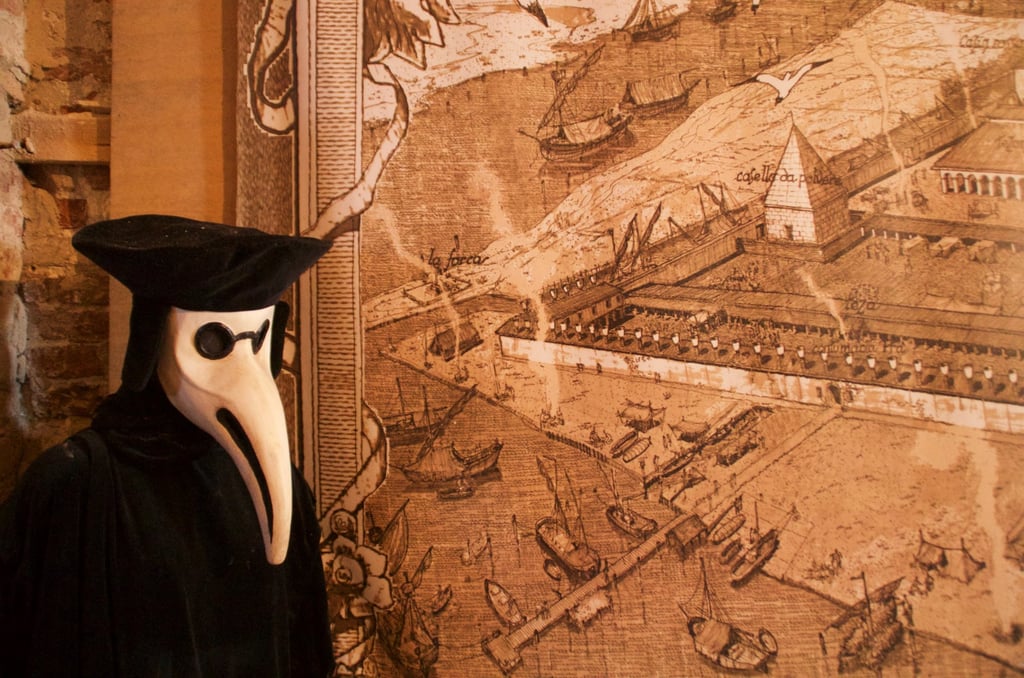
The city was the pioneer of a coordinated response to infectious disease, including disinfection, social distancing and the use of personal protective equipment (PPE), in which much of our current efforts against Covid-19 have their origins. It was the source of the word “quarantine” – the 40 days, or quaranta giorni, of compulsory isolation at the Lazzaretto Nuovo.
Advertisement
Across Europe, the increasing need for Covid-19 documentation to enter cafes, restaurants or museums is an echo of these early efforts, and assorted plague-related monuments including other lazarettos now draw crowds despite the original desire to keep people apart.
Advertisement
Select Voice
Select Speed
1.00x