Destinations knownA model for sustainable tourism development, the 400km Trans Bhutan Trail boasts impressive eco-credentials in an already carbon-negative country
- The historic route across Bhutan will officially open in March 2022, some 60 years after it fell into disuse
- Among its eco guidelines are that no single-use plastics are allowed, reusable water bottles will be supplied, and a tree will be planted for every visitor

From Haa to Trashigang, the width of a country that measures its success in gross national happiness can now be counted in footsteps.
Well, almost. The Trans Bhutan Trail – a model for sustainable tourism development – doesn’t quite touch the Tibetan border to the west or the Arunachal Pradesh (India) border to the east.
The name Trans Bhutan Trail refers to both the 400km (250 mile) historical route across the small Himalayan kingdom and the organisation (TBT) responsible for its restoration, some 60 years after the trail fell into disuse.
The route will officially reopen in March 2022 following four years of repair work, much of which has been undertaken by 900 or so workers who had been furloughed by the Covid-19 pandemic, according to TBT, an offshoot of the Bhutan Canada Foundation.
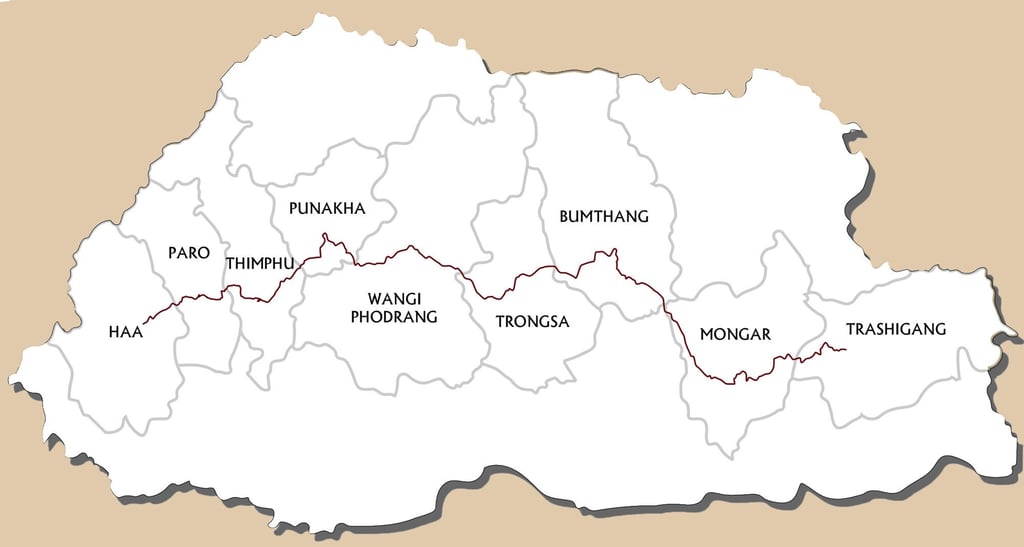
Now that 18 major bridges have been rebuilt and 10,000 stairs replaced, the trail again connects nine dzongkhags (districts), 28 gewogs (local governments), two municipalities and a national park. It winds through virgin forest, protected areas and wildlife corridors. The views of soaring Himalayan peaks are “panoramic” and the trail passes at least 400 historic and cultural sites.