What living in China’s old expat bubbles was like, and how Western travellers – ‘influencers’ of their time – often mocked it
- Early 20th century foreign enclaves offered luxury far removed from ‘China proper’, and Westerners who passed through were well looked after
- That didn’t prevent some of those hosts from being documented with various degrees of disdain and mockery by writers travelling the country

“To travel in China is easy,” wrote British journalist Edwin Dingle, in Across China on Foot (1911). He dismissed the Huangpu River at Shanghai as “looking like the Thames” and compared the Bund to London’s Embankment. Modern steamers up the Yangtze River to Yichang were “as comfortable as any river steamers in the world”, he wrote disparagingly. He was opposed to familiarity, and in search of China proper.
It was the tidy little foreign enclaves in China’s treaty ports, where the Qing dynasty unwillingly suffered foreigners to reside and trade, that made travel as easy as Dingle suggested. And even he accepted the hospitality offered to him in Hankou, Yichang and Chongqing as he made his way up the Yangtze on ever smaller boats.
Forced on the Qing by successive military and diplomatic defeats from 1842, these foreign communities sprang up in cities along the coast, then up the great trading artery of the Yangtze River, and eventually in remote border locations where it was imagined, usually wrongly, that there was potential for profitable trade.
In larger settlements, foreign residents by their own choice and sometimes for their own safety kept to little concessions that contained the only two-storey buildings, paved roads and proper sanitation in the cities onto which they were grafted.
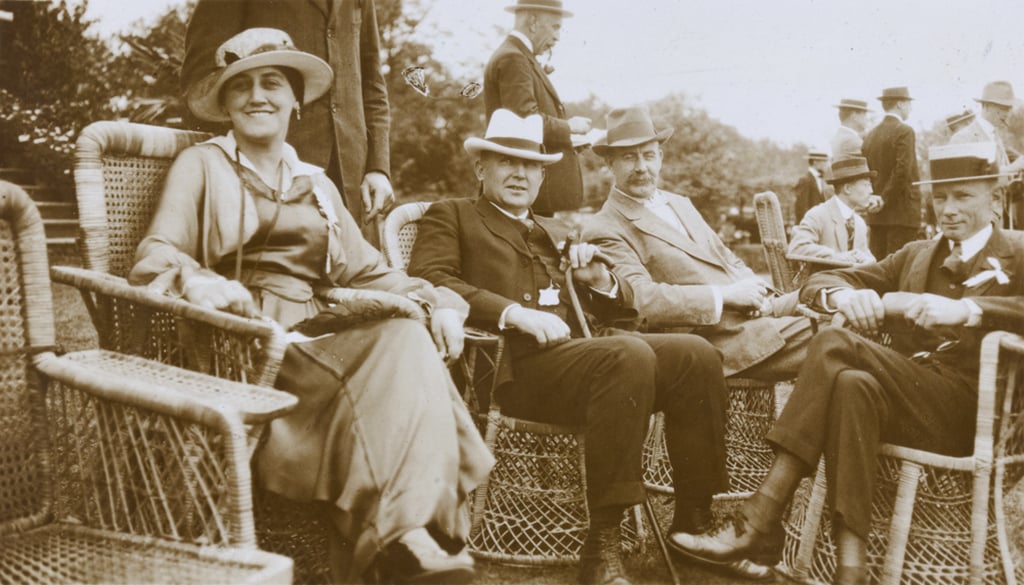
In lesser locations, the foreign population might consist of little more than a mutually suspicious consul or two, the staff of the foreign-run customs service, post office and salt gabelle (a tax-collection office), the representatives of Hong Kong trading houses or British American Tobacco, and a handful of missionaries.
Even then tiffin was served, people dressed for dinner and each enclave, however tiny, might appear as an oasis to a Westerner emerging from what he viewed as the surrounding desert of the alien.