Is Bruce Lee really the ‘father of mixed martial arts’? UFC president Dana White thinks so – but is he right?

With his synthesis of different fighting styles, Lee can perhaps be credited with having invented MMA – but there are earlier fight styles which also feature a mix of disciplines
Bruce Lee is famous for many things. For his innovative kung fu films like Enter the Dragon and Fist of Fury, for his philosophy – collected in the book Tao of Jeet Kune Do – that advises people to “be water”, for becoming the first global Asian movie star, and for his tragic passing at the age of just 33.
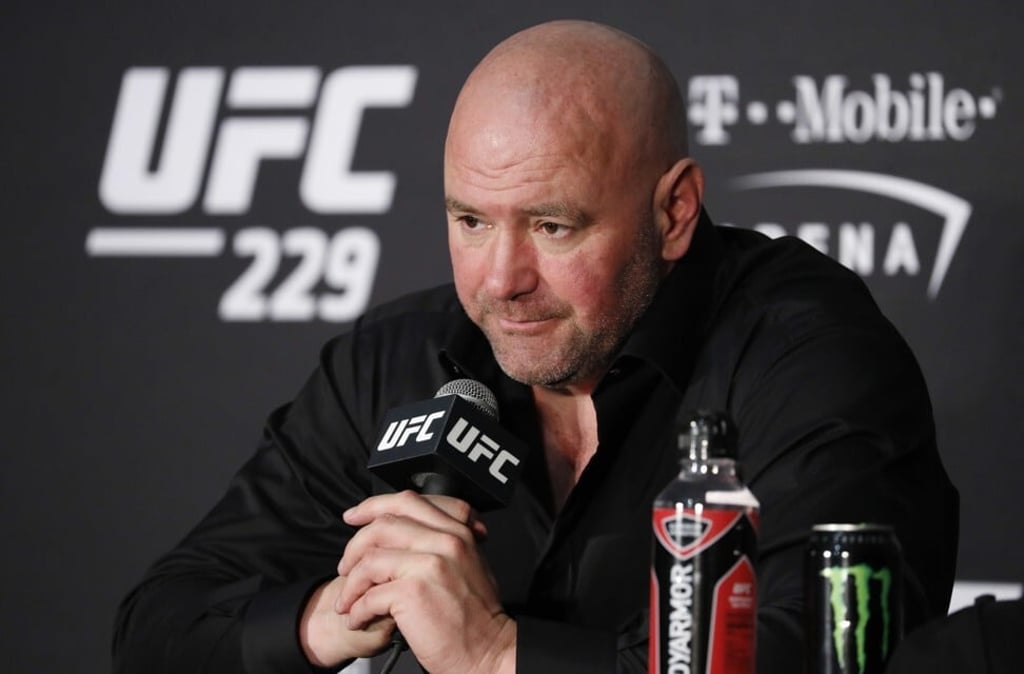
With his synthesis of different fighting styles it is arguable that Bruce Lee deserves to be recognised for inventing mixed martial arts (MMA). Not for nothing did Dana White, president of Ultimate Fighting Championship (UFC), the largest MMA promotion company in the world, once declare that Bruce Lee was the “father of mixed martial arts”.
Explaining what is required to excel at MMA, White said: “You’ve got to cross-train in many different systems … If you look at the way Bruce Lee trained, the way he fought, and many of the things he wrote, he said the perfect style was no style. You take a little something from everything. You take the good things from every different discipline, use what works, and you throw the rest away.”
White was correct in saying that Lee’s philosophy was based around no fixed style. It was in Tao of Jeet Kune Do that Lee stated: “There are styles that favour straight lines, then there are styles that favour curved lines and circles. Styles that cling to one partial aspect of combat are in bondage. Jeet Kune Do is a technique for acquiring liberty … Jeet Kune Do favours formlessness so that it can assume all forms … [and] uses any technique or means which serves its end. In this art, efficiency is anything that scores.”
This thinking fits in perfectly with MMA’s ethos of utilising different styles of fighting rather than, say, just judo or boxing. In Tao of Jeet Kune Do Lee goes on to explain the “weapons” that practitioners can use, which include various grappling holds as well as punches and kicks – not to mention “mental cultivation” such as Zen Buddhism and Taoism, and nutrition. His discussion of grappling was particularly apt given many MMA fights end up on the mat with competitors attempting to enforce the kind of leg and arm manipulations Lee wrote about before his death in 1973.
Yet although Lee can be considered a spiritual father of MMA, and he certainly popularised the idea of mixing different styles of martial arts in the West, there are other precursors that predate the Little Dragon himself.
One can potentially go as far back as the ancient Olympic Games and the sport of pankration to find the original MMA. Created later than both wrestling and boxing, which were also ancient Olympic events, pankration was a form of competition with few rules. The aim was to make your opponent submit and all punches, kicks, grappling holds and chokes were legal. Only eye gouging and biting were outlawed. The ferocity of pankration was legendary, to the extent that stories survive of one or even both competitors dying during bouts.
Closer to the modern day, Vale Tudo, meaning “anything goes”, is a Brazilian contact sport that developed in the early 20th century and has established links with UFC. Vale Tudo emphasised competition between various forms of martial arts such as Brazilian jiu-jitsu, luta livre and capoeira.