Why Pachinko star Jin Ha is an activist first, actor second – he fought being ‘othered’, wore a pink women’s hanbok on the red carpet and calls Harry Belafonte a role model

- Grammy-nominated for Jesus Christ Superstar and the first Asian-American to play King George in Hamilton, the Korean-American actor is also an accomplished singer, guitarist, and didgeridoo player
- He’s already starred in HBO’s Love Life and with Clive Owen on Broadway – his role as Solomon Baek in Apple TV+’s new wartime epic sees him speaking three languages
Proof the influence of K-drama is here to stay? Apple TV+’s new American drama series Pachinko, a Korean wartime epic adapted from Min Jin-lee’s bestselling novel of the same name, and produced in three languages – Korean, Japanese, and English – to ensure maximum cross-border crossover.
It follows two main characters – Sunja and her grandson Solomon Baek – who are forced to leave their homeland in the 1930s and again in 1989. As Baek, actor Jin Ha portrays a Korean immigrant attempting to fit into a new life whilst attempting to stay true to his roots. In fact, Ha could relate to the storyline more than you might think, since it bears a remarkable resemblance to his own. Here’s what we know about the actor.
I would always try to look at the potential project through the lens of, ‘Is this helping? Does this help my community? Does this help storytelling about faces and bodies that look like mine?’
1. Acting became his way to fit in
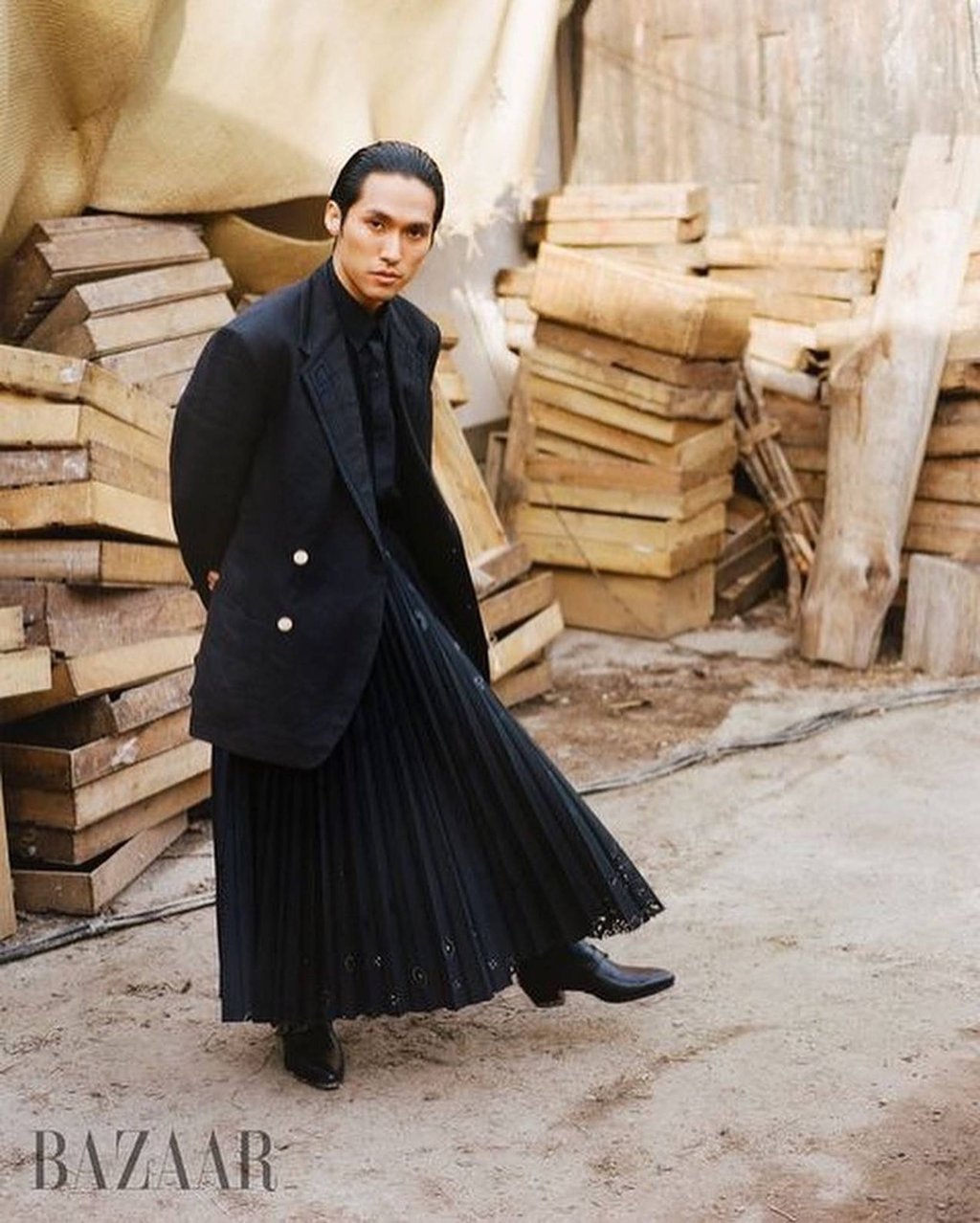
Ha shares a similarly international background to Baek. Born in Seoul, South Korea, when he was three, his family moved to Hong Kong, and then at eight, they immigrated to the US. Each time he arrived in a new place, he tried hard to fall in line with society. Surrounded by “white upper-middle-class students” in the US, he tried hard to dress like them, ran for student body president, and played football and baseball. But he never managed to escape the feeling of being “othered”, as he put it in an interview with NBC News.
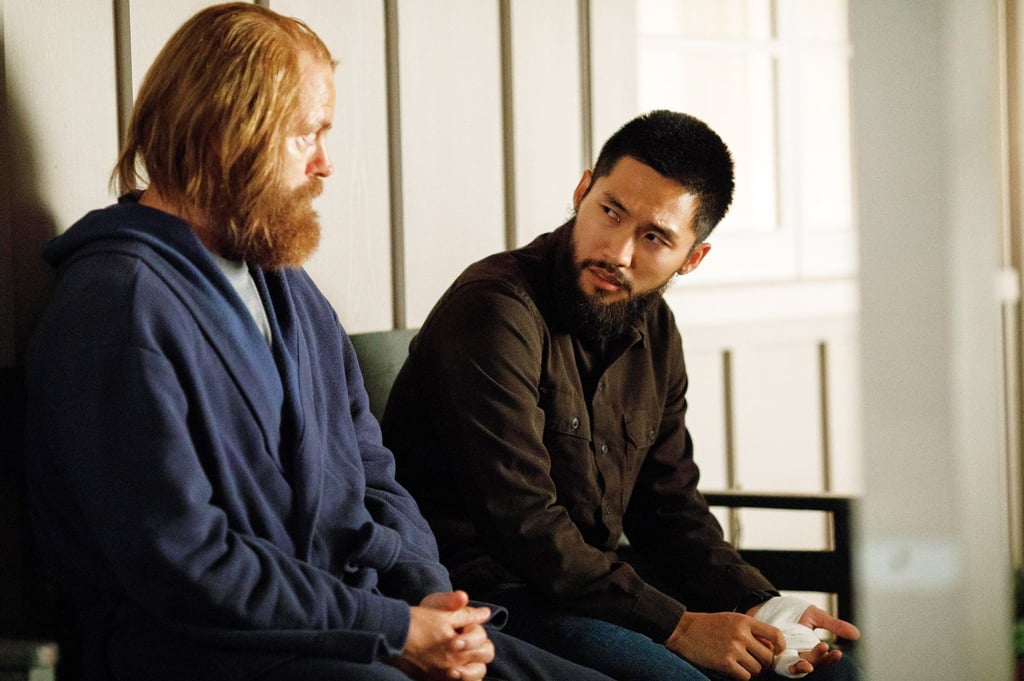
He nevertheless found joy in acting and singing throughout his school years.
“I had to very frequently find a new anchor in a new community or rediscover my identity or place in a community because I had to move a lot,” he explained in another interview with The Last Magazine. “Perhaps performance for me felt like a staple, where I could drop the responsibility of figuring out where I was in that social space because I was told who I had to become for a role.”