Fashion labels up their eco vibe to keep millennials buying

Retailers like J. Crew, Levi Strauss, H&M, Marks and Spencer are focusing on producing sustainable apparel to appeal to 22- to 37-year-olds
For years now, we’ve watched the old guard of the packaged-food industry get pummelled as consumers look to fill their grocery carts with trendier items bearing feel-good labels such as “natural” or “sustainably sourced”.
The beauty business, too, has had to adapt to this changing ethos; hence the proliferation of skincare products billed “eco-conscious” or “organic”.
So we can’t help but wonder: is the apparel industry next?
Several prominent clothing retailers are revamping their manufacturing and tailoring their brand images for just this kind of change. J. Crew Group, for example, recently debuted its “Eco Jean”, a selection of denim it boasts is made from “sustainably dyed organic Italian cotton”.
Earlier this year, Levi Strauss & Co. announced a new initiative that eliminates many chemicals from its jeans manufacturing process and reduces textile waste. In Europe, luxury group Kering, Swedish fast-fashion chain Hennes & Mauritz (H&M), and British retailer Marks & Spencer Group have all undertaken environmental and social projects. These range from a library of 3,000 sustainable fabrics that Kering’s luxury brands can draw on, to recycling more than 30 million garments over the past 10 years at M&S stores.
These brands have very good reasons to take these steps and highlight them in their messaging to customers.
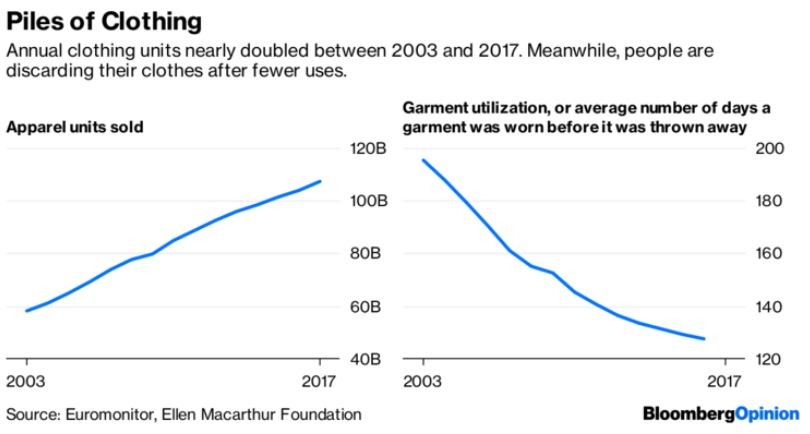
The environmental concerns around clothing manufacturing are more acute than ever before. Nearly twice as much apparel was sold in 2017 than in 2003. Some of that reflects growing spending power of consumers in emerging economies. But it also reflects the rise of fast fashion, which has trained shoppers to think differently about the shelf life of the goods in their wardrobe. People are tiring of their wardrobes more quickly, with global clothing utilisation – or the number of times a garment is worn – declining significantly in recent years.
Meanwhile, Helga Vanthournout, a sustainability expert at McKinsey & Co., points out that very little of our clothing is recycled, in part because it can be a technical challenge to do so for blended fabrics such as a cotton-polyester.