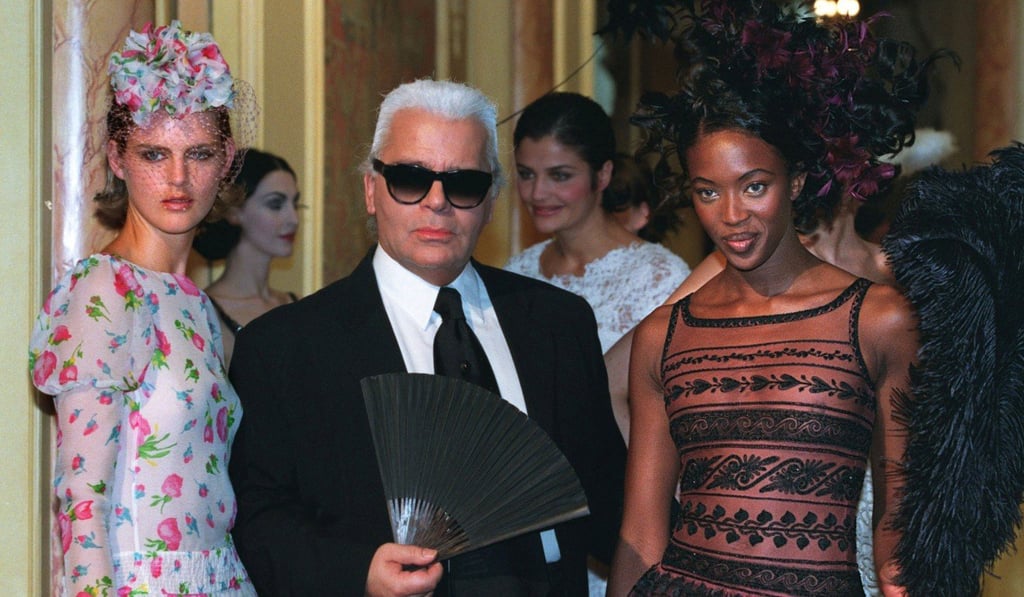
Karl Lagerfeld: the supermodels, the extremes and the reinvention of Chanel

German designer’s irreverence kept him a step ahead of everyone else, as he pursued the new and was totally absorbed by pop culture
When Karl Lagerfeld arrived at Chanel in 1983 it was a dormant couture label worn by bourgeois Parisian housewives, but the “Kaiser” was to transform it into a superbrand. He was a fashion genius who knew how to get under the skin of a label, identifying its personality and working his magic on Patou and Chloe in the 1960s and 70s, and the Italian luxury fur company Fendi where he spent an astounding 50 years. However, it is his work at Chanel for which he will always be remembered.
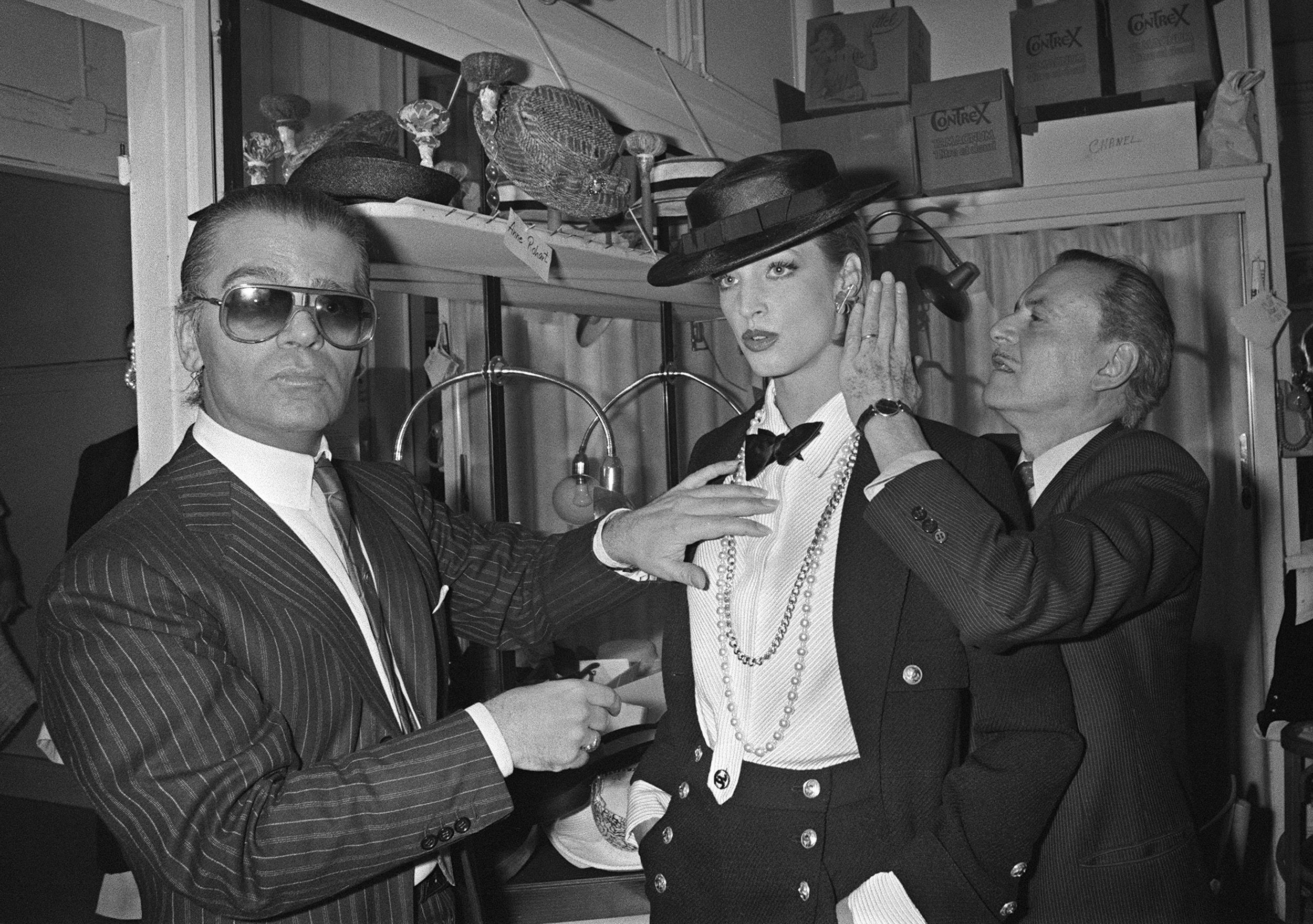
At 3pm on January 25, 1983, a handful of guests were invited to 31 Rue Cambon, where Coco Chanel used to stage her shows until her death in 1971, to witness a historic moment. Already a leading figure in ready-to-wear at the peak of his creative powers, Karl Lagerfeld was to show his first haute couture collection for what was regarded at the time as a house with a fading legacy. He chose to restyle Chanel’s 1939 collection, reinventing some of her classic tropes like the braid-edged tweed two-piece, the ropes of pearls, and the little black dresses: a look that the old guard had always loved but which from that time onwards 25-year-olds would be clamouring to wear.
This started the reinvention of Chanel for the modern woman. The timing was perfect, coinciding with the rise of the female executive and power dressing. Chanel became the go-to brand for brightly coloured tweed dresses and gilt-button jackets layered with chains and pearls, modelled in the mid-80s by supermodels Ines de la Fressange and Jerry Hall. The tweeds, the double CC logo, the quilt bags slung on gold chains all became icons of the era. However, it was images of de la Fressange casually wearing her Chanel jacket with jeans that transformed the fortunes of the house. It was this sense of irreverence that Lagerfeld and de la Fressange promulgated that made the brand so appealing.