Who do you think will take over Karl Lagerfeld's role as fashion king?

Karl Lagerfeld’s death leaves questions over where the industry is headed as most creative directors are middle-aged with only a handful younger than 40
Karl Lagerfeld’s passing has left two of the most influential fashion houses, Chanel and Fendi, with a creative vacuum. Lagerfeld spearheaded Chanel for more than 30 years and Fendi for 50 years.
Lagerfeld’s long-time deputy, Virginie Viard, is leading Chanel to keep his legacy intact. Fendi has promoted the founder’s granddaughter, Silvia Venturini Fendi, to take the helm of the entire line. She previously served as creative director of accessories and menswear.
Lagerfeld’s death also leaves a significant question for the industry: as designers of his generation age, how will fashion’s creative future unfold?
The fashion trade is having its most sanguine moment. Polymathic creative directors, perched atop time-honoured houses, are middle-aged: Maria Grazia Chiuri (55) at Dior, Nicolas Ghesquière (47) at Louis Vuitton, Hedi Slimane (50) at Celine, Riccardo Tisci (44) at Burberry and Clare Waight Keller (48) of Givenchy. A handful are younger than 40, like Anthony Vaccarello (37) at Saint Laurent and Louis Vuitton’s menswear designer, Virgil Abloh (39).
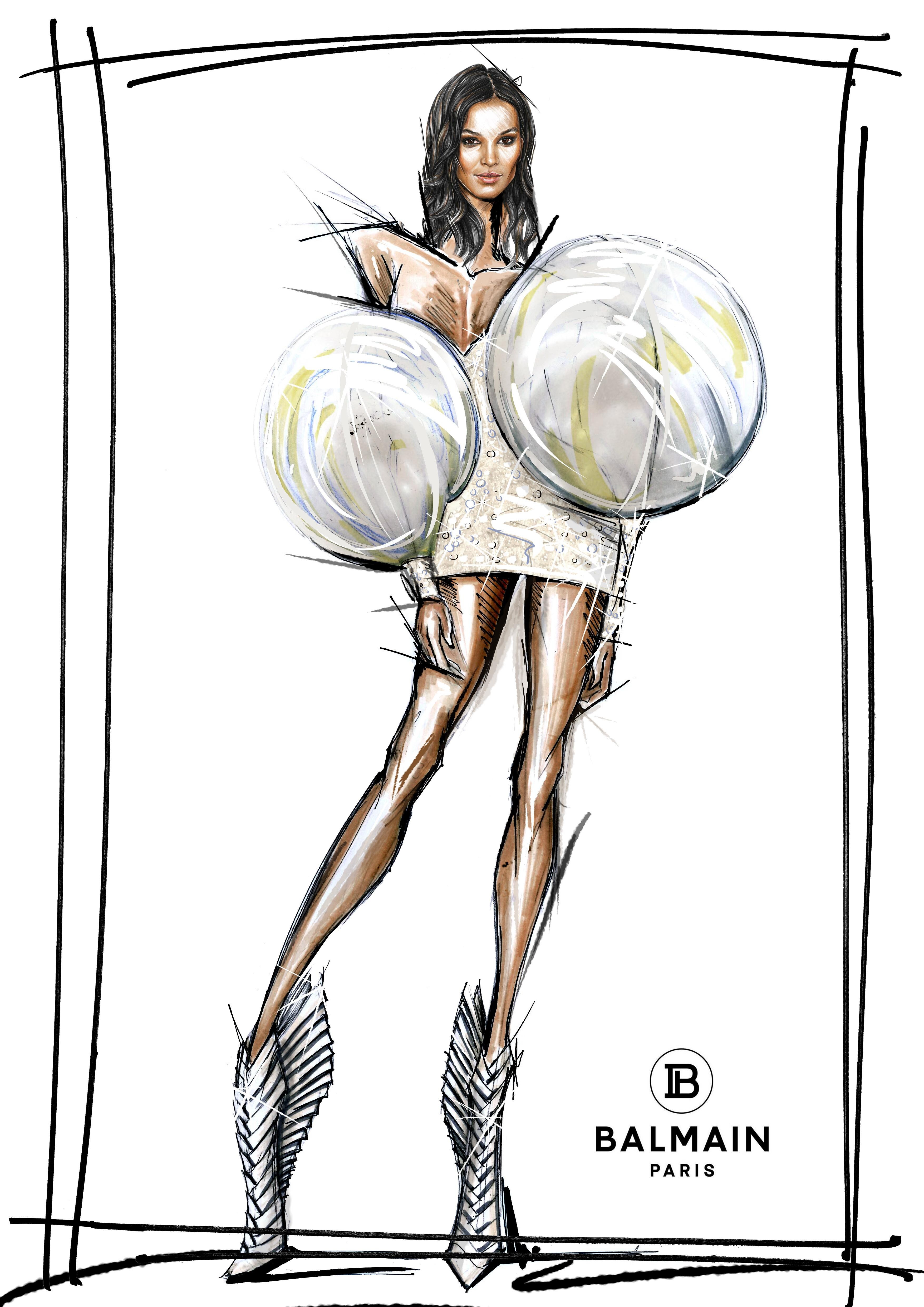
Some millennial arrivistes are disrupting the industry with their digitalised, untameable creativity.
Olivier Rousteing, who turned 33 this year, was appointed creative director of Balmain in 2011. He was only 25, and the second youngest to lead a French house. Yves Saint Laurent took the helm at Christian Dior at 21. Since Rousteing took over, Balmain – once reserved for fashion stylists and insiders – has been transformed into one of the most sought-after labels. In 2017, Balmain’s sales rose 13.2 per cent to €154 million (HK$1.37 billion), from €136 million in 2016. This is astronomical compared with €30.4 million in 2012, the first year after Rousteing took full creative direction.
An adopted child and openly homosexual, Rousteing is transparent about his upbringing which he translates into his collections – streamlined silhouettes, exaggerated shoulders, cinched waists, power boots – to empower women. Rousteing, who is of mixed race, introduced diversity to the French house, including infusing design elements from the East. Asia is a major source of revenue for the brand.
His creations speak volumes and are coveted by A-listers Kim Kardashian, Kendall Jenner, Sophia Loren and Brigitte Bardot. They are the designer’s personal confidants, or as he calls it – the Balmain army.
The young rebel is also a recognised digital influencer. He has amassed 5 million followers on Instagram, sharing everything from pictures with celebrities to selfies, as well as nude photography with the hashtag “#notafraid”, causing a considerable stir.
“I’m young, I’m black, I’m a designer, I have famous friends, but I also eat hamburgers and have both feet on the ground,” Rousteing once said in an interview. “It’s real life and reality always excites people.”