Advertisement
Advertisement
Advertisement
Fashion News

Style Edit: Why Louis Vuitton’s Monogram is one of luxury’s most famous motifs

STORYSCMP Style Reporter
The story behind the now famous Louis Vuitton Monogram that has adorned the luxury brand’s luggage for 130 years. Photo: Handout
Style Edit

Designed to defeat counterfeiters 130 years ago, the motif has become one of the most recognisable in all of fashion, seen on everyone from Audrey Hepburn to Zendaya
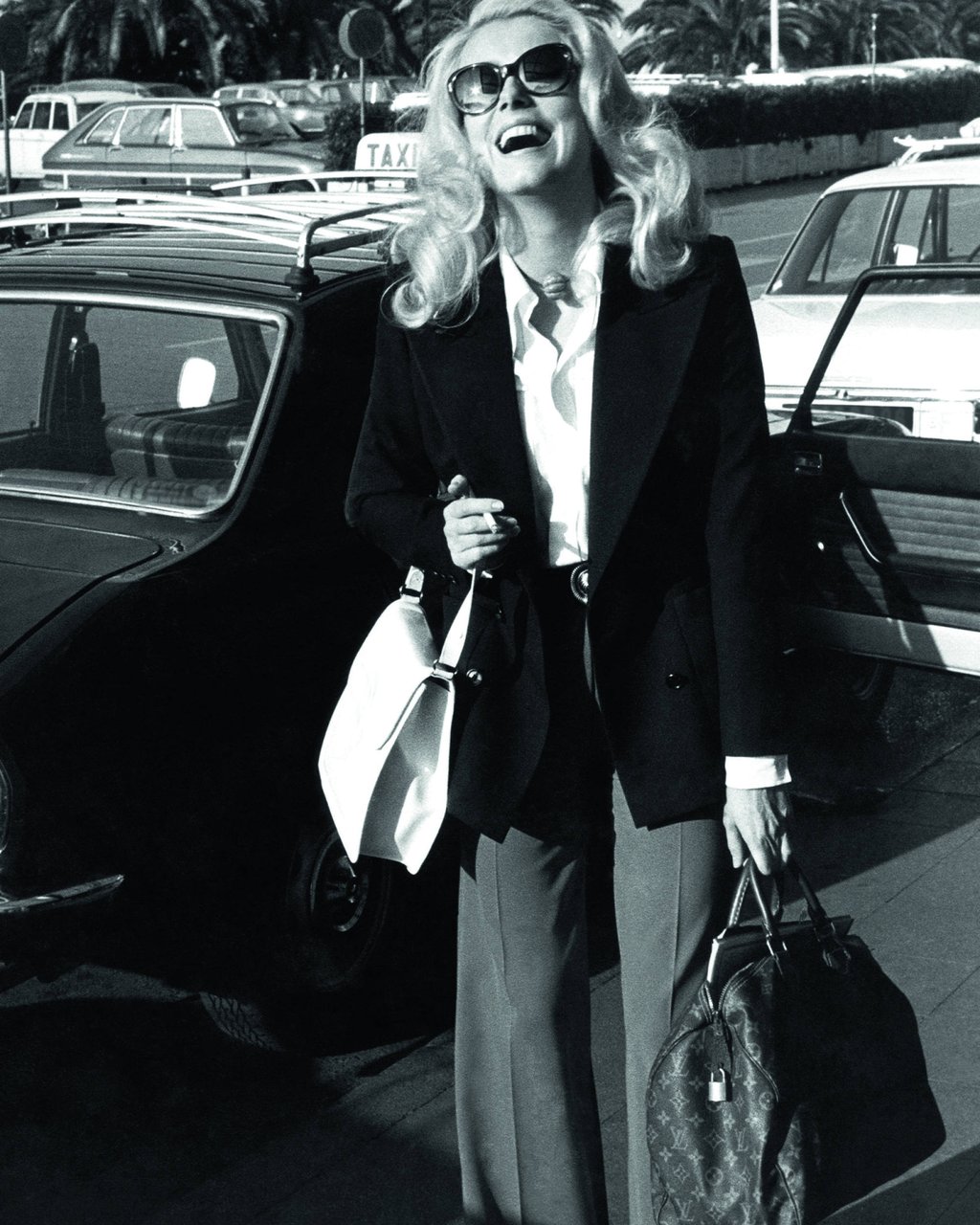
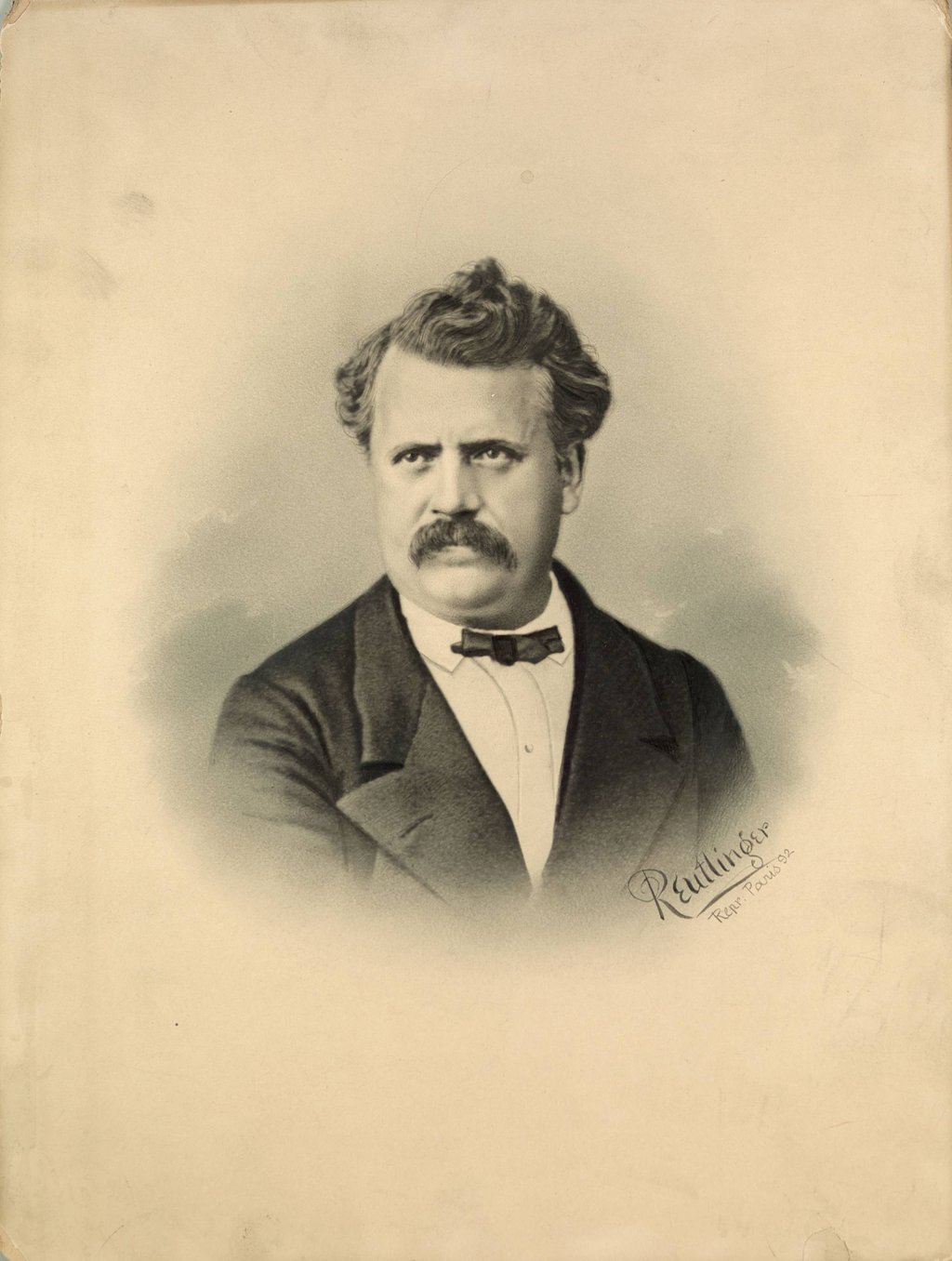
The Louis Vuitton Monogram hardly needs an introduction. For decades, the LV initials and floral motifs have been synonymous with luxury, spotted on the likes of Audrey Hepburn and Catherine Deneuve in the 1960s, and on A-listers of today like Zendaya and Lisa from Blackpink. As the famous pattern celebrates 130 years in 2026, here’s a quick history of one of fashion’s longest lasting and most iconic motifs.
Actress Catherine Deneuve with a Louis Vuitton bag. Photo: Handout
Louis Vuitton was already a celebrated craftsman with years of experience and a client list that included France’s elite, among them Empress Eugénie de Montijo, when he launched his eponymous brand in Paris in 1854. The timing couldn’t have been more perfect. Steamships and rail travel were transforming the world, ushering in a new era of exploration, and travellers needed sturdy, well-made luggage.
Advertisement
Louis Vuitton launched the brand, focusing at first on sturdy trunks for the then nascent tourism industry. Photo: Handout

More than a master of his craft, Vuitton was an innovative thinker who caught on to the fact that travellers faced one persistent inconvenience – their dome-topped trunks. Besides wasting space, the design meant that trunks could roll around endlessly if they toppled over. In 1858, Vuitton introduced a flat-topped trunk made from lightweight, durable grey Trianon canvas. It looked great and packed neatly. Demand soared – but imitations soon followed.
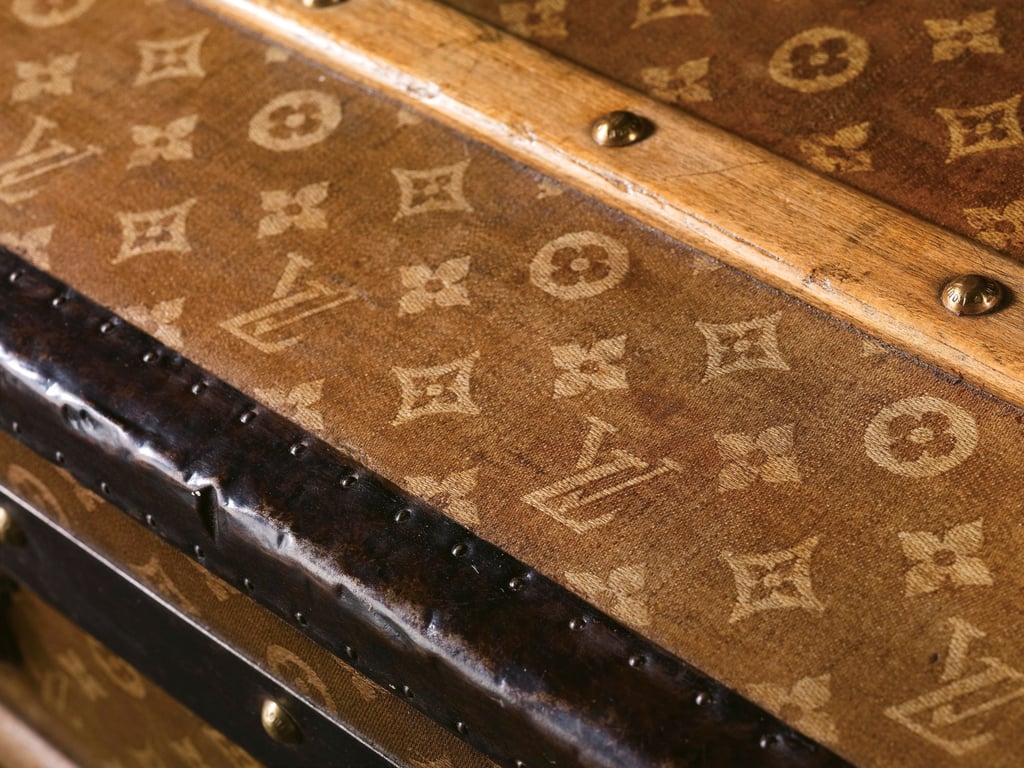
Detail of a Louis Vuitton trunk from 1897 showing the famous Monogram. Photo: Handout

To combat fakes, Vuitton’s son Georges introduced the Monogram pattern in 1896, combining interlaced LV initials with stylised flowers and quatrefoils inspired by neo-Gothic ornamentation, Japonisme and the emerging art nouveau movement of the time. The motif immortalised his father, who died in 1892, and, once it became a registered patent, functioned as a clever brand protection strategy.
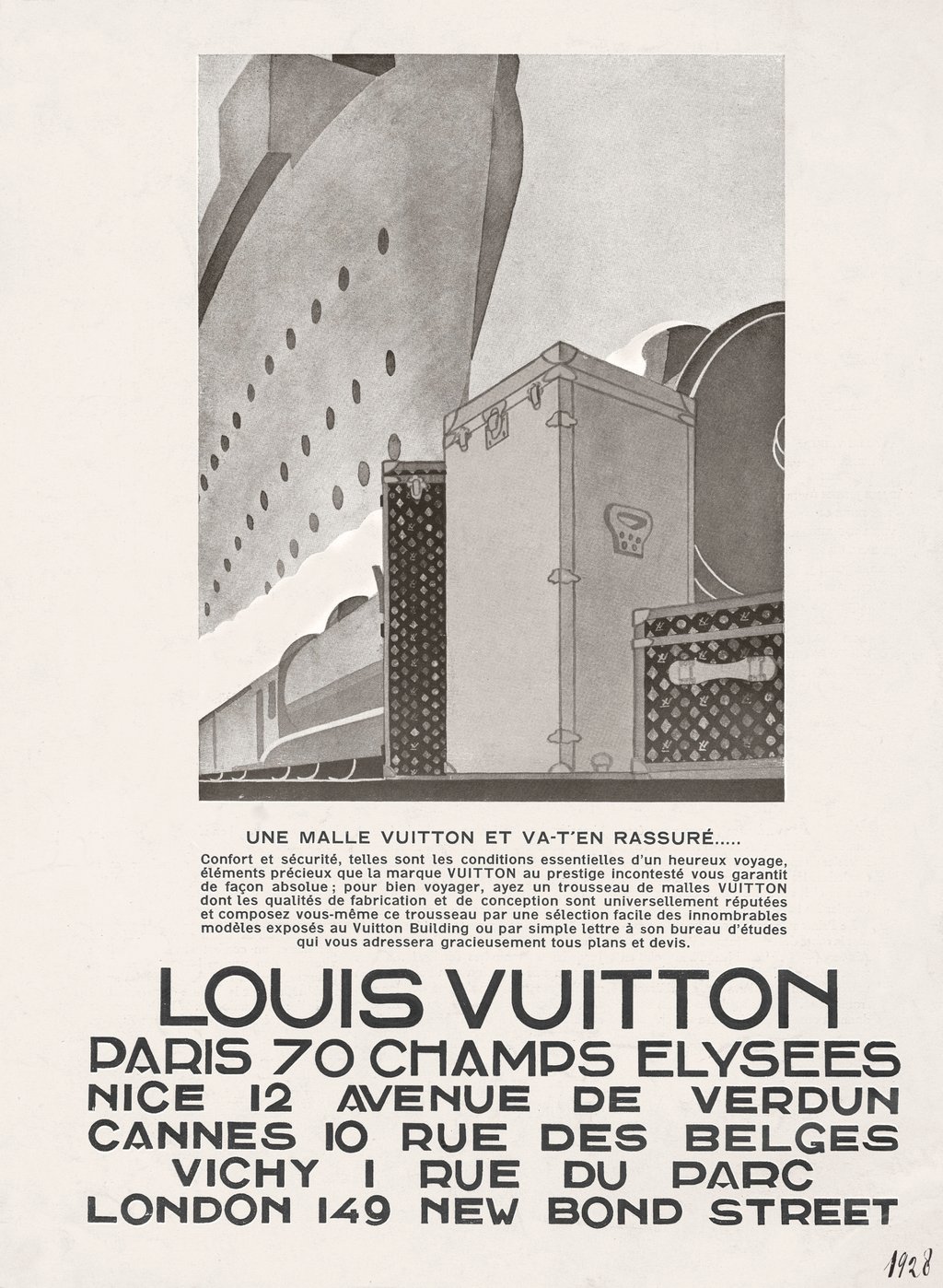
An advertisement for Louis Vuitton trunks in Vogue in 1928. Photo: Handout

Through the early 20th century, towers of Monogram trunks at railway stations and on board ocean liners became shorthands for wealth and wanderlust. In 1959, the house introduced the supple Monogram canvas, which has gone on to inspire modern-day classics like the Speedy and Keepall.
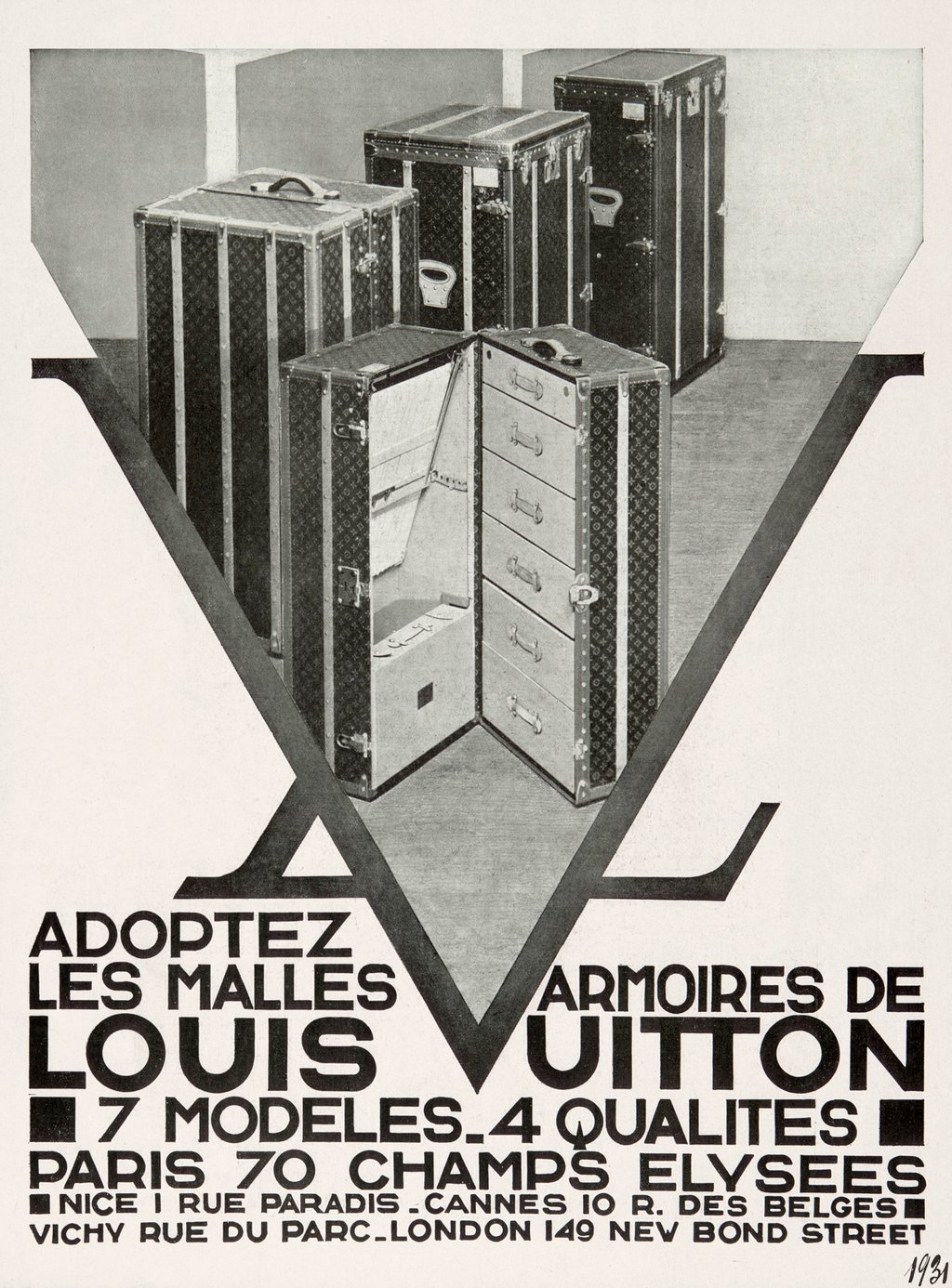
An advertisement for Louis Vuitton trunks from 1931. Photo: Handout
Select Voice
Select Speed
1.00x