Clothing for sensitive skin: why fashion brands are ditching synthetics for natural fibres

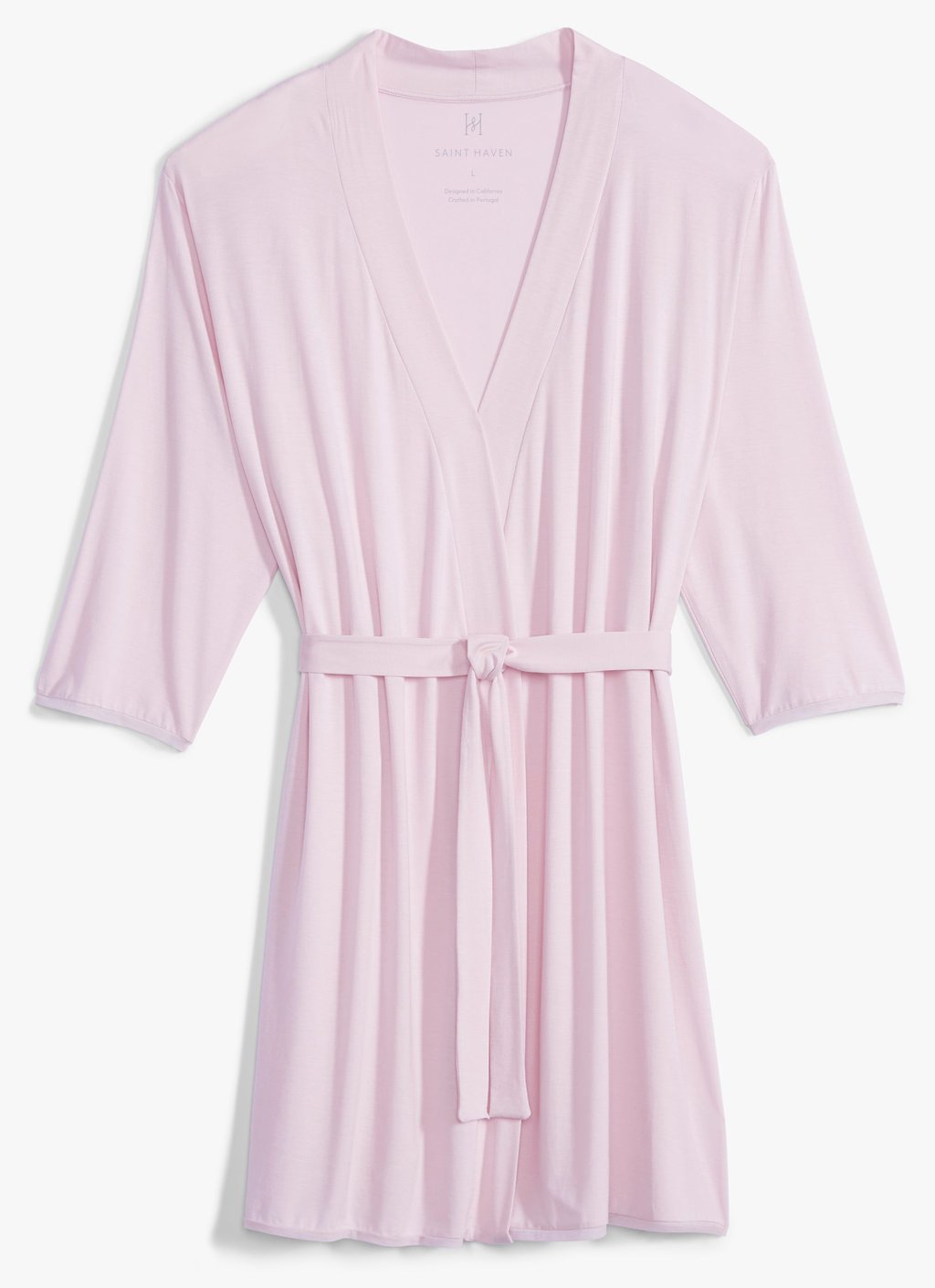
Labels like Sylva and Saint Haven are swapping polyester for seaweed and cellulose in a bid to prevent irritation – but can clothing really heal your skin?
Most people would find it hard to imagine that clothing could ever feel like the enemy. Uncomfortable? At times. Unflattering? Often. But so irritating and inflammatory that wearing one polyester top on an evening out could exacerbate a skin condition for weeks to come? Not so much – yet that’s how it is for some.
For English stylist Tallulah Harlech, who has struggled with guttate psoriasis since she was nine years old, clothes have long been a source of anxiety. Her whole-body condition is so inflammatory that she has spent over a decade of her young life on immunosuppressant medication. On top of taking these powerful drugs, she was only allowed to wear oversized cotton garments – and notes that the medically mandated underwear she was given by her doctor was particularly unappealing.
Given her mother is fashion legend Amanda Harlech, and she grew up in the heart of London’s style and media scene, this was a particularly difficult cross to bear, with Tallulah struggling to marry her growing love of sartorial expression with her skin’s inability to tolerate almost any material.
The result of all this angst is Sylva, a London-based brand that Tallulah Harlech launched in 2024, and one that is not only stylishly minimalist (its slim-fit dresses, leggings and tops wouldn’t look out of place in the juice bars of Los Angeles or cafes of Paris) but designed to work in harmony with the skin. This is thanks to certified natural performance materials such as cellulose, eucalyptus and seaweed. Irritants like polyester are banned – not only for skin health, but also the health of the planet.
“The beauty industry was surging forwards with all sorts of multi-step treatments and protocols for skin health, but they didn’t really go further down the body than the neck,” Harlech says. “As I had a skin condition that was across my feet, my body and face, I asked myself how I could cover my body and protect my body. How could I choose a fabrication that was more sympathetic to its largest organ: the skin?”

Beyond their anti-irritating properties, Sylva’s pieces have been designed to support the skin microbiome and its flora – something scientists are only beginning to understand. This, Harlech says, is thanks to a fabric called Pyratex SeaCell 15, developed in Spain.
It is made from a blend that includes 28 per cent SeaCell – a fibre derived from seaweed harvested in Iceland’s fiords in an environmentally sensitive way. Harlech says the material supports the skin microbiome, encouraging beneficial bacteria to thrive there.
“Extensive research has suggested that cellulose-based fibres perform differently on human skin compared with synthetics such as polyester, and in some cases even conventional cotton,” she says. “In particular, studies have explored how these materials interact with the microbiome and overall skin health.”