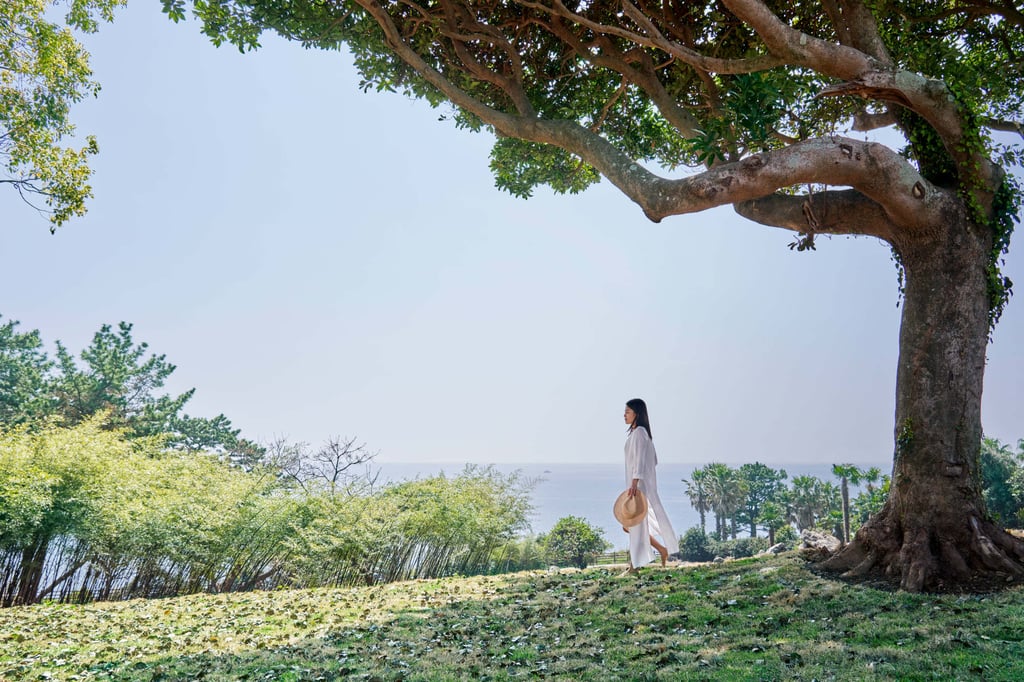
Jeju Island, beyond the K-drama: the ‘Hawaii of South Korea’ made famous by Netflix’s Squid Game is home to natural splendour, cultural heritage and traditional haenyeo female divers

- Mentioned in countless Korean drama series, Jeju Island is a geological wonderland home to cliffs, lava tubes and Hallasan, the country’s tallest mountain
- Designer Bill Bensley created the interiors at the new JW Marriott Jeju Resort & Spa, a destination stay showcasing artworks from Jeff Koons, Damien Hirst, Alexander Calder and Frank Gehry
The epicentre of the island is Hallasan, the country’s tallest mountain and a dormant volcano, while most visitors stay in urban areas on the coast like Jeju City in the north, which is popular thanks to its multistorey condos, restaurants and hotels, and smaller Seogwipo in the south.
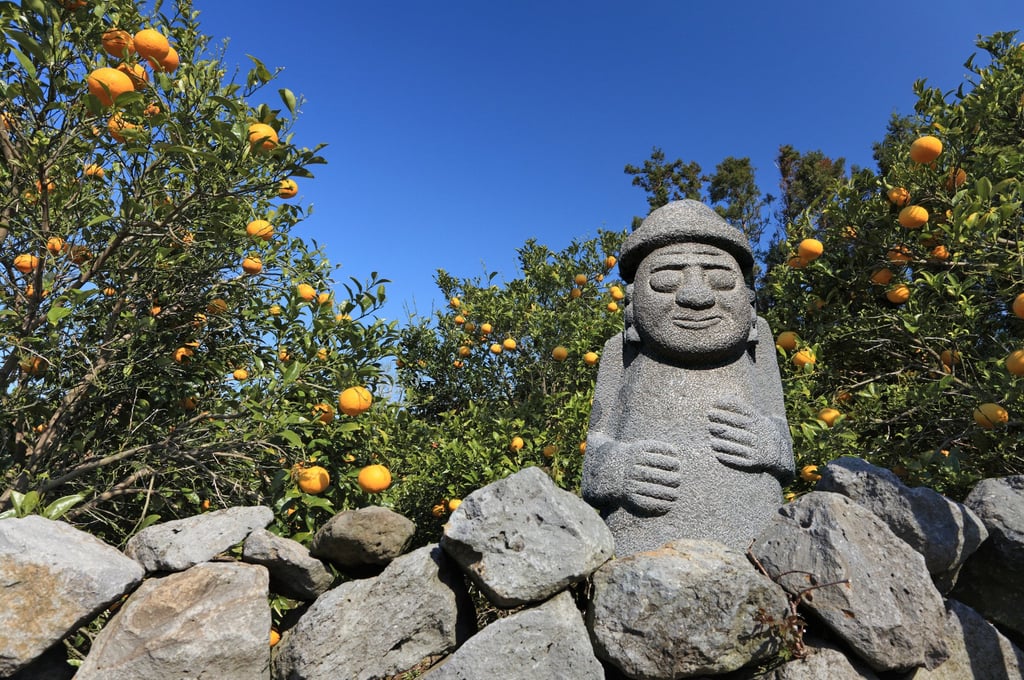
I’m hoping to explore the natural wonders that have made Jeju a Unesco World Heritage site and have opted for the latter as a quieter base. Along the way there I encounter lots of tourist traps including theme parks and dozens of museums dedicated to random interests like teddy bears and seashells. There’s no shortage of barbecue restaurants that advertise Jeju Heukdwaeji too, a local black pig known for its succulent belly meat. It all feels quite touristy until I enter the grounds of the newly opened JW Marriott Jeju Resort & Spa.
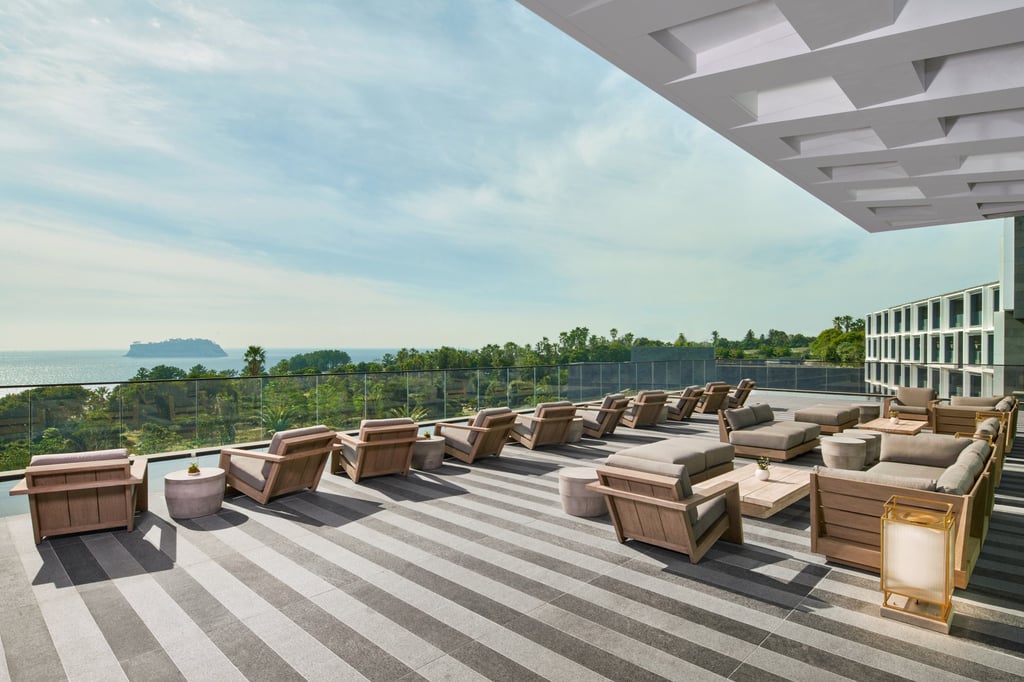
The hotel is perched atop a cliff and feels incredibly secluded while allowing for expansive views of the ocean. It’s made up of a series of sleek, minimalist buildings that house public and private areas, connected by open-air corridors and Zen-like infinity pools. Everything is made from local volcanic stone and slate, so the buildings blend into the landscape.
The 197 rooms and suites take up only a fraction of the site, although they are luxurious both in size (starting at 43 square metres) and design. Bangkok-based American designer Bill Bensley created the interiors, which boast a vibrant yellow palette inspired by the island’s canola flower fields, accented with grey and white. All the rooms are light and airy thanks to top-to-bottom glass doors which open onto balconies with views of the ocean or secluded gardens. Some rooms even have a private hot tub.
The hotel offers all the luxury amenities you would expect like a spa, indoor and outdoor pools (a traditional Korean spa complete with hot springs will open early next year), a kids’ club and six dining options. The Island Kitchen is popular not just for its over-the-top brunch but also its melt-in-your-mouth croissants. The more upmarket Flying Hog features local produce – chef de cuisine Jayden Kim forages for local greens daily and espouses a zero-waste cooking method – cooked on a traditional wood-fired grill.