Advertisement
Advertisement
Advertisement

How do you Kakadu? Crocodile cruises and safari glamping in Australia’s Northern Territory

Glamping at Cooinda Lodge, in Australia’s Northern Territory, includes an outdoor bathtub in which to wallow and enjoy the sunset. Photo: Handout
Australia

Adventurous travellers are discovering the country’s Top End, offering luxury eco-lodges, wildlife encounters and brushes with Aboriginal culture

“If you get eaten by a croc,” our guide Dennis Miller says with a grin, “I’ll try to bring back what’s left of you.”
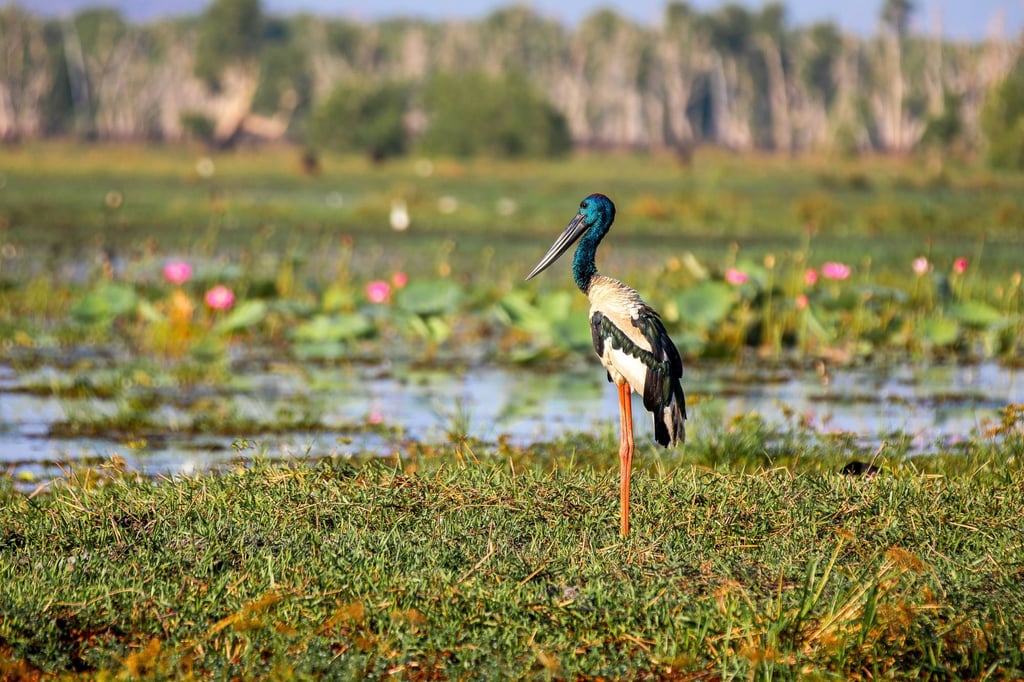
In true Aussie fashion, he is only half joking. We are, after all, cruising the Yellow Water Billabong in Kakadu National Park, home to around 10,000 crocodiles – or 10 per cent of all the crocs in the Northern Territory. In the dry season from May to October, they sun themselves on the sandy banks. But now, in early April, as the last rains of the wet season linger, they slide silently beneath the surface, practically invisible and certainly deadly to any creature unlucky enough to cross their path.
The Yellow Water Billabong, Kakadu’s most famous wetland, is home to some 10,000 crocodiles. Photo: Handout
Advertisement

As our boat slices through the flooded wetland, we scan the billabong for ripples and reptilian eyes, while Dennis brings the landscape to life with tales of its seasonal rhythms.

“Big wets [periods of high rainfall] rejuvenate the land,” he says. “More fish, more birds, more for everyone to eat.” We spot magpie geese, the sacred kingfisher and a white-bellied sea eagle scanning the water from above. Finally, a keen-eyed passenger spots a lone saltwater crocodile perched motionless on an exposed tree root, its knobbled back barely distinguishable from the bark.
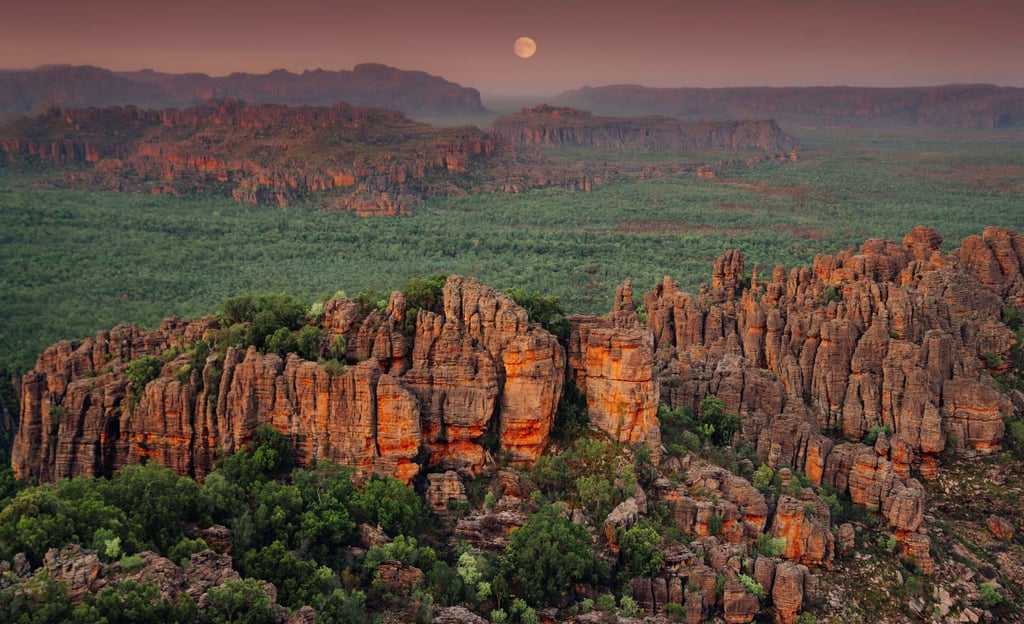
Encompassing nearly 20,000 square kilometres, Kakadu National Park enjoys Unesco World Heritage status for its blend of rich Aboriginal heritage and diverse, pristine wilderness. Photo: Tourism NT/Hello Emily

Finally laying eyes on the fearsome predator is the ideal finale to our river cruise, but in truth, our adventure has just begun. The Top End of Australia’s Northern Territory, a tropical frontier at the very northern edge of the continent, is brimming with untamed beauty.

With epic waterfalls, ancient rock escarpments and lush, wildlife-rich wetlands, the region is fast emerging as Australia’s version of a safari getaway, offering close encounters not only with crocodiles, but also wallabies, dingoes, wild horses and a staggering array of birdlife. At the heart of it all lies Kakadu National Park, a vast 20,000 square kilometre expanse that is not only Australia’s largest national park, but also a living cultural landscape.
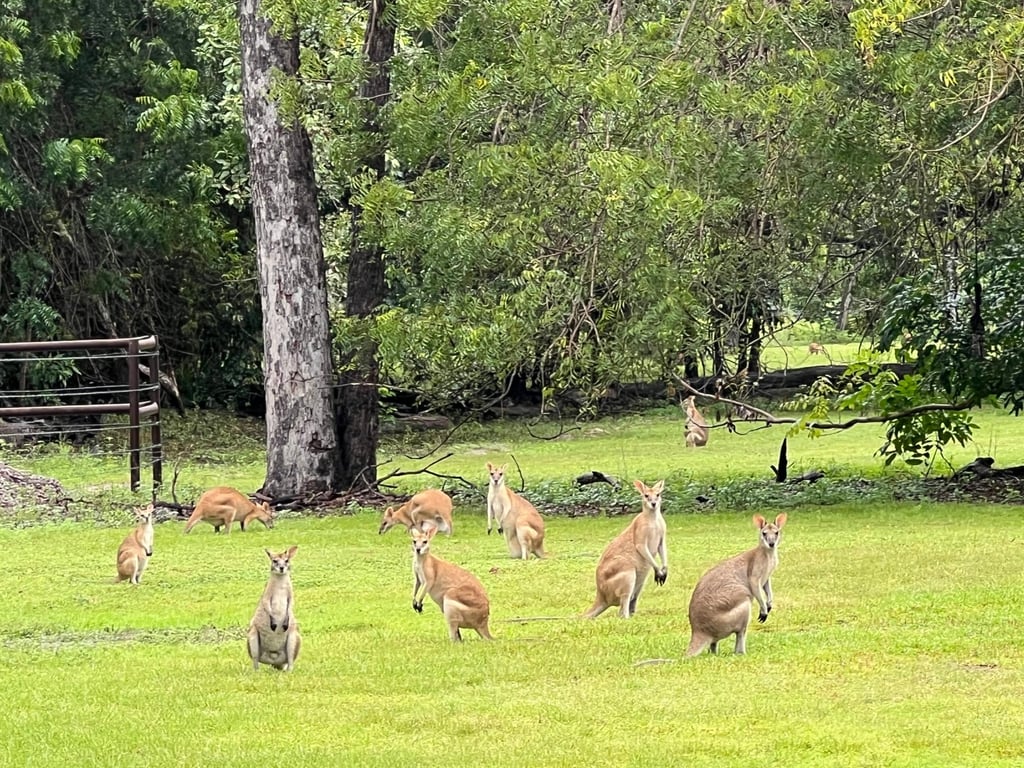
Who’s watching who? Wallabies in Kakadu National Park study the visitors. Photo: Karen Tee
Kakadu has been shaped in part by the local Aboriginal people, whose ancestors have cared for this land for 65,000 years. Today, these custodians continue practices such as cold fire burning – carefully timed, low-intensity fires that clear areas of underbrush, so reducing the chance of catastrophic wildfires – and share their deep knowledge when guiding tourists.
There is Dennis, our guide to the Yellow Water, as well as Mandy Muir, a descendant of the Murumburr people and daughter of community leader Jessie Anderson. Muir leads walking tours around the Burrungkuy (previously known as Nourlangie) rock art site. This is a natural shelter that also provided a canvas for Aboriginal rock paintings, which tell stories of creation and ancient beliefs, while also offering insights into how people used to live.
Select Voice
Choose your listening speed
Get through articles 2x faster
1.25x
250 WPM
Slow
Average
Fast
1.25x