Whether online or offline, a fake Gucci Jackie or a fake LV Pochette, the counterfeit market is still thriving: if LVMH and others don’t find a way to protect themselves, things are going to get much worse
This article is part of STYLE’s Inside Luxury column.
Fakes are as old as luxury brands themselves. Famously, the more complicated Louis Vuitton monogram was created in 1896 by Georges Vuitton (son of Louis) in an effort to trounce those who were attempting to counterfeit his father’s original bags, which had already acquired cult status.
Tools, at the Louis Vuitton workshop in France. Photo: Handout
Advertisement
Despite many of the in-person “fake markets” having now been eliminated across the world, the fake problem has nevertheless become even more threatening for many luxury brands – and not just because of e-commerce. Many luxury brands have reported falling victim to schemes in which shoppers buy legitimate products, say a handbag, in a brand store, just to return days later with a fake for a refund. Some of these fakes are almost identical to the original, so that even the store staff can’t tell them apart. The result? A legitimate customer buys the seeming original days later, not knowing that they have a fake.
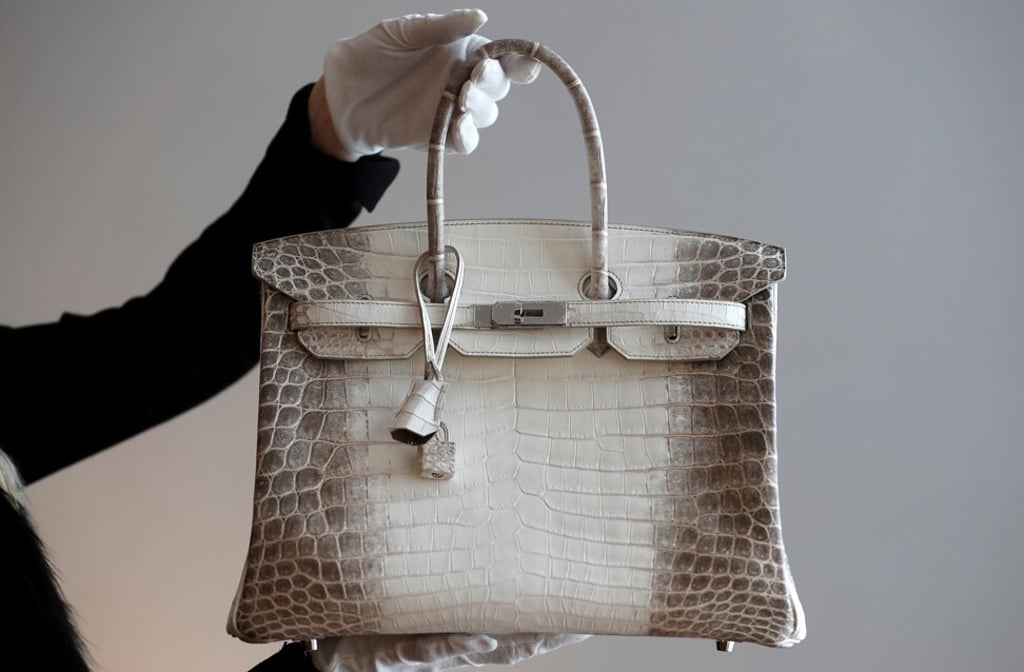
A rare Hermes handbag, the mat white Birkin Himalaya 35, is held up during an auction preview at Christie's in Paris. Photo: Reuters
With the growth of third-party retailers selling rare used bags – such as the Hermès Birkin – at enormous premiums sometimes even compared to new bags, the risk of highly sophisticated fakes entering the market only compounds. After all, the fakes offer huge profit margins to their illegal and illegitimate sellers.
Although brands like Louis Vuitton have a strict zero-tolerance policy when it comes to fakes, technologies like blockchain-based authentication services are not yet widely used. Irene Woerner, CEO of EmTruth, a pioneering blockchain solutions company, told me that “the usage of technology-based authentication solutions in the luxury industry is way behind other sectors”. As a result, brands gamble with their brand equity as more and more sales volume is done via e-commerce and resellers.
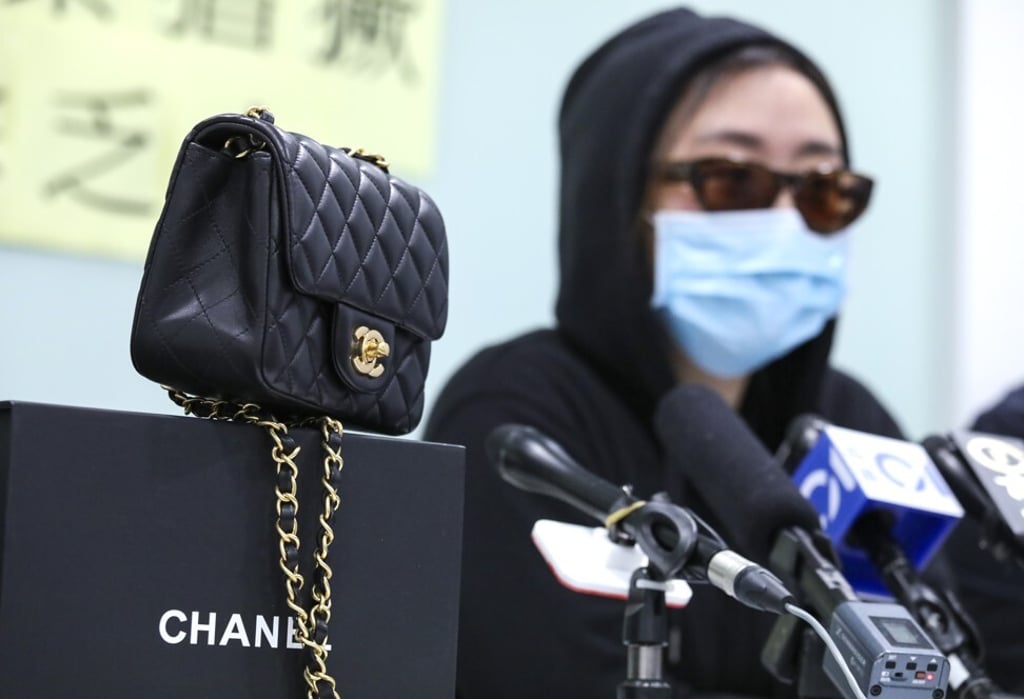
Victims of an online shopping scam via Instagram hold a press conference in Hong Kong urging law enforcement departments to crack down such scams. Photo: Nora Tam