Advertisement
Advertisement
Advertisement
Luxury

Opinion / How health, quality of life and social responsibility are changing luxury – the megatrends driving the rich to switch from Rolex to Apple Watches, and prompting brands like Gucci to embrace inclusivity

STORYDaniel Langer
Gucci and other luxury brands are all grappling with the trends of the post-pandemic era: health, quality of life and sustainability. Photo: @guccibeauty/ Instagram
Luxury goods

  • The uber-wealthy are replacing their Pateks and Rolexes with smartwatches for their health functions and ubiquity amid growing health and security concerns
  • Disruptive brands like Drunk Elephant and JK7, from Jurlique founder Jurgen Klein, bring natural ingredients and ethical implications to the fore

Scientists argue over how long it takes to form a habit – some say as little as 21 days, others two months or more – but it’s safe to say a year of working differently, living differently and interacting differently will leave its mark on future behaviours and preferences.

The question is: what does this mean for the future of luxury? With a global luxury market showing its deepest dip over the last 30 years or more during 2020, it’s reasonable to ask if there even is a future for luxury. Some experts say that following the pandemic, we will see a new “roaring twenties”, a time of untamed consumption, while others think that luxury will be more hidden, consumed in the privacy of homes or private venues, away from the eyes of the less fortunate. 
In a time of transition, the incumbents always argue that people will never change. Until they do

High Kensington in London. Photo: @BarbourABI/Twitter
Advertisement
That concerns about the elite’s safety in an unequal world are growing is not surprising. In High Kensington in London, where you might see more Rolls-Royces parked along one street at one time than you would in years elsewhere, physical attacks on wealthy people have reportedly increased.
All over the world, many of the rich have replaced their Pateks and Rolexes with Apple watches for day-to-day use. Whenever I warn traditional watch companies that they need to rethink their business models drastically, the answer is that this is all temporary and that people will always want to wear fine watches. I am not so sure.

Since Apple launched their first watch, the Swiss watch industry has been in decline. The pandemic accelerated this, with Morgan Stanley’s latest report, “King Rolex”, stating that the wider Swiss watch industry suffered a decrease of 21 per cent in value and 33 per cent in volume in 2020.
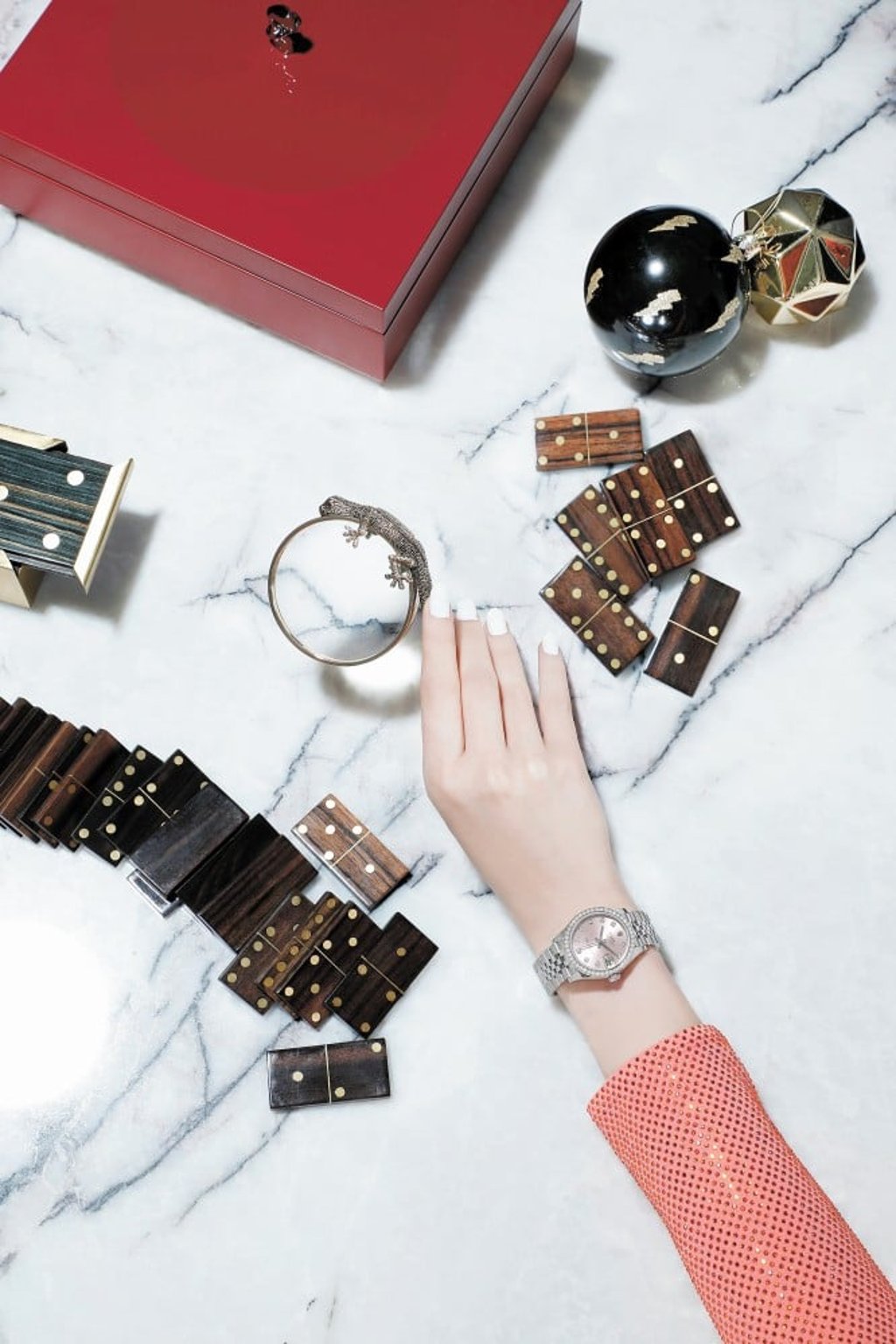
This takes revenue back to 2010 levels while volumes are the lowest in decades. Geneva, you have a problem.
Rolex Datejust 31 in Oystersteel, white gold and diamonds, dress by Alexandre Vauthier at Net-a-Porter. Domino set and magnifier by L’Objet from Lane Crawford Home, Pacific Place, Hong Kong. Photo: SCMP

This should be a wake-up call. When companies believe that they are immune to shifts in consumer sentiment and don’t lead the change, then they will be obsolete at one point. Why is this change so drastic? Équité and IMS conducted an A.I. powered study to analyse how consumer sentiment has shifted during the pandemic. Three megatrends emerge when it comes to luxury: health, quality of life and social responsibility.

Select Voice
Choose your listening speed
Get through articles 2x faster
1.25x
250 WPM
Slow
Average
Fast
1.25x