Explainer / The enduring allure of the signet ring: how a striking piece of jewellery travelled from Mesopotamia in 3,500BC to 21st century fashion runways, donned by Elvis Presley and Meghan Markle
Winston Churchill wore a signet ring bearing 2 family crests, and Frank Sinatra and James Brown were both partial to a pinky ring – today, brands from Anita Ko to Yvonne Léon are embracing the style
One of the most quietly commanding accessories you can wear – small in size but rich in symbolism – the pinky ring, especially the signet variety, has always been a popular jewellery choice among a certain set. Enjoying a spike in popularity of late, signet rings are frequently being spotted on runways, red carpets and in collections from designers putting their own spin on this old-school staple.
So what exactly is a signet ring – and is it the same as a pinky ring? Not quite. A pinky ring is simply any ring worn on the little finger. A signet ring, on the other hand, is defined by its flat surface, often engraved with a crest, initials or symbol. While signets are traditionally worn on the pinky – of the non-dominant hand – a pinky ring doesn’t have to be a signet. Still, the two terms are often used interchangeably – and with good reason, as the signet has become the most iconic pinky style of all.
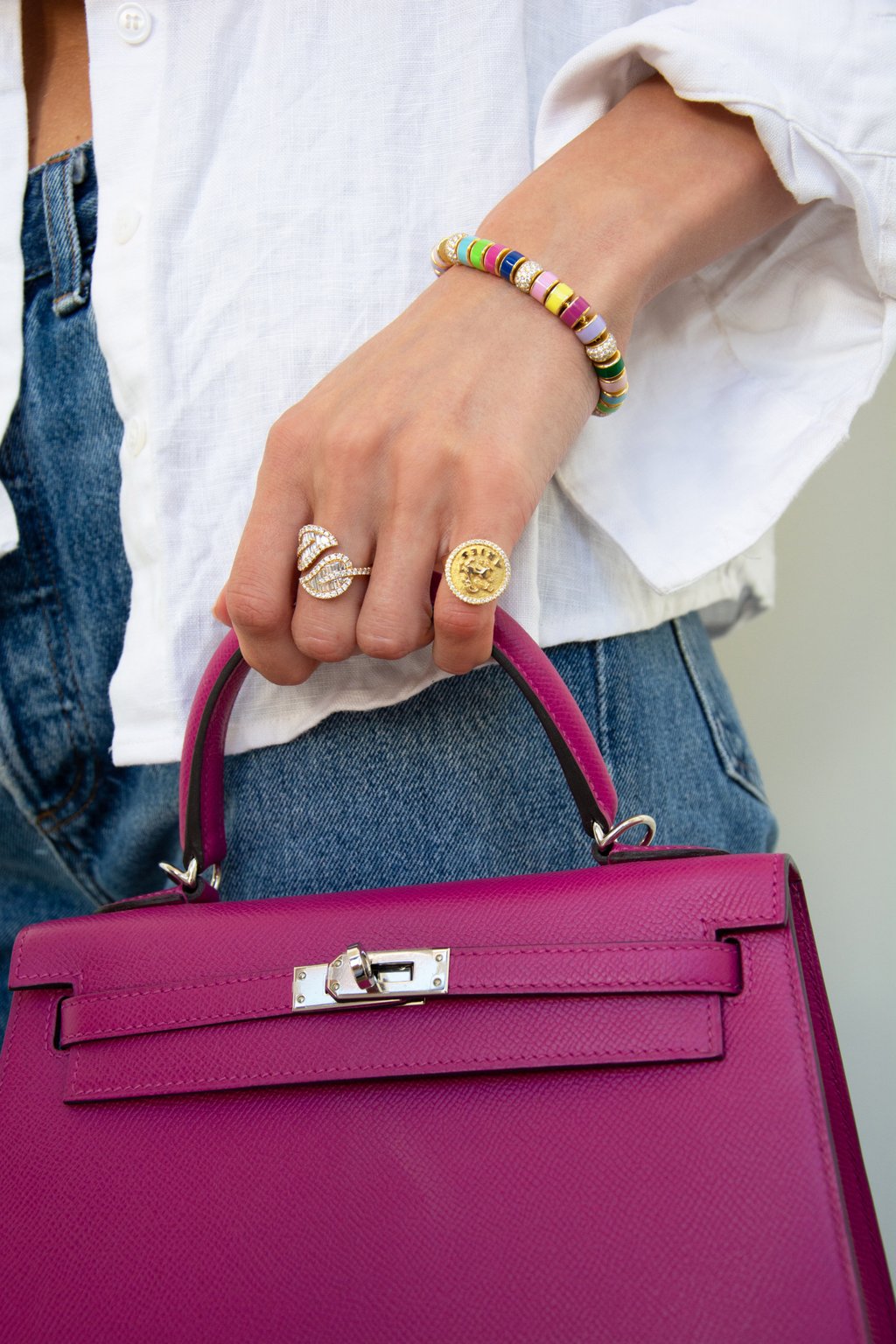
A Zodiac 18k gold and diamond ring by Anita Ko worn on the pinky finger. Photo: Handout
Advertisement
The origins of the signet ring can be traced back to Mesopotamia around 3,500BC, when they were used – often by illiterate businessmen – to authenticate documents and mark property. The ancient Egyptians continued the tradition, carving sacred symbols in reverse to leave imprints in wax or clay – giving rise to the tradition of wearing the ring on the pinky, which made sealing easier without obstructing writing.
The use of signet rings continued through the Roman Empire, when carved gemstones served as personal signatures – and status symbols – for emperors and merchants. In medieval Europe, they also became legal instruments, and were often destroyed upon the owner’s death to prevent misuse. The pope’s Fisherman’s Ring, used to seal documents until 1842, symbolises papal authority to this day.
By the Renaissance, signet rings were tied to aristocratic tradition, especially in Britain, where they were engraved with coats of arms and passed down through the generations. They also signified allegiance, being worn by Freemasons and other societies as discreet symbols of identity.
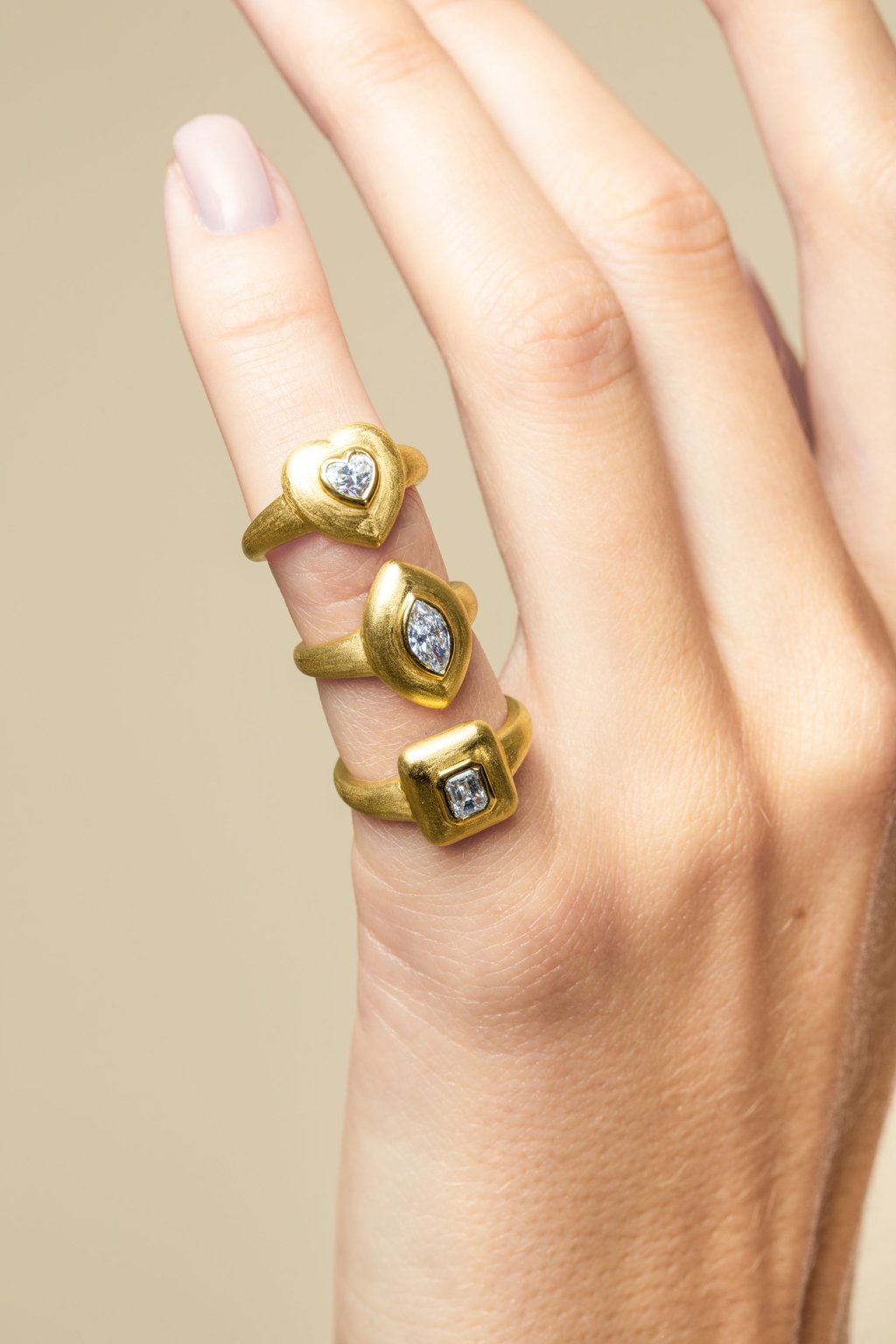
A stack of Maison H Jewels’ 18k yellow gold and diamond rings. Photo: Handout
By the early 20th century, the signet’s role had shifted once again. It still conveyed status, but increasingly it spoke to personal identity and intellectual legacy too. Winston Churchill famously wore a large square one, bearing the crests of both the Churchill and Spencer families (the latter marking a lineage that would later include Diana, Princess of Wales).
The 1960s and 70s saw another cultural change, with the rings now speaking much more of individuality than heritage. Rock and soul legends like Frank Sinatra, Elvis Presley and James Brown embraced the pinky ring, blending tradition with their own sense of style. King Charles III has been pictured wearing his gold signet ring since the mid-1970s – a royal tradition continued by Meghan Markle, who has started wearing a gold signet ring engraved with her and Prince Harry’s royal cipher.
Today, the pinky ring is being reinterpreted by a new generation of designers and wearers, with many modern iterations proudly genderless or designed with women in mind, moving away from the outdated notion of signet rings as men’s jewellery. Still, the style continues to carry rich historical significance, making it a symbol that bridges tradition and modernity.
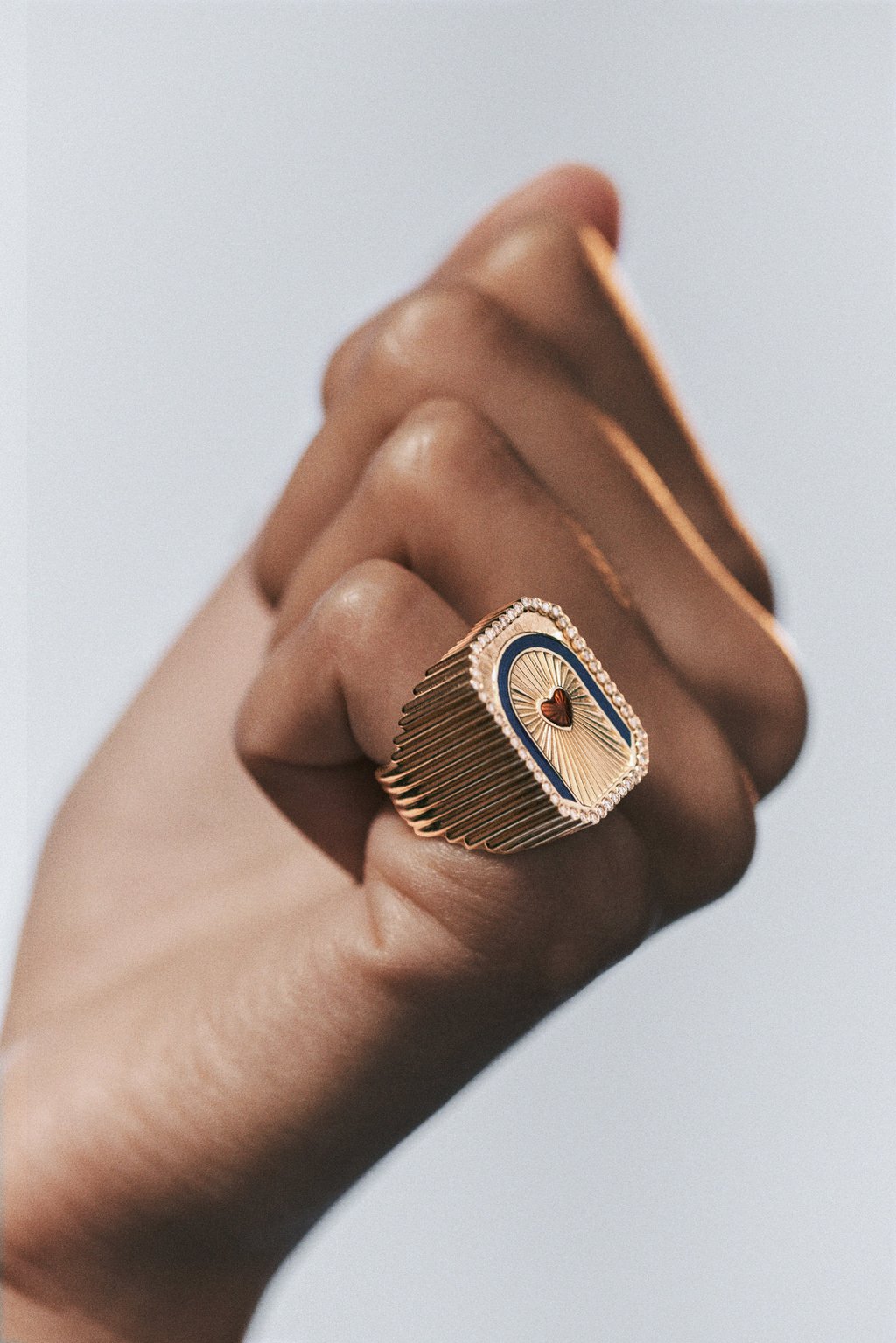
Marie Lichtenberg Heart Mini Scap 18k gold ring with diamonds. Photo: Handout