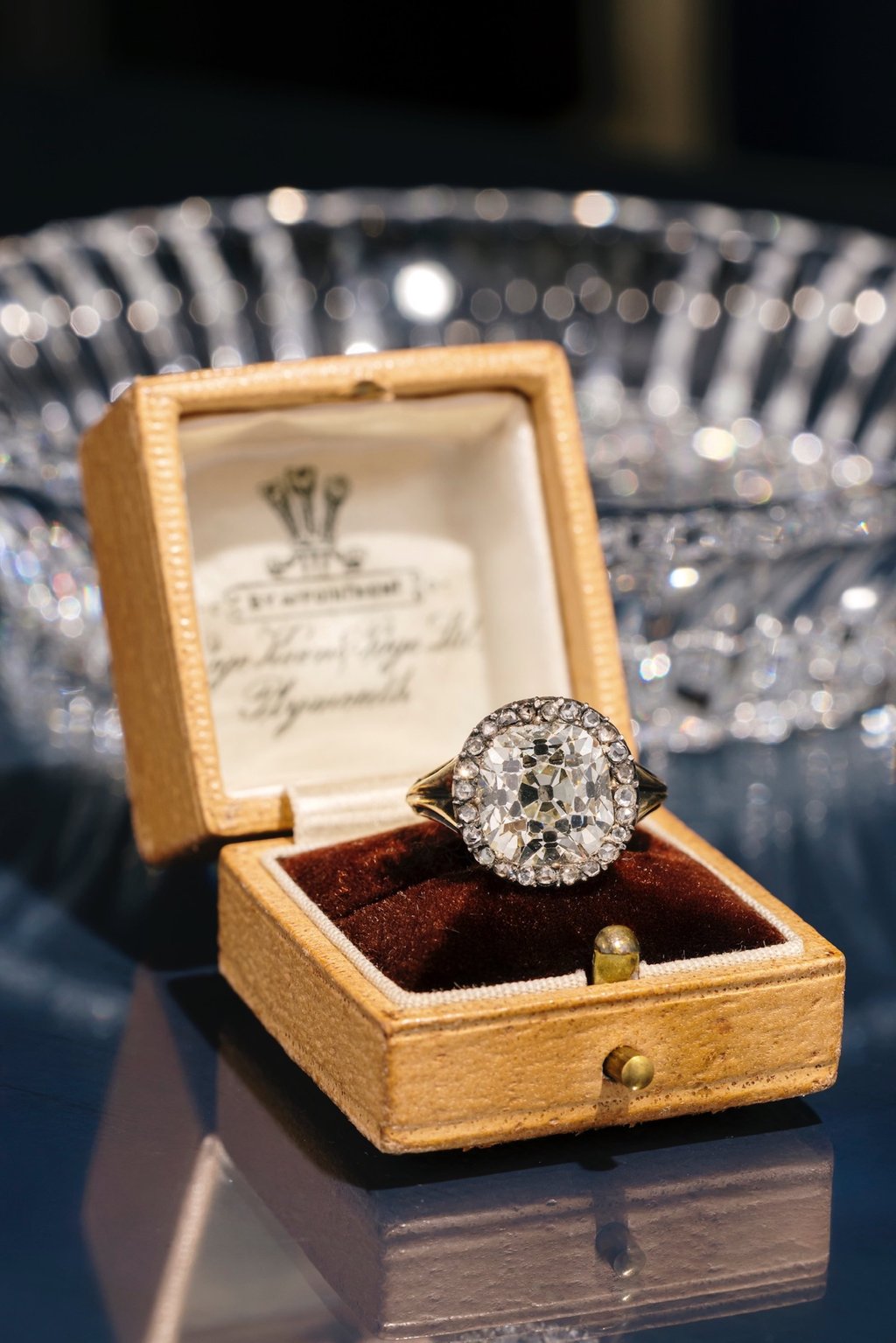
Antique-cut diamonds all the rage since Taylor Swift unveiled her engagement ring

The Kansas City Chiefs’ Travis Kelce knew what he was doing when he proposed to The Life of a Showgirl singer with an old-mine-cut sparkler
There is nothing like a celebrity engagement to spark huge curiosity in an engagement ring, and Travis Kelce knew exactly what his vintage-loving girlfriend Taylor Swift would like. The American football star popped the question with a massive old-mine-cut diamond in a bezel setting, with intricate hand engraving on the band’s shoulders. The approximately 10-carat custom-made ring was designed by Artifex Fine Jewelry’s Kindred Lubeck, a second-generation goldsmith originally from Florida.
The choice of stone was unusual. It is a historic cut, dating from the 18th or 19th century, that is often overlooked in modern jewellery. The name harks back to the “old mines” of India and Brazil, at a time when stones were cut entirely by hand – unlike modern stones, which are cut by laser to maximise their brilliance. An old-mine cut has 58 facets – the same number as a round brilliant cut – but the proportions and appearance are different. The old-mine cut is known for its squarish, cushion-like shape featuring a high crown, deep pavilion and large open culet (the flat facet at the bottom), all of which enhance its distinctive play of light. The old European cut, also found in antique jewellery, emerged later, in the mid-1870s, and is rounder, leading to the development of today’s round brilliant styles.
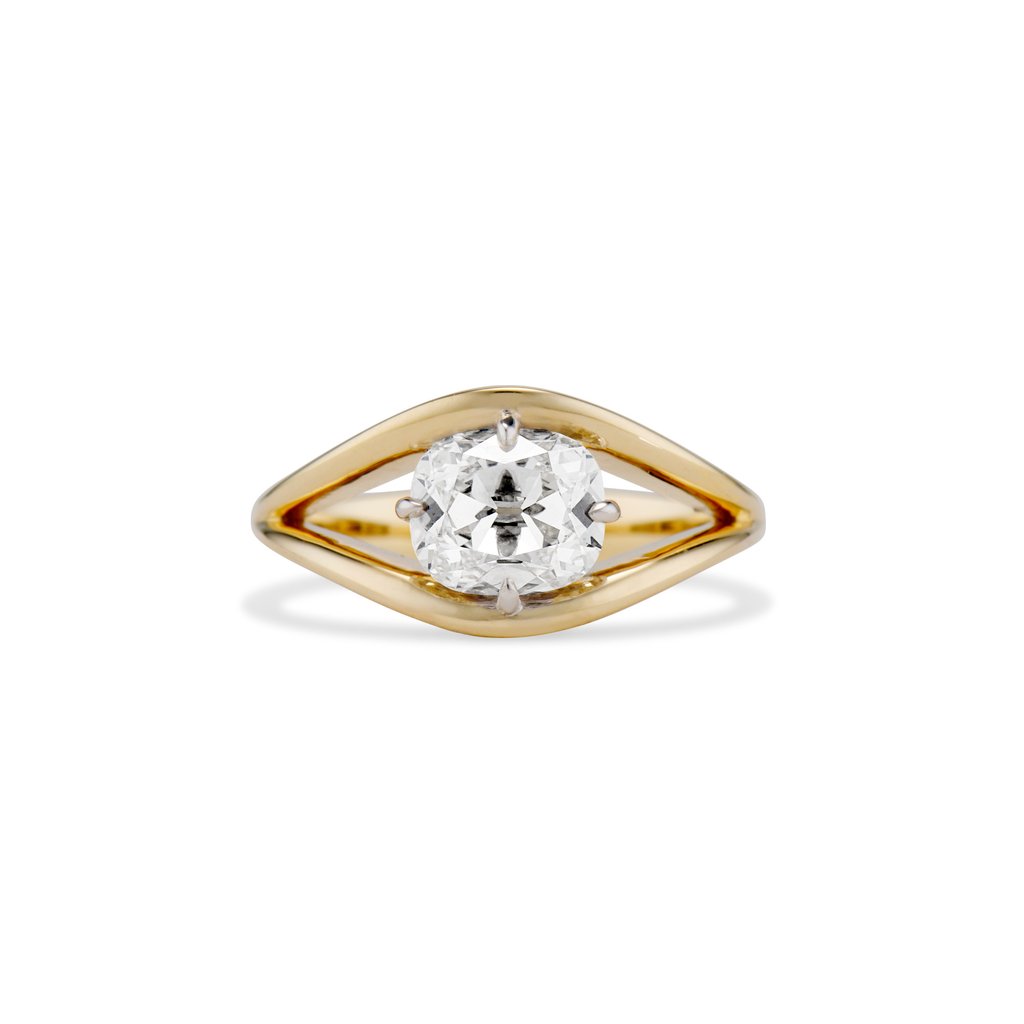
The old-mine cut offers more lustre than brilliance and was designed to sparkle in candlelight long before electricity was invented, creating a romantic aura.
Swift’s ring “beautifully demonstrates how design can blend nostalgia with modern elegance”, says Sissi Xu, managing director, Greater China, of the Natural Diamond Council. She believes the ring is likely to spark renewed interest in these antique cuts, which she points out “so gracefully embody the timeless and poetic allure of natural diamonds”.
New York-based jeweller Ashley Zhang agrees: “I prefer the warmth and more subtle sparkle that antique diamond cuts have,” she says. Zhang specialises in antique-cut stones for engagement rings, with the elongated old-mine cut one of the most requested shapes, although that shape was itself a rarity 100 years ago. “These stones were cut before today’s modern technology and so they really had to follow the [raw] stone’s natural shape from the earth,” she notes. Cutters measuring the facets by eye rather than computer “weren’t able to make tightly faceted or cut styles, so everything has a chunky proportion”.
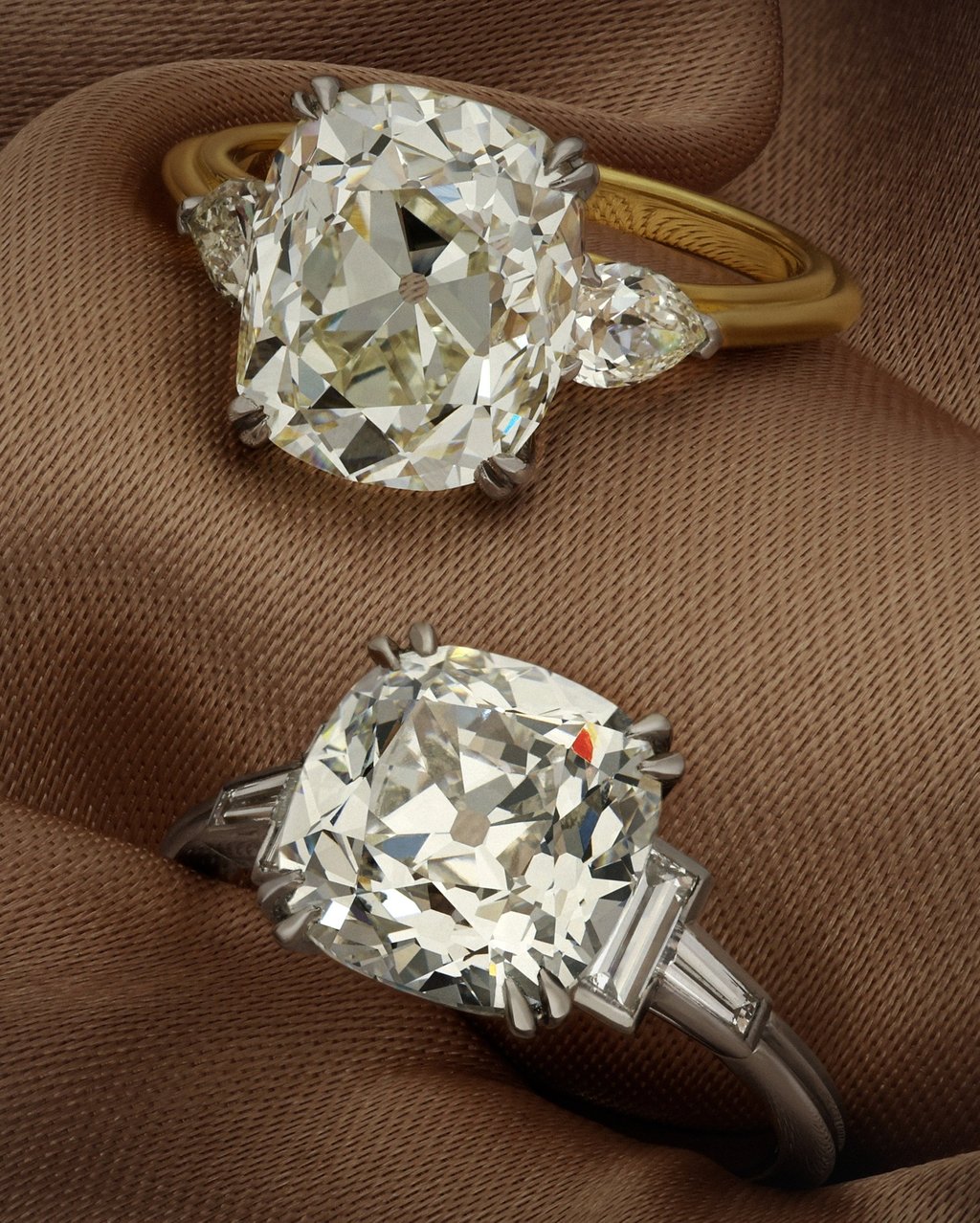
These irresistible historic cuts, including old mine and old European, are a rarity on the market. Many jewellers source the diamonds through antique dealers and auctions, or are commissioned to repurpose a family heirloom.
Hancocks London has a whole floor of its five-storey Georgian town house devoted to antique diamonds produced by master cutters from the 19th century onwards, which it puts into modern one-of-a-kind settings for engagement rings. “These stones were cut to look as beautiful as possible,” says managing director Guy Burton. “Those big-facet faces that you get in old-mine-cut diamonds are glorious, and you’ll see them across a room before you see a modern-cut diamond.”