How this jeweller is reimagining traditional Chinese filigree in modern pieces

The Beijing-born artist’s intricate brooches will be featured in an exhibition opening on June 23 at Hong Kong’s Crafts on Peel
The skilful combination of filigree, inlay and various other techniques to shape jewellery out of delicate gold and silver threads – known as fine gold art – reached new heights during the Ming dynasty (1368–1644) and was developed further in the Qing dynasty (1644–1912).
Over those centuries, a number of China’s ethnic minorities developed filigree jewellery ornaments – hairpins, hook earrings and buckles – with their own characteristics, passing them down through the generations until they ended up on today’s market stalls. That’s where eagle-eyed collectors like Huimin Zhang snap them up.
The Chinese art of filigree is kept alive through the passion of artists like Zhang, who has adopted and adapted this painstaking craft to create contemporary jewellery that wins awards and is now featured in the Victoria & Albert Museum (V&A) in London. The jeweller also took part in London Craft Week in May.
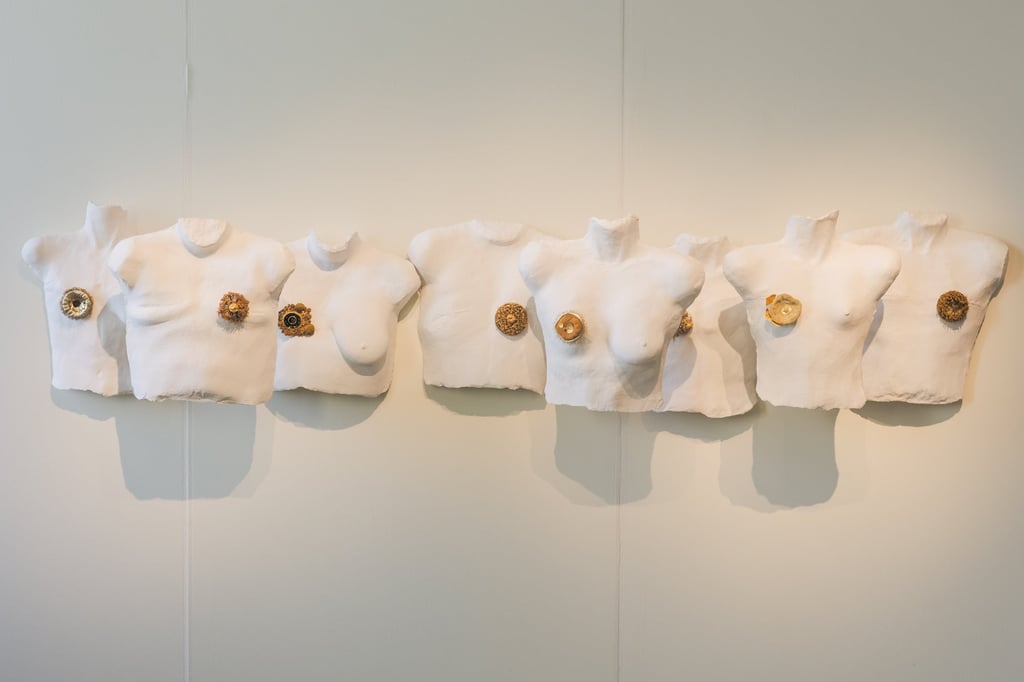
Now, Zhang’s delicate brooches are to feature in an exhibition opening on June 23 at Crafts on Peel in Hong Kong, a foundation whose founder Yama Chan is on a mission to breathe new life into traditional craftsmanship.
“The way I combine different techniques shows how filigree can be very modern, and I hope that my work can inspire people to take up these traditional skills,” says Zhang.
She describes the process of working 22k gold wire that is only 0.08mm thick, and titanium that is 0.05mm thick, as very meditative. “I enjoy working in my small world all day forgetting about time, just listening to music,” she says. Geographically, that small world is a workshop in London’s jewellery district of Hatton Garden in a discreetly located building that is a hub for jewellers, including Castro Smith.
It can take a month to make one of Zhang’s graceful brooches, which have either a mosslike texture or a mesh structure, depending on the technique. She also creates rings that resemble flower heads, and which captivated collectors when she showed them at the prestigious Goldsmiths’ Fair in London last autumn.
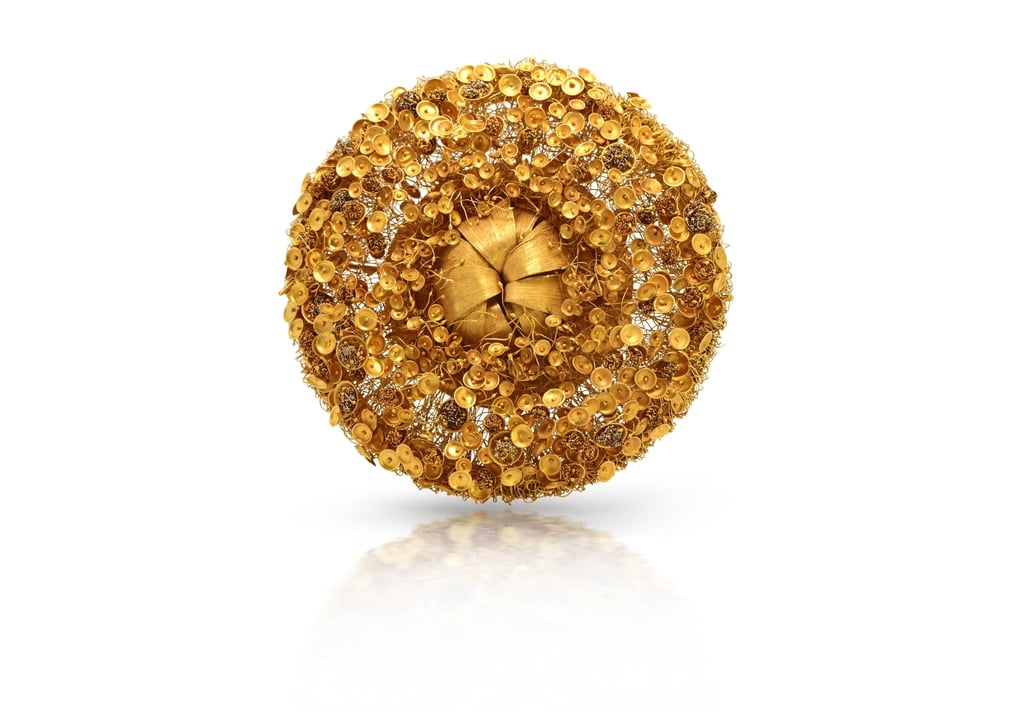
Her most striking exhibit at the fair was a series of Gold Mammary brooches inspired by a close friend who was having a harrowing experience with breast cancer. “I used gold wire as fine as hair and made a brooch that blooms like a summer flower to encourage her to be brave,” explains Zhang. She gave her friend one of the brooches, and another is now in the Chinese department of the V&A.