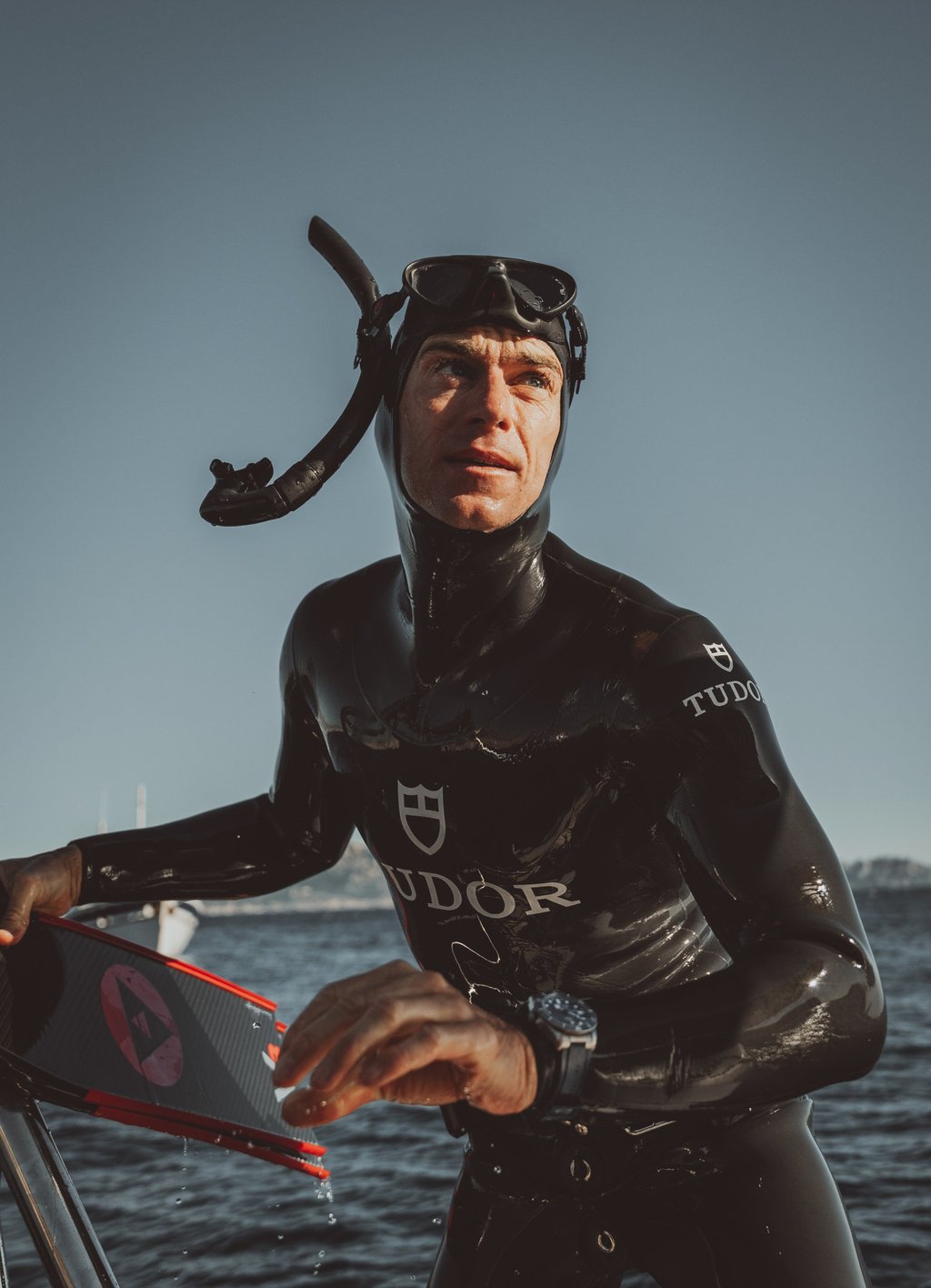
World champion freediver Morgan Bourc’his on how to get started in the sport and his relationship with Tudor, the watch brand with a deep connection to the underwater world – interview

- In 2021, Bourc’his starred in the documentary The Quest for Nature in which he travelled up to Norway to see oceanic wildlife and raise awareness for its protection
- Bourc’his has a blue Pelagos given by fellow ambassador David Beckham after they worked on the film Dare to Dive, a Black Bay GMT and a Black Bay Chrono, engraved with details of his last world championship
Looking for a sport or pursuit where you must let everything go to achieve total serenity, while at the same time pushing yourself to your physical and mental limits? It seems a paradoxical question, but one possible answer is freediving, and for Tudor ambassador and three-time world champion Morgan Bourc’his, focusing on these two ideas simultaneously is the key to victory and even self-actualisation.
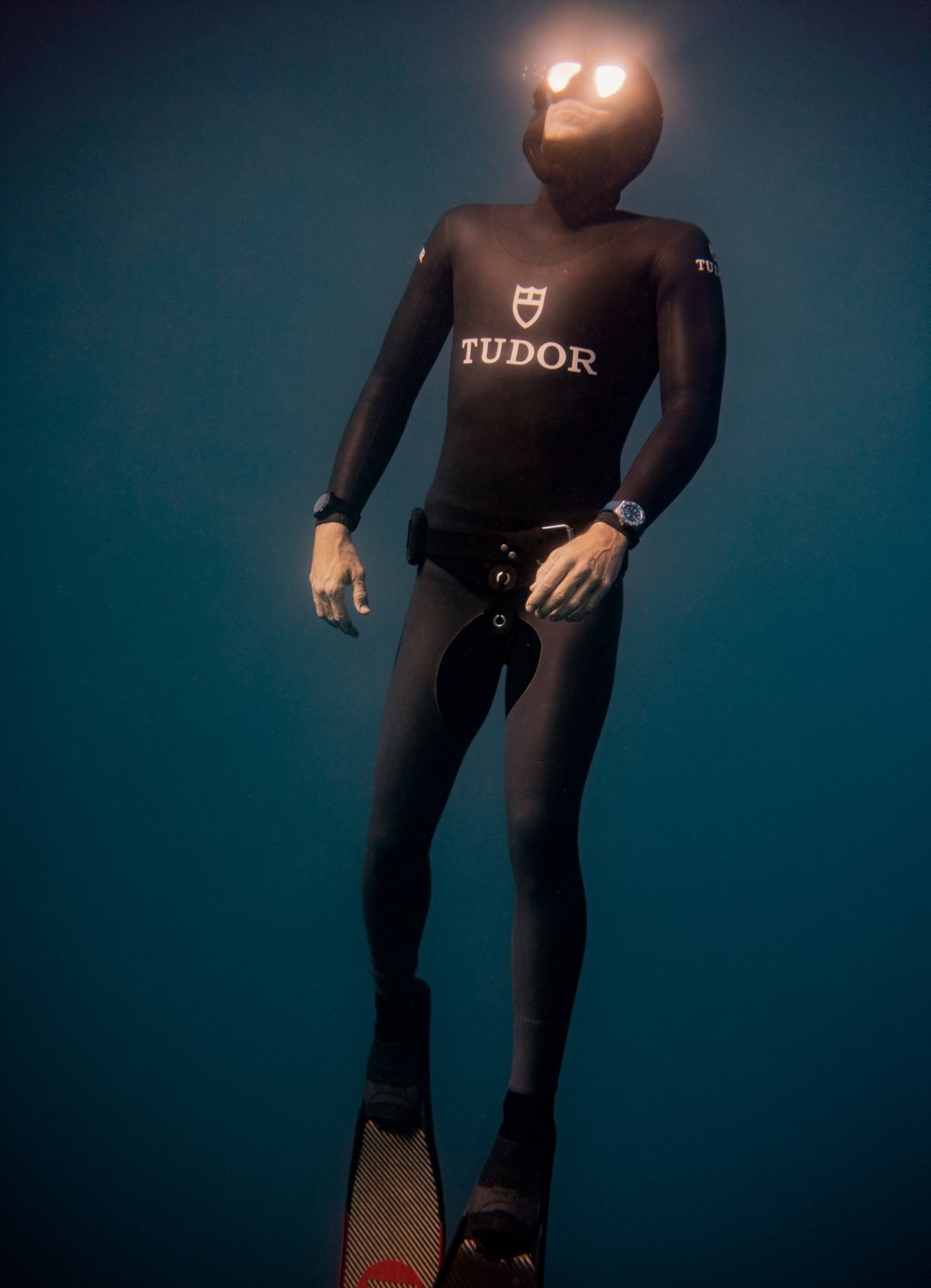
Unlike traditional snorkelling or scuba diving, freediving is distinguished by its lack of gear, relying on a variety of mental and physical techniques – starting with such simple steps as pinching your nose and exhaling to equalise the pressure in your ears with that of the water – to take divers down to depths of tens of metres or more, all in a single breath. In competitive freediving, divers start at the surface, prepare themselves by relaxing and taking in oxygen, then descend alongside a rope towards a fixed depth target to claim a tag and return to the surface.
The practice dates back centuries to divers all around the globe fishing or collecting other prized items. In Greece, Kalymnos was thought to be one of the epicentres of diving for sponges mentioned in texts by Plato and Homer, and in the Pacific, the women ama divers in Japan and men in the Philippines each developed a long tradition of diving for pearls.
Today, the sport encompasses many different disciplines: you can dive with fins or without, using the rope or not, and even with varying weights attached to the body. It is in the Constant Weight, No Fins (CNF) category that Bourc’his has won his three world championships, his most recent being in 2019 with his personal CNF record of minus 91 metres.
This is one of the most difficult disciplines according to Bourc’his because, other than fixed weights and a wetsuit, the diver is almost completely unaided. There are no fins to propel you down, nor is there a rope to help stay on target. Bourc’his says his background in breaststroke swimming that preceded his move to Marseille at the age of 22 has allowed him to excel in the CNF category, with him winning his first world championship in 2008 at age 30.
“Know that body and mental relaxation are the keys to being good underwater,” he advises. “Here, it’s important to forget haste and force [in favour of] softness and slowness. You have to rely on economy to stay underwater and, of course, to enjoy it.”
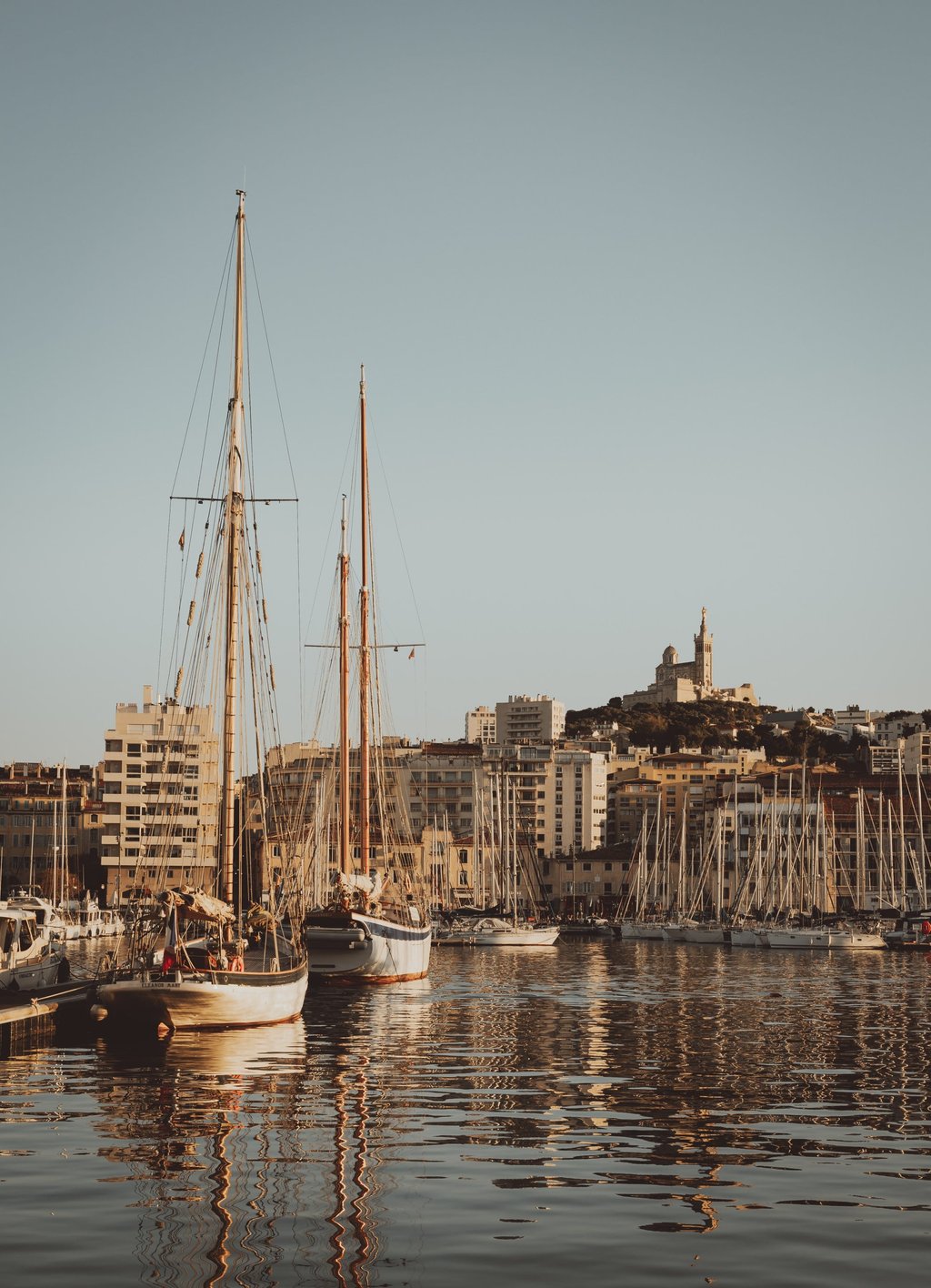
Catching up with Bourc’his in Marseille, we don’t simply dive head – or feet – first into the sea, at least not immediately. Bourc’his introduced the necessary techniques on land first, with stretching and breathing exercises to expand our lung capacity and increase relaxation, before taking us to the pool to show us how to manage our breathing.
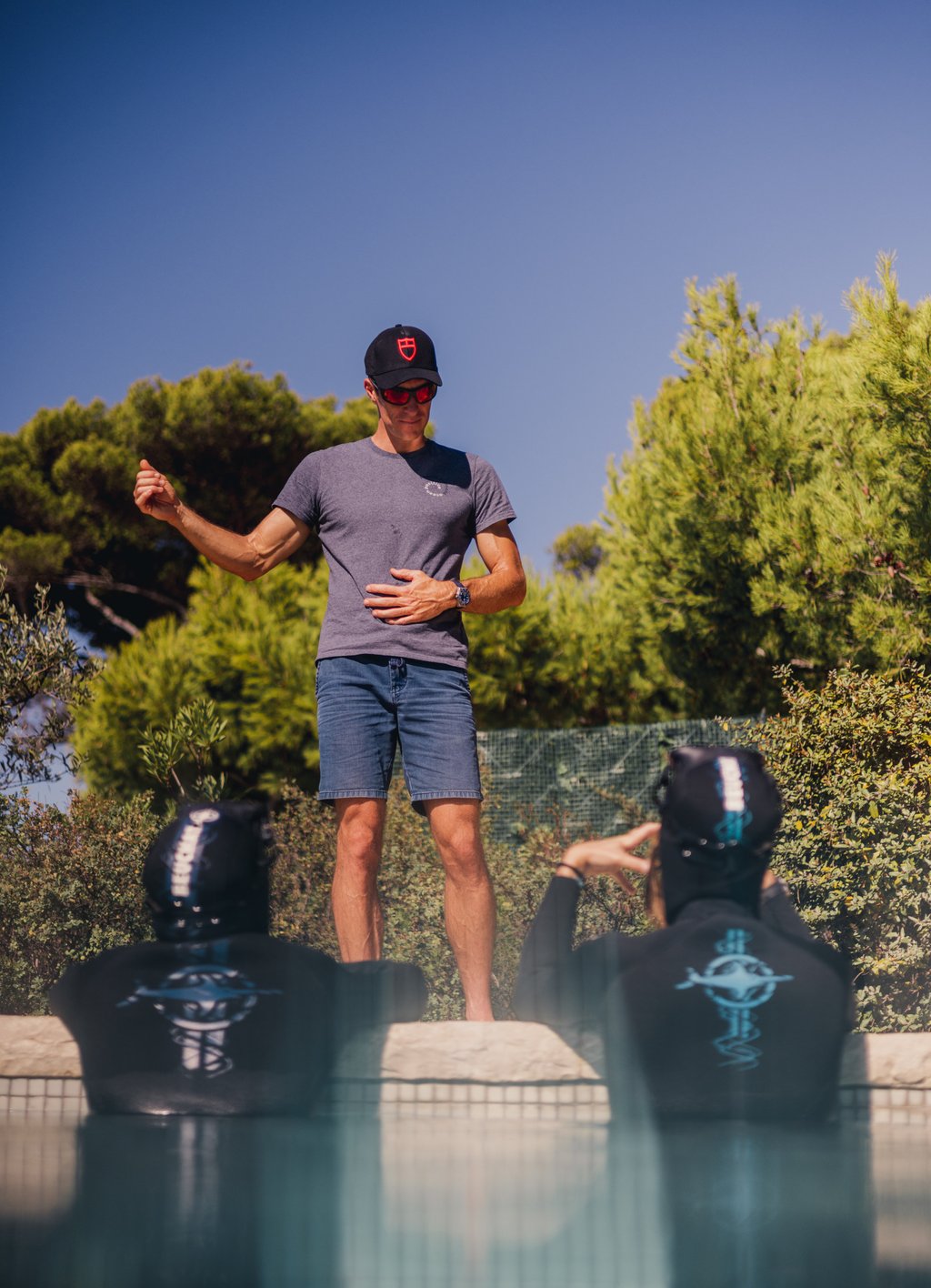
One of the immediate results of these sessions, before having to deal with the pressure of deeper water, is a more relaxed mind and body allowing us to stay underwater for longer, even helping us to push past our body’s natural reflexes to gasp for air – usually if the body has time for that, we are told, there is still some oxygen left to go.