The evolution of the watch strap, from Tudor and Grand Seiko, to Jaeger‑LeCoultre and Zenith

Watch straps have evolved far beyond traditional leather bands, with today’s hi-tech models designed to be stylish, comfortable and easily interchangeable
Watch straps are as much about function as they are about form. They are an integral part of a watch’s construction and wear, and can also transform a design’s aesthetic through their build, texture and fit.
The strap has always been crucial in the development of the wristwatch: its development is the reason why pocket watches and their chains are almost never seen in the wild any more.
They are an integral part of the experience of wearing a watch, transforming a design’s aesthetic through its build, texture and fit. The modern wristwatch was inspired by ladies’ jewellery bracelets, emerging during World War I when soldiers needed to check the time quicker than was possible with a pocket watch.
The watch strap has come a long way since it was a strip of leather fastened with a pin and buckle. From metal bracelets that aim to hug the wrist to Nato and rubber exemplars that stand up to the elements, the modern watch strap has adapted to the evolving designs, functions and innovations of wristwatches.
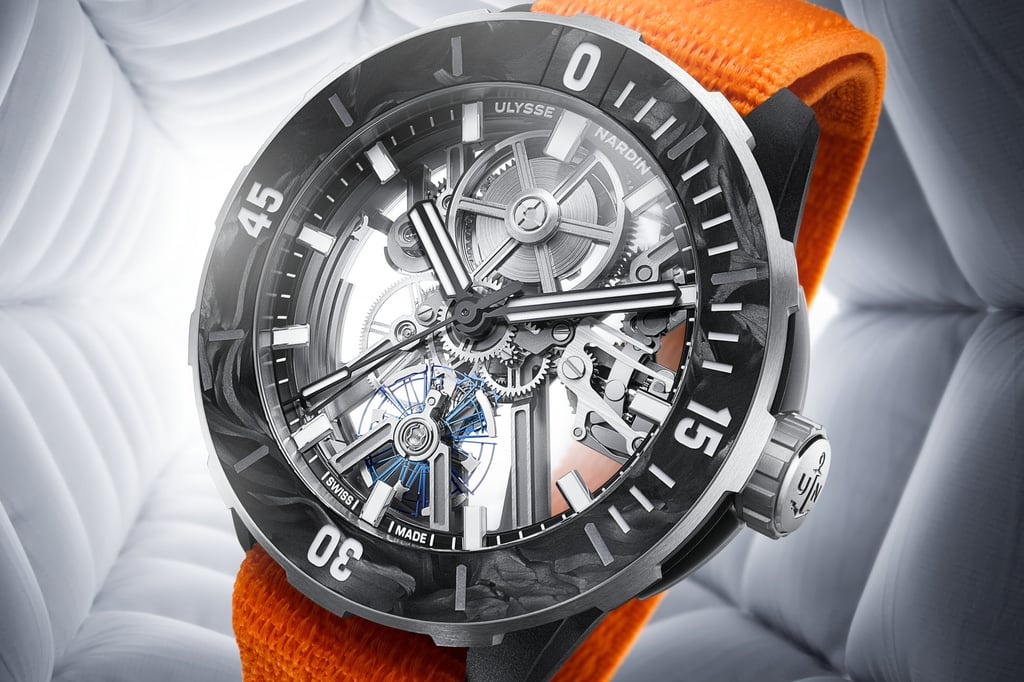
Garnering much attention at this year’s Watches and Wonders, Ulysse Nardin unveiled its attempt at creating the world’s lightest dive watch, the Diver Air. The skeletonised timepiece weighs 52 grams, including the strap. The watch is presented with two elastic fabric straps in white and orange, each weighing just six grams. The strap’s Velcro-like scratch closure allows the piece to be securely fastened over dive suits without adding to the weight of the watch. The option to swap between colours also speaks to the growing popularity of interchangeable straps.
Today’s demand for straps and bracelets optimised for wear and comfort has prompted the industry to respond with innovations like quick-change strap mechanisms, which are increasingly becoming the standard for many watchmakers. Tudor’s latest Pelagos Ultra model introduces an ultra-quick-adjust clasp that even features luminous indication for easier adjustment during dives. Grand Seiko has joined the fold, debuting its quick-adjust feature at Watches and Wonders, underscoring the growing emphasis on wearability.
The increasing popularity of quick-release mechanisms has reduced the need to choose between a strap and a bracelet since they are now easy to swap – many watches are now sold with both options included. Zenith integrated this into its range of timepieces in 2021, including the Chronomaster and this year’s new Defy Skyline, offering a rainbow of rubber, nylon and link bracelets. Like many watchmakers, Zenith has embraced the quick-change bracelet mechanism engineered for effortless strap swapping without tools. A push-button system integrated into the bracelet’s end links releases spring-loaded pins that securely hold the strap in place while allowing easy detachment.