Style Edit: Omega’s latest Speedmaster Moonwatches honour the brand’s connection with space

The latest models derived from the Speedmaster that went to the moon on Buzz Aldrin’s wrist, these two models feature ‘reverse panda’ dials
Omega and the history of human space exploration are intertwined thanks to the brand’s Speedmaster collection. It was first introduced in 1957 as a sports chronograph and quickly became popular among pilots. That made it an obvious choice when humanity began to look to the stars – beginning as early as 1962, when astronaut Wally Schirra, previously a naval aviator, took his own Speedmaster on Mercury-Atlas 8, the fifth US space mission.
Three years later, after subjecting a collection of popular mechanical chronographs to a battery of exacting tests, the Speedmaster was adopted as the official timepiece of the US space programme – culminating in 1969, when the model on the wrist of Apollo 11 astronaut Buzz Aldrin became the first watch on the moon.
Since then, the Speedmaster Professional has been known as the Moonwatch and has remained in official use among Nasa’s astronauts. The timepiece is loved for its absolute reliability, rugged construction and classic aesthetic, and the new models are modern interpretations that offer subtle updates while honouring the collection’s history.
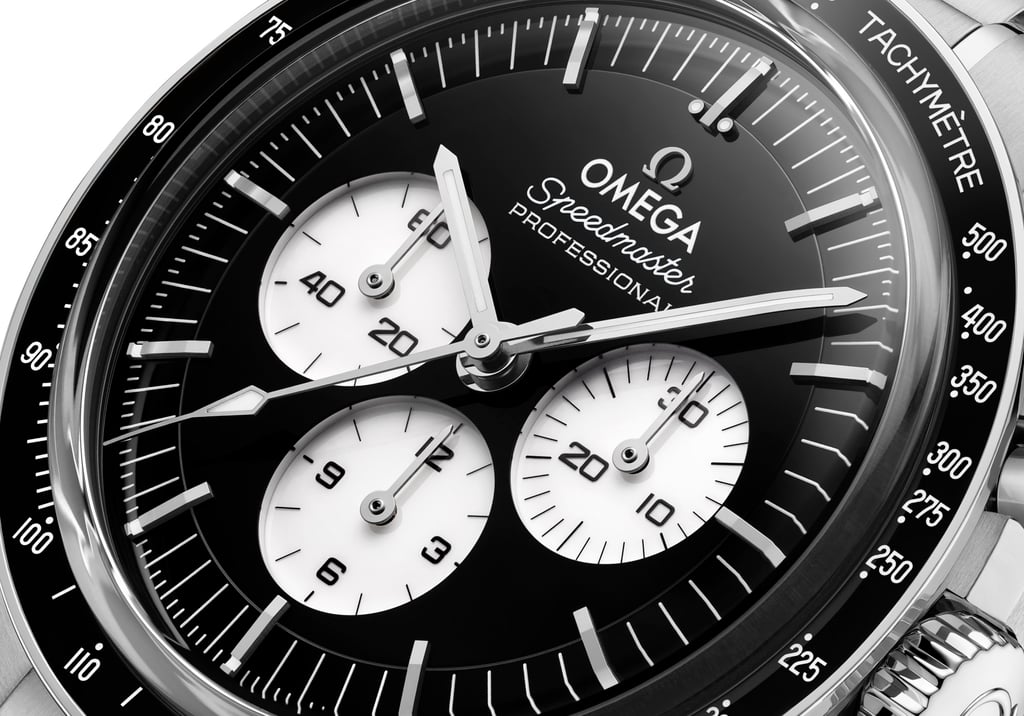
That can most clearly be seen on the watch’s face, which switches the usual monochrome look of the Moonwatch for a so-called panda dial, where the subdials at 3, 6 and 9 o’clock are in a contrasting colour. Specifically, the new look goes for a “reverse panda”, where white subdials contrast with the black surroundings – an effect created with the use of two plates, a black one atop a white one.
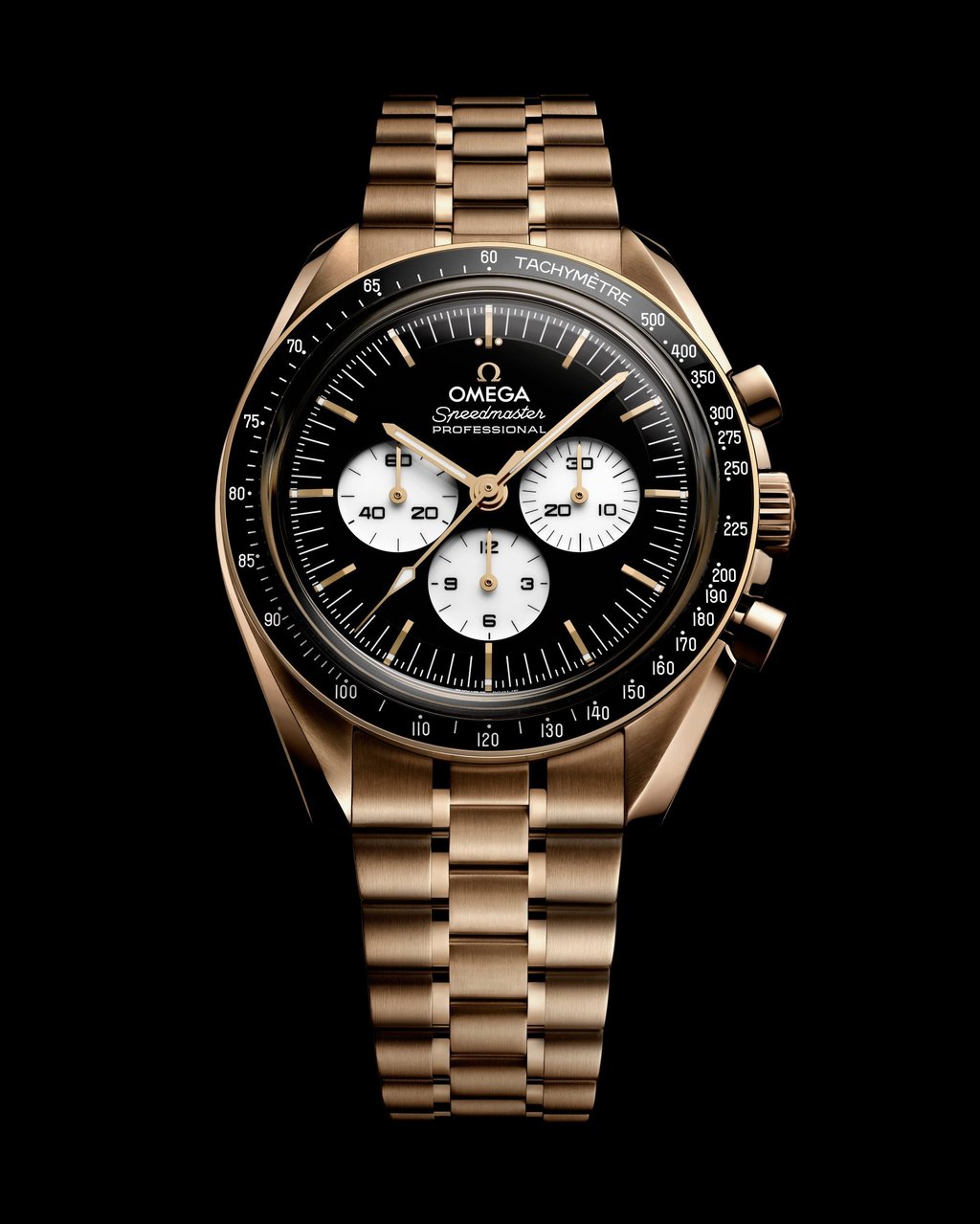
That dial is offset by a choice of cases. One comes in stainless steel, with hands and hour markers covered with white Super-LumiNova, while the other is made from Moonshine Gold, Omega’s own version of yellow gold, which also complements the Super-LumiNova on the hands and hour markers.
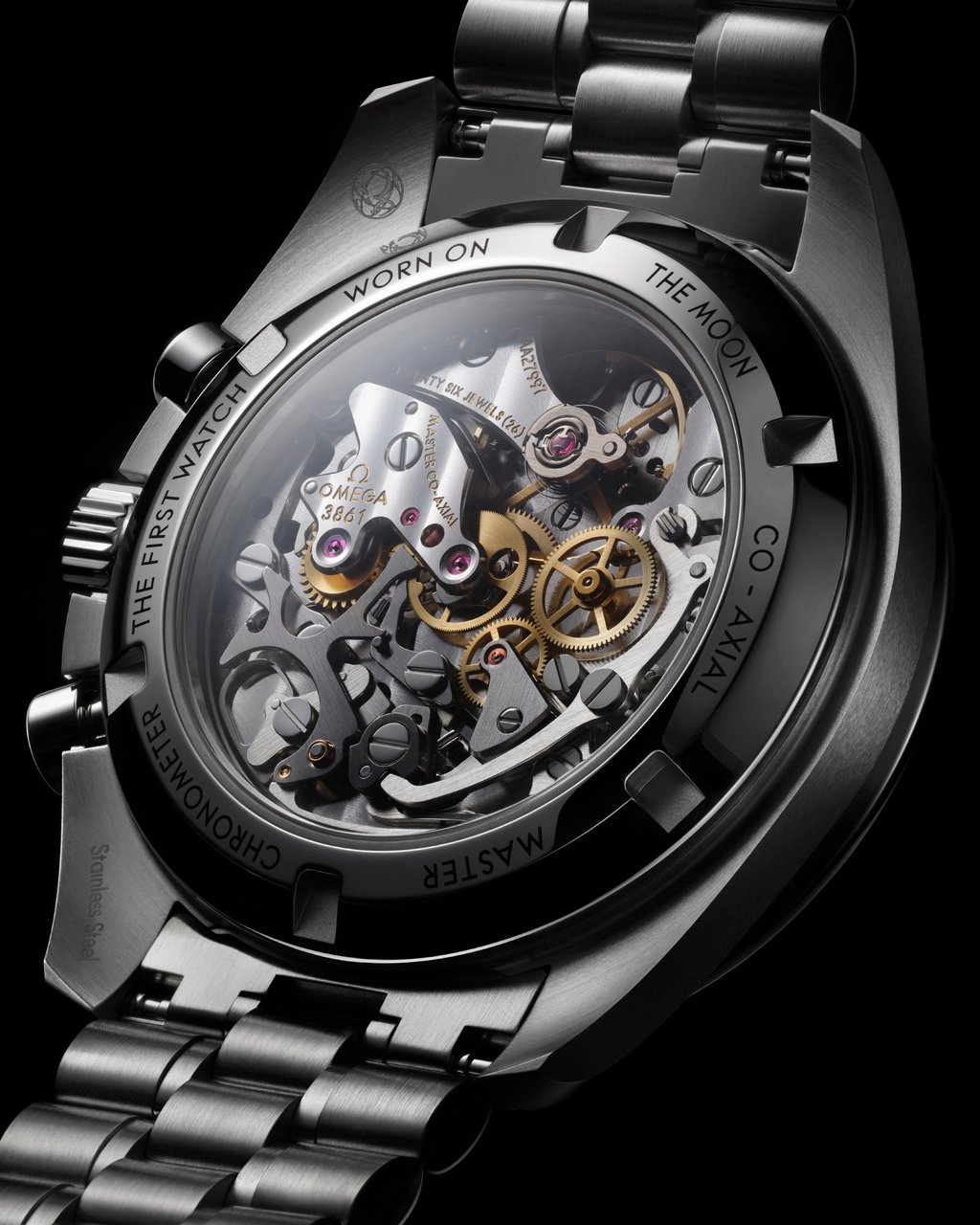
The two models are powered by the calibre 3861, based on the original calibre 321, the movement that Nasa astronauts trusted on the moon – another way in which the Moonwatch’s legacy of lunar exploration continues to shape this most well-travelled of timepieces.