Style Edit: Audemars Piguet reveals new Royal Oak Minis and Neo Frame Jumping Hour

Two very different approaches to making a head-turning timepiece – one recalls a sleek 1929 reference, the other a jewel-like aesthetic
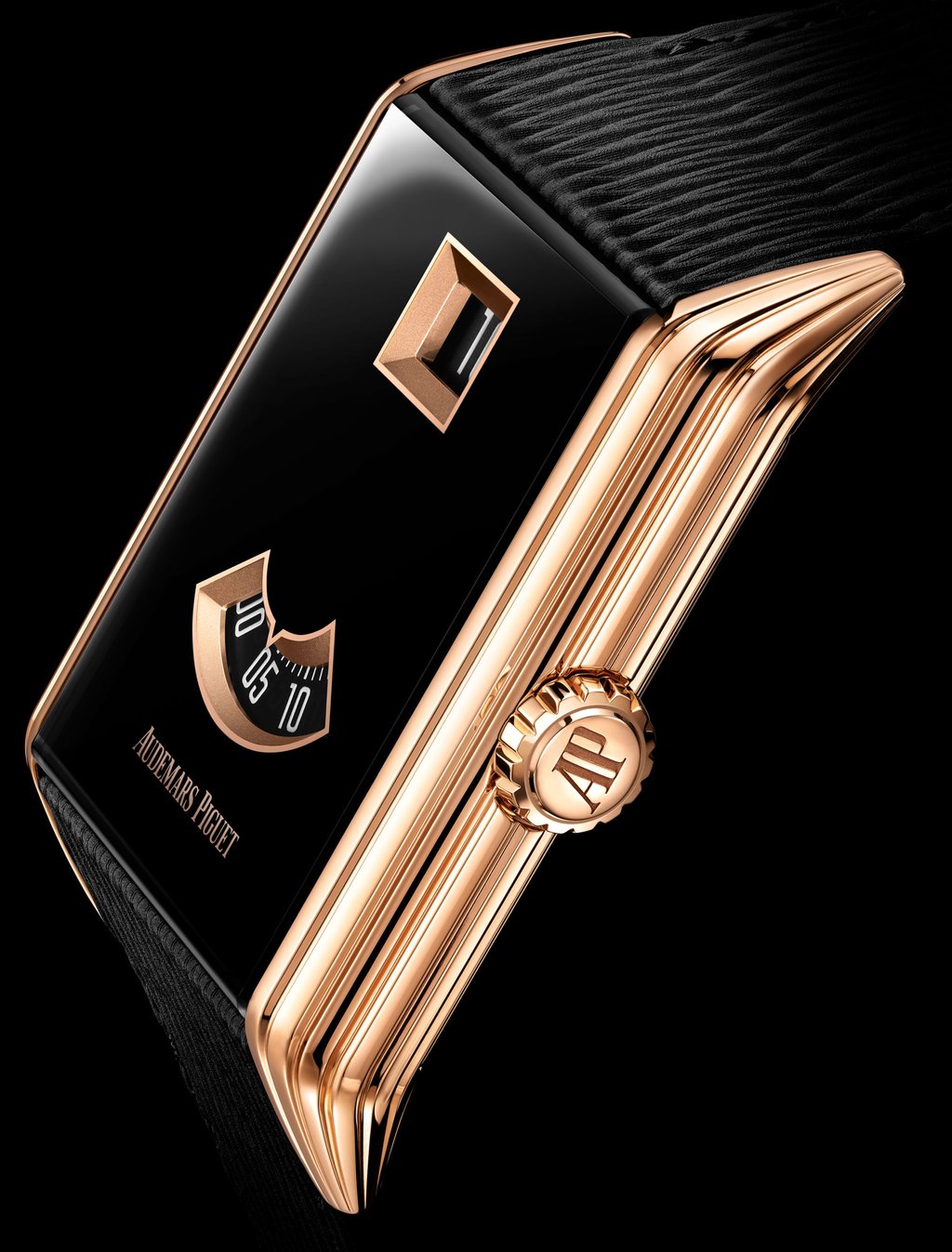
The Neo Frame Jumping Hour is, at first glance, a departure. Rectangular, compact and resolutely graphic, it draws on a 1929 reference created at the height of the Streamline Moderne movement. Its 18k pink gold case, measuring 32.6mm by 34mm, is flanked by eight vertical gadroons on each side – fluted lines that taper into pointed lugs, evoking the aerodynamic silhouettes of ocean liners and locomotives. The motif continues across the crown, caseback and even the oscillating weight, underscoring the watch’s sculptural coherence.
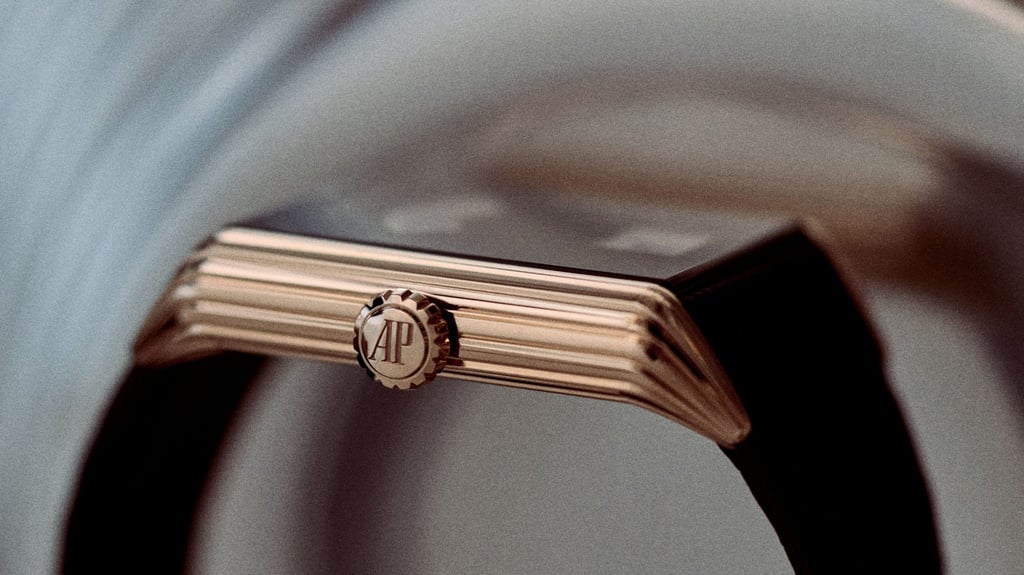
The dial replaces traditional hands with two gold-framed apertures set into a black PVD-treated sapphire crystal. Hours jump instantaneously; minutes advance progressively on a disc. Beneath this pared-back display lies a significant milestone, the calibre 7122, the manufacture’s first self-winding jumping hour movement.
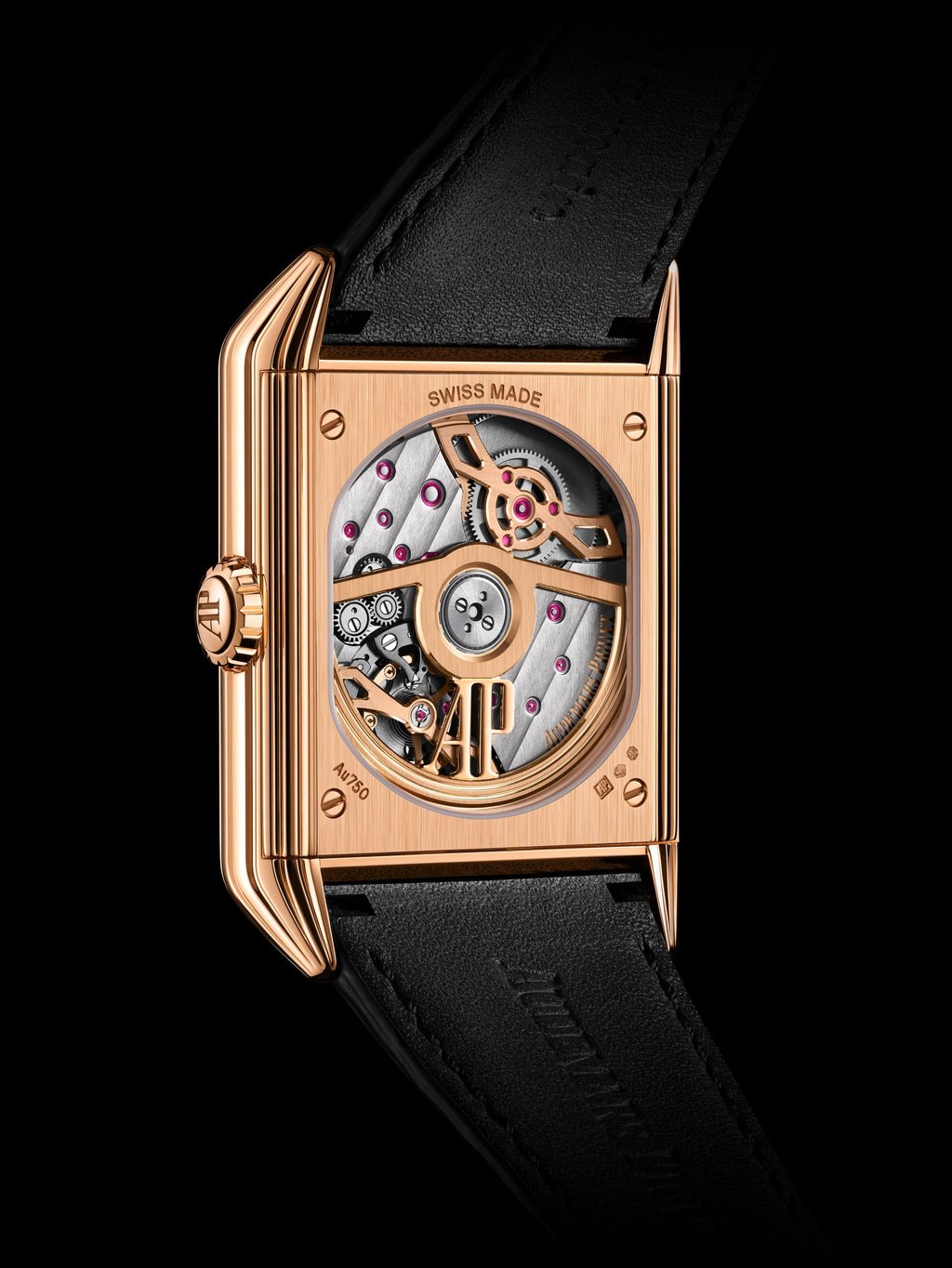
Developed in-house and derived from the architecture of the calibre 7121, it offers a 52-hour power reserve and incorporates a patented shock-absorbing system to prevent unintended hour jumps. Titanium and aluminium discs enhance resilience, while traditional finishes – côtes de Genève (Geneva stripes) and satin brushing – affirm its haute horlogerie credentials. A black textured calfskin strap completes the composition, neatly integrated between the lugs.

One pairs 18k pink gold with a mirror-polished black onyx dial punctuated by brilliant-cut diamond hour markers – graphic, precise and quietly powerful. The other frames an extra-white mother-of-pearl dial in 18k yellow gold, its iridescence offering a softening counterpoint to the Royal Oak’s angular geometry.