‘Omacha’: explorer and marine biologist dedicates life to protecting Amazon river dolphins
Fernando Trujillo named the 2024 Rolex National Geographic Explorer of the Year to honour his decades of conservation work for the species

Mountains, rainforests, the ocean – it is thanks to these critical systems that our planet has water, oxygen and a stable climate to meet our most basic needs for life on Earth. But these ecosystems are increasingly at risk due to global environmental challenges like climate change.
As explorers worldwide seek out a better understanding of our planet in order to protect it, standing alongside them is Rolex and its Perpetual Planet Initiative. From equipping the first adventurers who reached the summit of Mount Everest to enabling vital discoveries in the Amazon rainforest, the Swiss watchmaker has supported trailblazing expeditions for almost a century.
Today, its Perpetual Planet Initiative champions individuals and organisations working on solutions to the pressing problems that we are faced with across the globe.
One key partnership within the initiative is with the National Geographic Society. Rolex and the National Geographic Society are working together to support scientific research and expeditions that not only examine the threats facing the planet’s life-support systems, but also identify ways to resolve them.
Trujillo has dedicated his work to protecting the freshwater dolphins of the Amazon River. He has been studying these dolphins for over 30 years, tracking their migratory patterns and assessing the levels of mercury in their diet, which serves as a barometer for the overall health of the Amazon.
Jill Tiefenthaler, CEO of the National Geographic Society, said: “The Society is extraordinarily proud to name Fernando the 2024 Rolex National Geographic Explorer of the Year. Fernando is a solutions-driven changemaker ... his work in South America enhances protections for endangered wildlife and supports sustainable practices for the betterment of local communities.”
In response to the award, as well as the platform that Rolex and the National Geographic Society have given him, Trujillo said: “[This] is providing a megaphone for me to reach a global audience, and encourage them to learn more and to care about the changes impacting our planet.”
Trujillo is also one of 17 explorers who took part in the National Geographic and Rolex Perpetual Planet Amazon Expedition. This two-year scientific and storytelling exploration of the Amazon River basin – which is considered the world’s most vital freshwater ecosystem – spanned from the Andes mountains to the Atlantic Ocean.
Launched in 2019, the Perpetual Planet Expeditions programme is another facet of the long-standing collaboration between Rolex and the National Geographic Society. By harnessing world-renowned scientific expertise and cutting-edge technology to reveal new insights about the planet’s most critical ecosystems, these expeditions help scientists, decision-makers and local communities find solutions to the impacts of climate change.
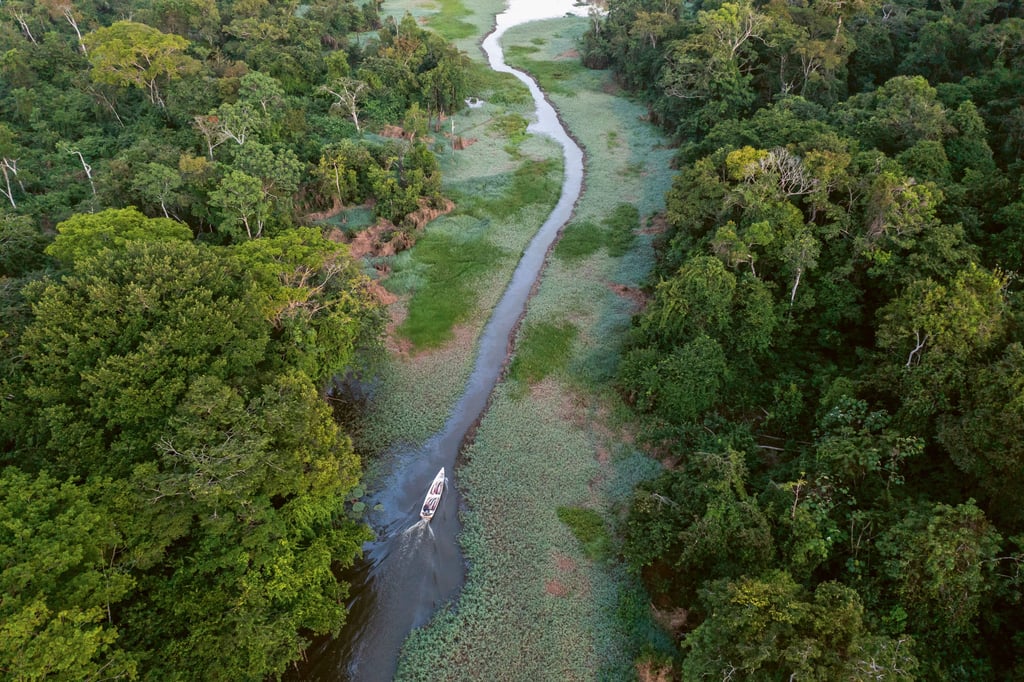
Trujillo, who was a lead explorer on the expedition through the Amazon River basin and its rainforest, said: “For me, it’s kind of magic to find dolphins in the forest, [but] as the Amazonia experiences some of the most extreme climate phenomena in decades, it is critical to shine a spotlight on this issue, conduct deeper research and generate solutions to protect this magnificent region.”
His devotion to saving these animals inspired the indigenous Tikuna tribe to nickname him “Omacha”, after a mythological creature that transforms from a dolphin into a human.
Trujillo also adopted the name for the non-profit organisation he co-founded, Fundación Omacha, which creates strategies for the sustainable development and conservation of Colombia’s forests, rivers, lakes and wildlife that also help sustain the livelihoods of local communities.
In addition, Trujillo serves as a mentor for National Geographic’s Young Explorers programme, which invests in the next generation of changemakers striving to make a positive impact on the world.
Rolex provides similar support to future explorers, scientists and conservationists through the Our World Underwater Scholarship Society and The Rolex Explorers Club Grants, which help young people further their environmental education.
Trujillo’s conservation efforts in the Amazon have resulted in government agreements on fishing and wetlands regulations. He has also led tree-planting initiatives to revitalise ecosystems and facilitated a conservation management plan for river dolphins that was signed by the governments of Brazil, Colombia, Ecuador, Peru, Bolivia and Venezuela.
Last year, Trujillo was joined by two other National Geographic Explorers, Maria Jimena Valderrama and Mariana Frias, to spearhead a first-of-its-kind global declaration for the protection of river dolphins.
“The dolphins are a key species for people to create empathy and to understand all the problems that the Amazon is facing,” Trujillo said.