Even dogs are eating quinoa now

After all that meat, ancient grains and vegetables make a play for top billing in the bowl
Tell your dog to get ready for quinoa kibble. Pet food trends are following their owners’ tastes. Even the meat-loving brands are marketing plants, the very ingredients they once sidelined – just not the plants the industry has historically relied on, like the high-protein soybean and corn-gluten meals.
Instead, Blue Buffalo offers a Chicken & Quinoa Ancient Grains recipe, for example, and a grain-free line from Purina’s Beneful is now “accented with blueberries, pumpkin & spinach.” The Honest Kitchen, which uses only human-grade ingredients, has been selling its Chicken & Quinoa recipe since 2006 and now offers Beef & Chickpea, Duck & Sweet Potato, and Fish & Coconut blends as well.
Dogs aren’t wolves, after all. They’re omnivores, said Anna-Kate Shoveller, an assistant professor of animal biosciences at the University of Guelph, in Canada. “They do quite well on a vegetable-based or a lower-protein diet,” she said.
Shoveller researches nutrition in animals and has been conducting experiments and publishing on a newly controversial topic: feeding vegetables to domestic dogs. And despite recent documentaries and marketing trends, Labrador retrievers, cocker spaniels, and the rest of the nearly 70 million dogs living in homes in the US do not need to be fed like wild beasts.
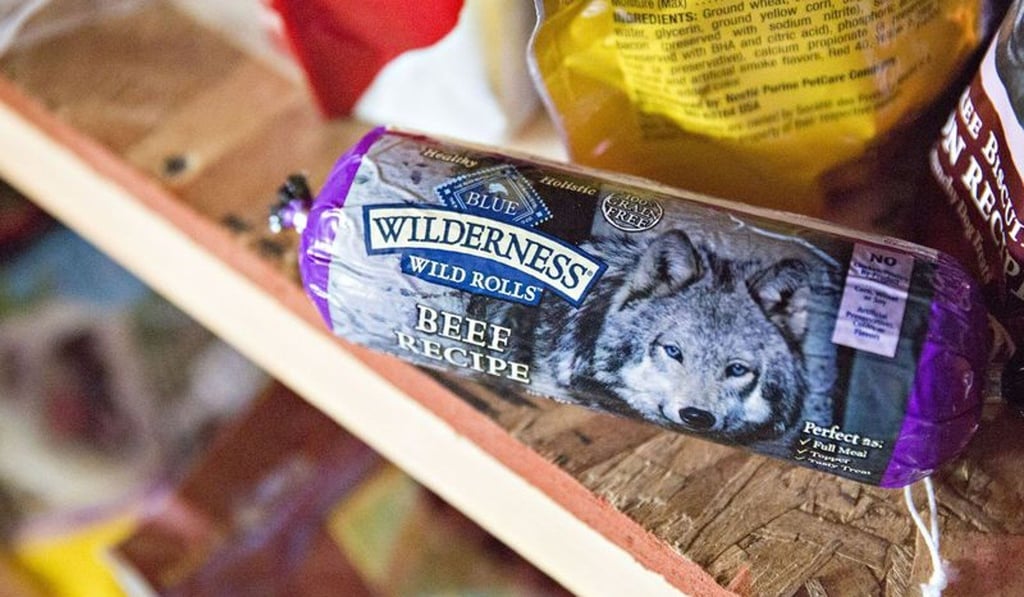
Consider the nearly US$30 billion pet food market’s second and third most popular dog food brands: the relative newcomer Blue Buffalo, whose “farm-to-table inspired canine cuisine” features a portrait of a wolf on each bag of its Wilderness line, and Beneful, whose bags brag of “real” chicken, beef, and salmon as “the #1 ingredient.” Together, the two brands sold more than US$2.3 billion of dog chow last year. (Pedigree, Mars Inc.’s budget-friendly brand, was the top-selling dog food in the country in 2016, pulling in US$1.6 billion, according to data from Euromonitor.)
Blue Buffalo has played the healthy-wolf card better than any other company, despite admitting in a lawsuit that its ingredients weren’t always as marketed. Founded in 2002, it commanded 7.5 per cent of the US dog food market last year, making it the fifth-largest seller in the country. That’s still small compared to Nestle, which owns Purina, which is No. 1 at 23.5 per cent but is down from 26.8 per cent in 2011, according to Euromonitor.
If there’s a mythos around meat, plants come with their own presumptions. The industry’s pivot back to plants, but only certain ones, seems a bit silly to experts, at least from a nutritional point of view.
“If soy is bad, why is pea good?” said Ryan Yamka. Yamka is an animal nutritionist certified by the American College of Animal Sciences and the founder and an independent consultant with Luna Science and Nutrition. “It all comes down to marketing,” he said.