Livia Firth: We're not going to be in a world without leather or wool

However, consumers can learn more about their clothes and where they come from so conservation can be practised more efficiently
Livia Firth still has the wool sweaters she wore as a teenager. The environmental fashion campaigner, who grew up in Italy, remembers hand washing her sweaters each summer, carefully storing them away, then unpacking them the following winter. She would wear them year after year so she had to look after them. This was before fast, disposable fashion she says, “We did it a different way.”
These days, as the founder of Eco-Age, a brand consultancy firm that works with luxury fashion labels on improving their sustainability credentials, and as someone who makes frequent appearances on the red carpet alongside her Oscar-winning husband actor Colin Firth, she has an expanded wardrobe – yet it’s probably not as big as you may imagine. In 2010 Firth came up with the Green Carpet Challenge, using her visibility in front of the world’s media to wear only ethical, sustainable and repurposed fashion, and she’s often photographed repeatedly wearing the same gowns as part of her #30wears pledge.
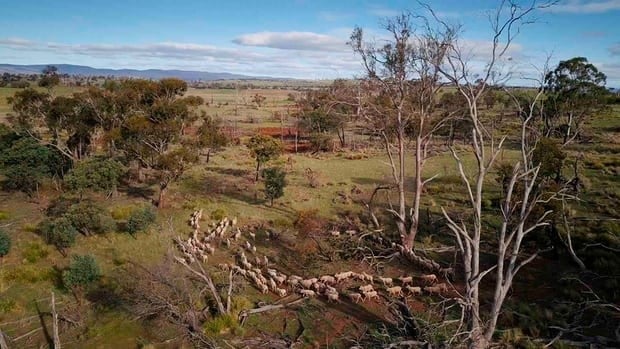
She was a long way from Hollywood’s red carpets last year when she travelled to Tasmania to meet some of Australia’s top merino wool growers and learn about the production of wool. Each year she travels to a different country to learn more about the global supply chain. “You can never replace the real experience of meeting people and seeing things with your own eyes.” Recently, she visited Bangladesh to meet the garment factory workers and Brazil to meet the leather farmers threatening the Amazon leather.
The trip to Tasmania was “facilitated” by Woolmark, the Australian company that promotes the use of merino wool around the world, and her experiences were captured in a short documentary, Fashionscapes: Forever Tasmania.

She says she didn’t know what to expect. “You have images of huge herds of sheep overgrazing and intensively reared and then we ended up in this landscape.” Tasmanian farmers such as Matt and Vanessa Dunbabin of Bangor farm, who farm merino sheep, prime beef and prime lamb, and Roderic O’Connor, who runs the wool farm Connorville met with her, and she says she found their careful approach to land conservation and sustainable wool production inspiring.
While she acknowledges that not all wool producers are as careful, she considers it important to highlight those who are doing it to demonstrate an alternative approach for others. “It’s not realistic to think we are going to be in the world without leather or wool or cotton, so what is the blueprint for doing it [better and] beautifully?”