Chinese vase made for emperor and found in French attic is set to sell for US$637,000

The rare 18th century yangcai porcelain vase – thought to have been made for the Qianlong Emperor – tipped to sell for about US$637,000 at Sotheby’s auction in Paris on June 12
A rare 18th century Chinese porcelain vase, discovered in the attic of a French family’s home, is expected to sell for about US$637,000 when it is auctioned at Sotheby’s in Paris on June 12.
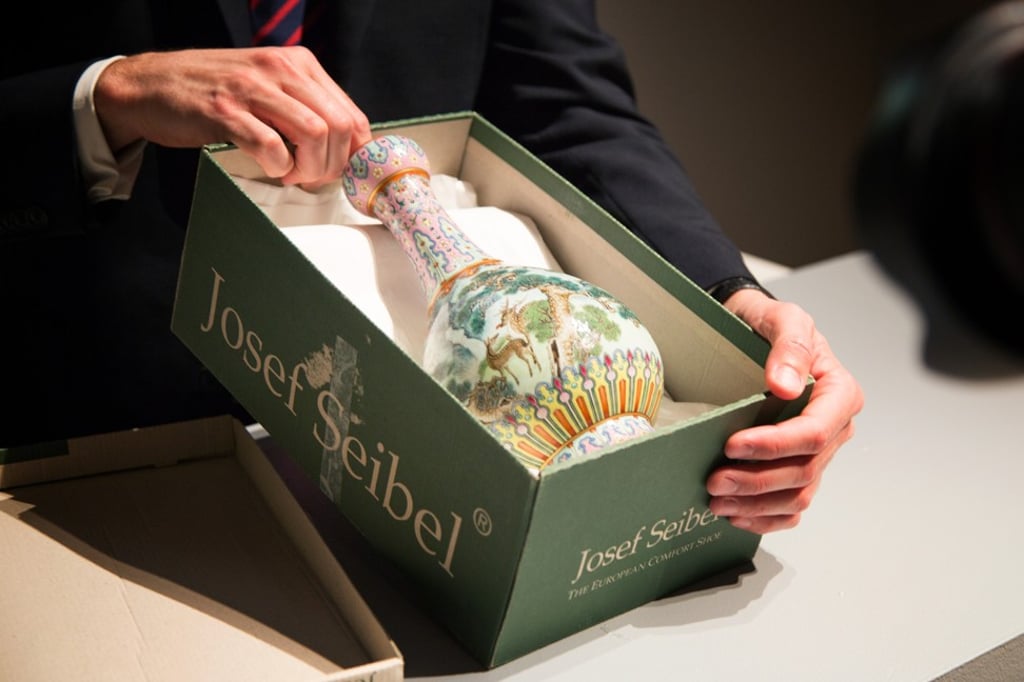
This type of famille-rose – “rose family” – yangcai porcelain is rare in the market.
Most yangcai porcelain is now housed in the National Palace Museum in Taiwan, with one similar vase in the Guimet Museum of Paris.
Chinese art has been admired and collected across Europe for centuries, but the importance of certain pieces is occasionally lost over time
In April, a yangcai porcelain bowl was sold at Sotheby’s Hong Kong for HK$239 million.
Yangcai, which means “foreign colour” in Chinese, is characterised by its use of an opulent-looking enamel, a palette commonly in rose colours, and Western-style compositions.
“Chinese art has been admired and collected across Europe for centuries, but the importance of certain pieces is occasionally lost over time,” says Henry Howard-Sneyd, Sotheby’s chairman of Asian art.
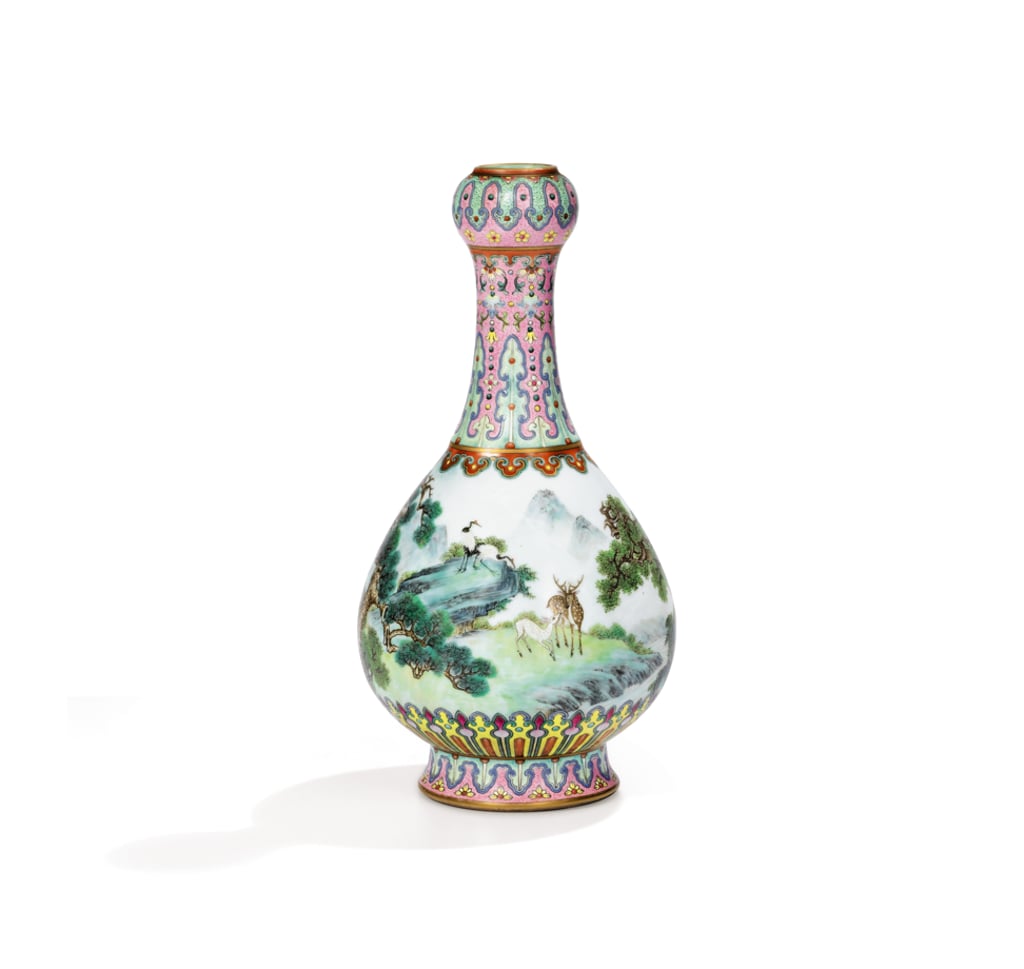
Brought to Sotheby’s in a shoebox, the vase bears a mark from the Qianlong Emperor’s reign in the 18th century and would have been made for the emperor by the finest craftsmen in the Jingdezhen workshops.