Reuse, recycle and upcycle: what local waste experts suggest we should do with our trash

Reuse, recyle and upcycle: this is the battle cry as the mountains of municipal waste in our landfills grow larger every year
Waste is such a complex issue but also presents a tremendous opportunity, especially for business. We jumped on the chance to bring together some of Hong Kong’s biggest social movers and shakers to shed light on the problems and solutions surrounding waste (listen up, entrepreneurs).
Unless you live off the grid, you’ve probably heard all the staggering statistics surrounding the state of our planet today. To start with, our oceans are filled with plastic, so much so that there will be more plastic than fish by weight by 2050. Moving on to waste, every day in Hong Kong there are 370 tonnes of waste thrown into landfills – and that’s not even taking into account the electronic waste that’s damaging our soil with chemicals. Or maybe you’ve noticed the hordes of cardboard collected by the elderly, not just on the streets of Hong Kong but also in most major cities in Asia? And we’re barely scraping the tip of the iceberg here. The list goes on.
Did you know that Hong Kong produced 3.7 million tonnes of municipal waste in 2015 – the highest figure for five years. And most of it got dumped into landfills.
But, there’s always a bright side. Imagine for a minute if waste from one organisation or industry could be used to supply the raw materials needed by another? Well it can, and the process is called the “circular economy” and it defines a community where everything produced gets either reused, recycled or upcycled. It’s a paradigm away from our current linear model, which relies on the “take-make-dispose” model of production.
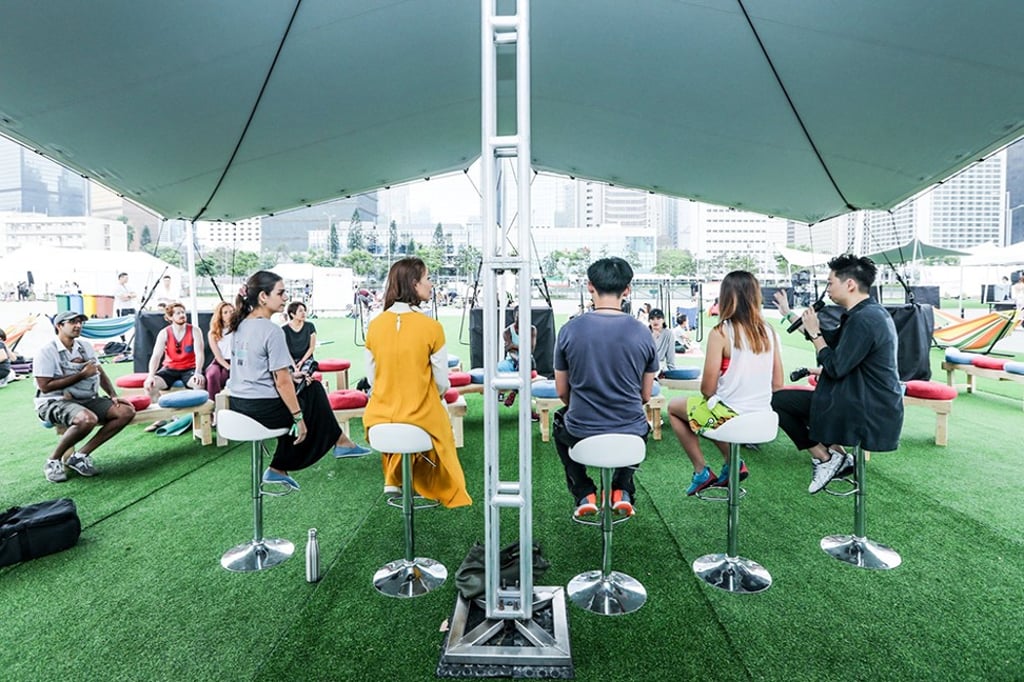
This year, IRIS – a health and wellness festival in Hong Kong – offered us an opportunity to put together a panel on sustainability and we jumped at the chance to get to the nitty-gritty when it comes to Hong Kong’s waste situation. We invited experts in the field, including thought leaders from local grassroots communities like the Circular Community of Hong Kong, HK Recycles and No More Junk. In earlier discussions, we all agreed that no one in Hong Kong is really sure if waste is really being recycled. Even though trash is getting separated at home, no one actually knows what happens next. This scepticism probably comes from witnessing recyclables being mixed up again after collection, time and time again.
We decided to get to the bottom of it once and for all and find out the truth behind the waste situation in Hong Kong. We drew up our questions and took them to the experts. Here is who sat on our panel:
Tom Ng, member of 正澳社區回收 街坊 NO MORE JUNK Bay
Aigul Safiullina, founder of Sustainable Minds and former co-founder of Zero Waste Life
Tanja Wessels, founding partner of the Circular Community HK
Philippe Li, business developer at HK recycles