Chinese millennials love bird’s nests, but would you eat bird mucus for better sex and a longer life?

Said to have anti-ageing properties, and to promote cell regeneration, boost immunity and enhance sex drive, edible bird’s nests have become popular with Chinese millennials
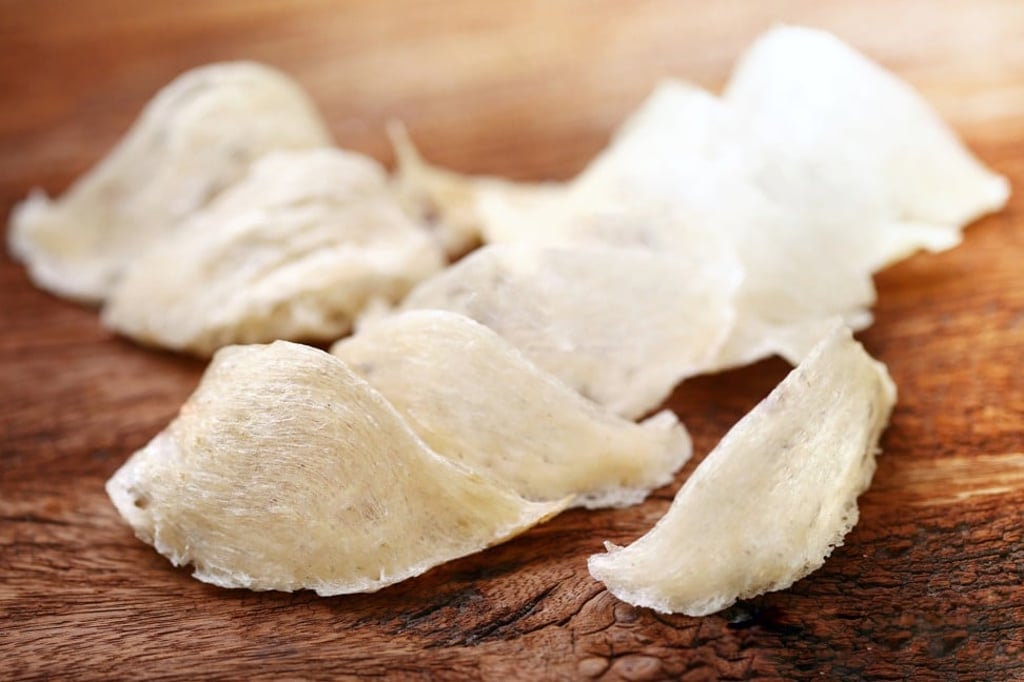
Solidified swiftlet mucus mixed with feathers, aka edible bird’s nest, is one of the most expensive and revered delicacies in Chinese cuisine. It has been part of Chinese culinary history for a long, long, time, with trading records dating back to the Tang dynasty (618-907).
The nests are not made from saliva, but instead viscous mucus
Attaining such status, and longevity, is the result of a sticky recipe of history, myth, envy and marketing, seasoned with a dash of truth.
According to Liu Junru, author of Chinese Foods, it falls into a special category of delicacies described as: “Rare tastes from the mountains and the seas” or shan zhen hai wei.
This rarefied classification and its distinct texture (gelatinous, jelly-like), secured its place on court tables dynasty after dynasty.
However, it was not until the early Ming dynasty that it garnered its current status as a medicinal super food, largely thanks to desperation, or so the legend goes.
Chinese fleet admiral and explorer, Zheng He, sailed the waters of Southeast Asia from 1407-1433. At one point during these years he was forced to seek shelter on a remote and rocky island because of a dangerous storm. After several days morale and provisions were low so he sent his hungry and tired crew to look for food. They returned with some swiftlets’ nests. Within days of a bird’s nest diet all on-board were bursting with health, vitality and energy. This sudden transformation, he felt, was because of the nests, making it imperative to share with the emperor, taking back nests as a gift.
Court consumption increased significantly, and by the time of Emperor Qianlong, it was being eaten at least once a day. Qianlong was an epicurean: “The tables of other emperors could not equal the grandeur of those of Emperor Ch’ien Lung (1736-96), whose Court was considered the epitome of Chinese culture,” reads an excerpt from Royal Cookbook, Favourite Court Recipes from the World’s Royal Families (Robert H Doherty, coordinating editor). He is said to have consumed a bowl of warmed bird’s nest sweetened with rock sugar daily before holding his audience, followed by a savoury preparation for breakfast.