How Hong Kong artist Mizuki Nishiyama draws from her Japanese and Italian heritage to explore fragility, lust – and Dante’s Inferno

Inspired by Dante’s Divine Comedy, human love, loss and lust, and the throb of NYC, this distinctly third-culture visual voice is making waves at just 21 years old
At 21 years old, Mizuki Nishiyama is already making ripples in the international art industry. Bridging her Hong Kong, Japanese and Italian cultural heritage, Nishiyama fuses her craft with New York’s gripping energy, channelled into her tempestuous artworks. Focusing on subjects of human fragility, she draws inspiration from her personal experiences, making them her canvas.
The distinctly third-culture visual artist recently concluded her second solo exhibition in New York City – where she studied at the prestigious Parsons School of Design before returning to Hong Kong – so we chatted with Nishiyama to explore more of her distinctive artistry and to get a sneak peek at her upcoming creations.
Like Dante’s Inferno, my work may be considered erotic or lascivious. I am bringing light to the ethical and philosophical complicity between love, lust and, human fragility
What or who inspired you to enter the world of art?
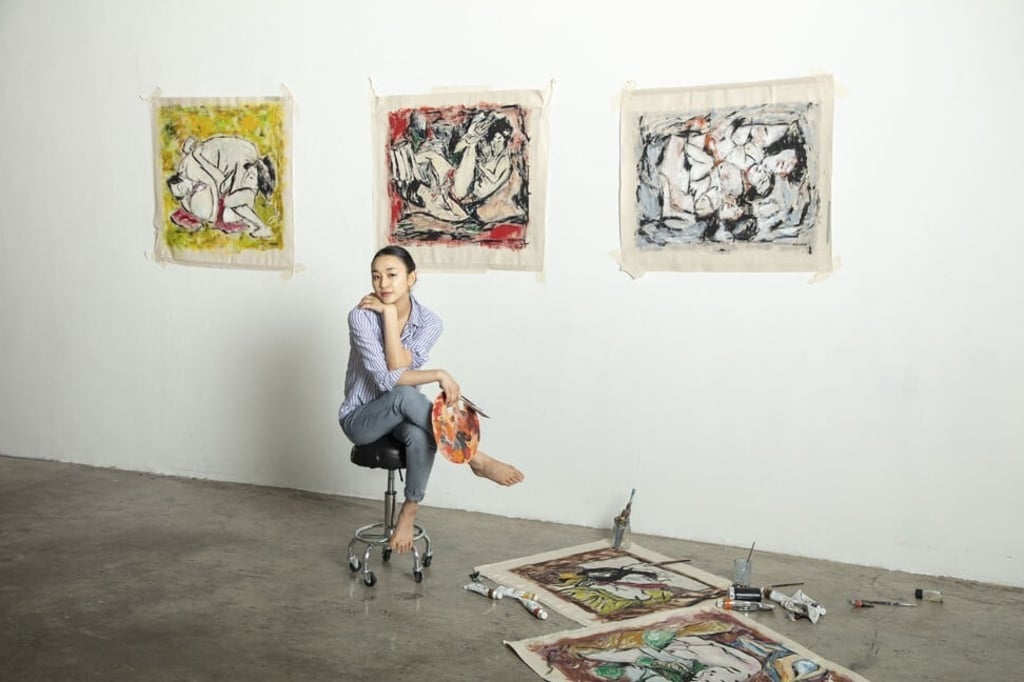
My family! I'm so grateful to come from a family of artists. Everyone's unique medium must have somehow impacted on me while growing up. Being mixed Japanese, I was fortunate to be able to experience a whole variety of art. My parents spent most of their lives in Milan, Italy. My father was the creative director of a couture fashion house, and he is also a flamenco guitarist. My mother is an abstract painter, she creates massive landscape oil paintings that truly gave me the first glimpse into how intense this craft is. My grandmother is a Japanese Nihonga painter, she works extremely delicately with Japanese minerals and pigments, and my grand uncle was a water colourist. I recall listening to his fascinating stories from when he worked in his atelier in Florence, Italy, back in the 50s.
What is your art style and how does colour play a role in your work?
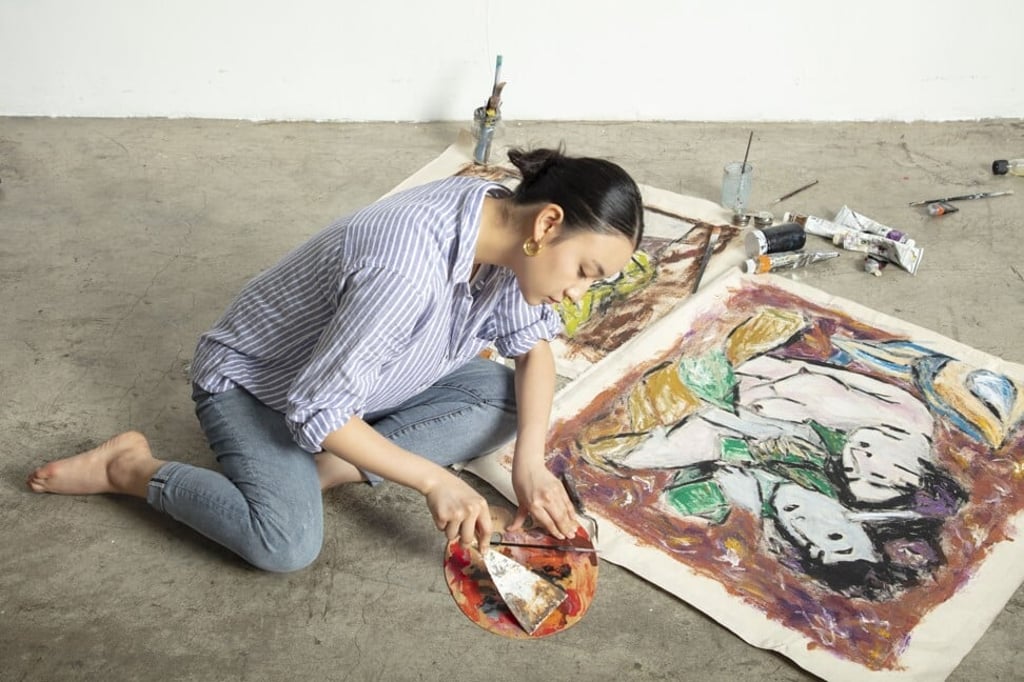
I refrain from putting myself into genres, or categories. But in terms of my favourite periods, I would say expressionism and abstract expressionism. Colour is ultimately energy. Whenever a pigment is layered on canvas, energy is incorporated. It's about balancing between elements of designs, what I want to express, and how well those converge to my liking.
So why love, lust and human fragility – the themes of your latest exhibition – and what do you aim to express and communicate through your artworks?
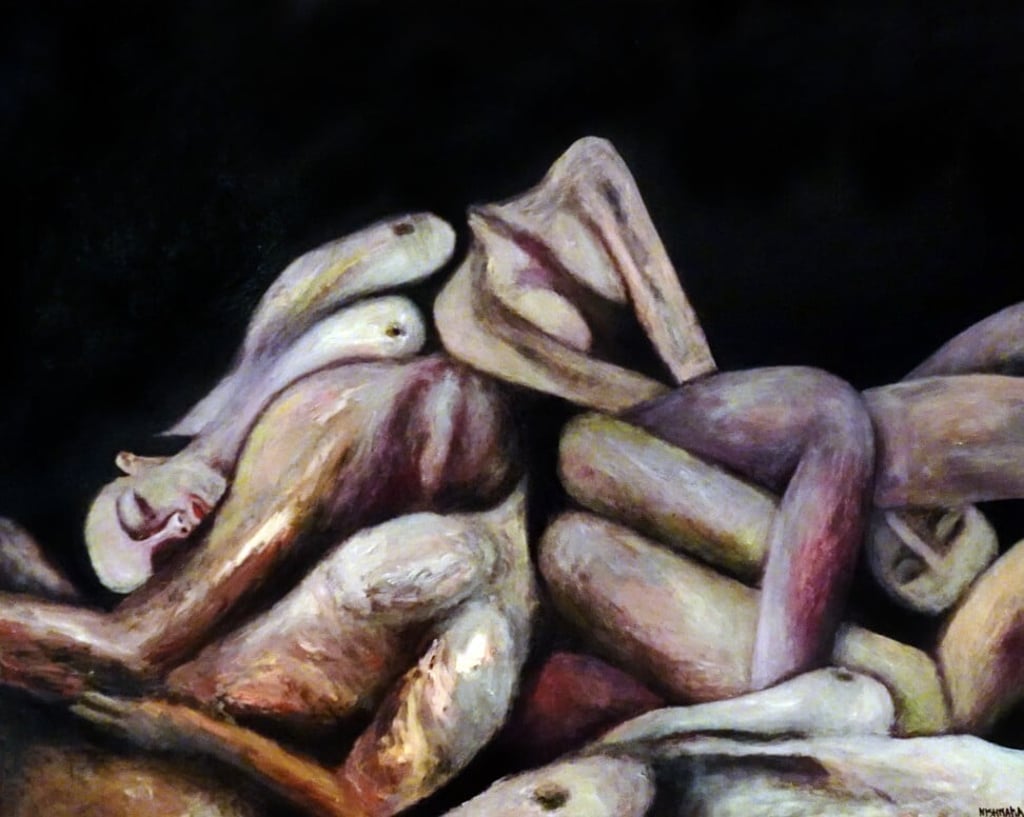
“An Exploration of Human Fragility: Love and Lust” is my [latest] exhibition at Tenri Cultural Institute of New York. My work is a messy and imperfect visualisation of my humanity. I personally think that specifically the duality between love and lust can bring out so many intimate layers of our existence.