Opinion / Why art galleries won’t survive after coronavirus – unless they adapt to create value for artists through digital channels

Up to 40 per cent of art galleries will collapse imminently after Covid-19, reckons Daniel Langer, but artworks worth US$1 million or more remain a solid investment – and artists able to channel the human experience through figurative art are set for a payday
The art market appears to follow its own rules. A technically excellent painting that an artist worked on for years may only sell for a few hundred US dollars, or never sell at all. Another smaller scale work, done in an instant as a reflection of a moment, can fetch several million dollars. It may be only a small exaggeration to say that 99 per cent of all artists are paid miserably, while the top 1 per cent enjoys a celebrity status and can sell their art with enormous premiums.
One might expect that the market upheaval following the pandemic would signal a plummet in demand for art, yet the opposite is happening – but not in all segments. While traditionally somewhat anti-cyclical to the stock market, the “luxury” art market is growing during the pandemic as stocks remain somewhat robust. This reflects the uncertainty of investors, who look to art as a long-term value play.
I estimate that up to 40 per cent of galleries will collapse in the near future
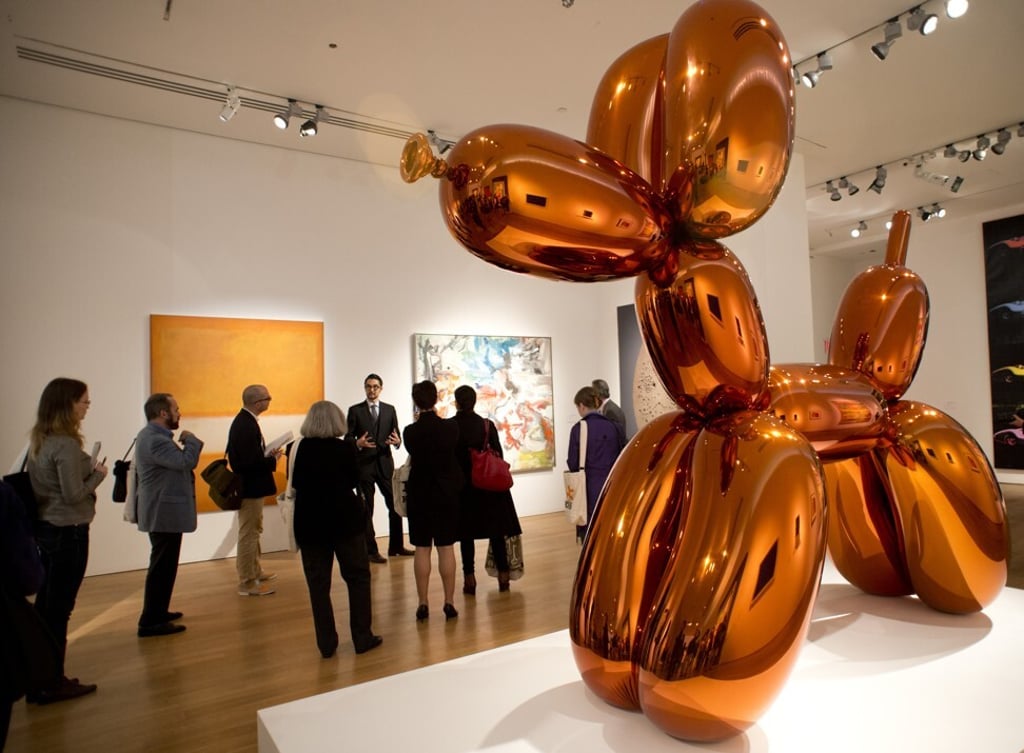
Artists like Jeff Koons can fetch millions of dollars at auction; his orange Balloon Dog sold at Christie's for US$58.4 million, becoming the most expensive work by a living artist sold at auction. Collectors who bought some of his art a decade ago realised gains in some cases of more than US$10 million on some of his pieces. This makes art – at its top end – an attractive investment, especially in times of uncertainty. On top, it is an investment that can be enjoyed every day, hanging on a wall or perched on your floor, while you wait to cash in.
The gallerist sat almost lifeless on his chair, his attitude was arrogant. No information about the painter, no storytelling … If there is no reason to buy, no one will buy. It’s that simple
However, not all art segments are enjoying equal fruits of the current boom. Typically, a sound investment is a work worth more than one million dollars; art that is cheaper is not seen as a safe investment by many collectors. But artworks above the seven-figure threshold typically not only hold value, but strongly exceed it. It is fatal to be “stuck in the middle” – and this has a deadly effect on many “badly managed” galleries.
I estimate that up to 40 per cent of galleries will collapse in the near future. They will blame it on coronavirus, but most of them were in bad shape before. They did not create any value – not for the buyer, who typically pays a significant premium to the gallery (some galleries mark up the artwork by 50 per cent); not for the artist, who simply gets an exhibition space but rarely more from those galleries without a clear profile.
At last year’s Art Basel Hong Kong I was eyeing a painting that I found fascinating. The gallerist sat almost lifeless on his chair, his attitude was arrogant. No information about the painter, no storytelling. When he told me the price, there was no reference point to the value. Hence, the gallery made one critical mistake: they did not create any brand equity and no experience. All the rules of luxury were ignored. As a result, I walked away. And the gallery missed an opportunity to sell. Extreme value creation through brand building, storytelling, customer experience and customer care is as important in the art world as in any other luxury category. If there is no reason to buy, no one will buy. It’s that simple.
Investors know that they often overpay when buying direct from galleries. And artists know that they don’t build up their personal brand value through those places. So what’s the point? As the art market shifts to digital means, galleries have to reinvent themselves for younger millennials and create extreme value for artists through digital channels if they want to escape obsolescence. Consequently, the most successful artists now build their own social media followers and develop their brand equities independently of many galleries. A handful of successful galleries do a great job, but the vast majority are endangered unless they make drastic changes. Luxury is extreme value creation, and the art market is no exception. If an artist or a gallery doesn’t excite and makes no impact, then there is no value. Again, it’s that simple.