Photo park in Indonesia takes FOMO to new heights

Visitors to this Indonesian park wait hours to get the perfect shot for social media
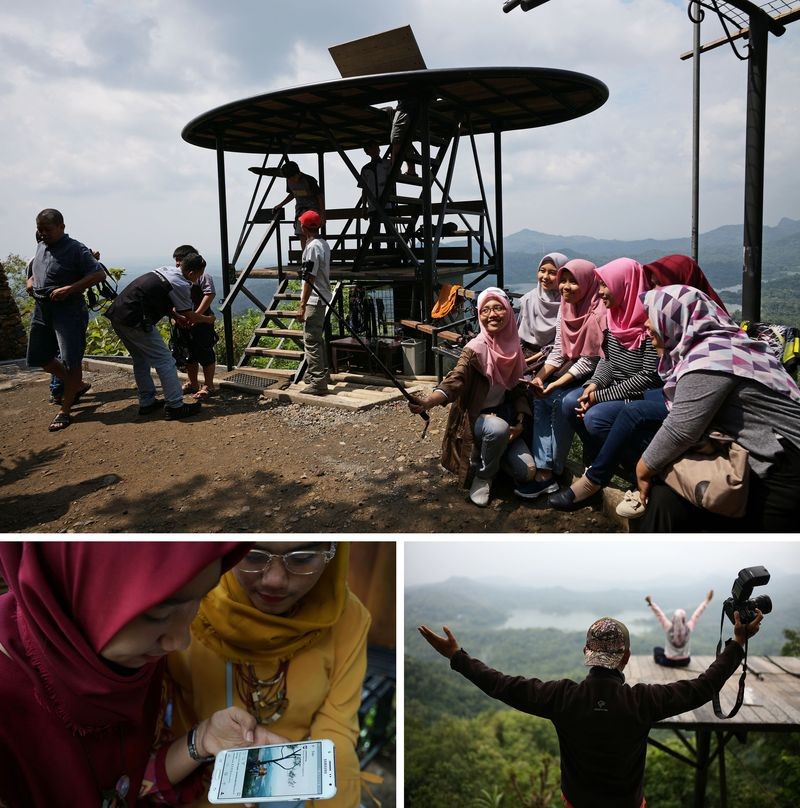
In Indonesia’s Menoreh hills, villagers built a treetop adventure course in 2008 to lure thrill-seeking tourists. Instead, visitors are coming for the perfect Instagram shot.
So perfect, in fact, that Kalibiru Tourism Village, near Yogyakarta, redesigned the attraction to convert the zip-lines and treetop platforms into a fully-fledged destination for social media photo-ops. It installed cameras and hired photographers to advise on the best poses to showcase the background of verdant hills and a shimmering blue reservoir. Images are uploaded directly to visitors’ phones.
Similar photogenic attractions are popping up across Asia as an increasingly footloose generation of young travellers competes via social media to show off their experiences. Today’s adventurer travels not just to see, but to be seen. When stunning images go viral, they can unleash a horde of tourists eager to get a copycat photo.
As Kalibiru’s popularity soared on blogs and image-heavy sites such as Instagram, WeChat and Facebook, waiting times grew to six hours on popular days, spurring a nearby village to raise about US$100,000 to build a second photo destination in the protected forest, which was once a barren landscape denuded by illegal logging and burning. About 7,000 tourists now visit the two sites each week.
In China, 97 per cent of millennial tourists report sharing their travel experiences online, according to a joint study by McKinsey & Co, Visa Inc and the Singapore Tourism Board. The report predicts spending on international travel by Asian millennials will jump 160 per cent to US$340 billion by 2020.
For a growing number of Asians in their 20s and 30s, travel has replaced Louis Vuitton handbags and designer clothes as the new status symbol. It’s created what the founder of travel app Klook refers to as “FOMO marketing” – slang for fear of missing out, where people see dramatic pictures posted by friends or compatriots and want the same images of themselves.
The phenomenon isn’t restricted to adventure-seekers and backpackers. As more people seek envy-inducing selfies, the pressure to create photogenic moments runs to the most elite resorts, fuelling the demand to find more stunning destinations.