How ‘king of bling’ Philipp Plein built his successful fashion brand on bad taste
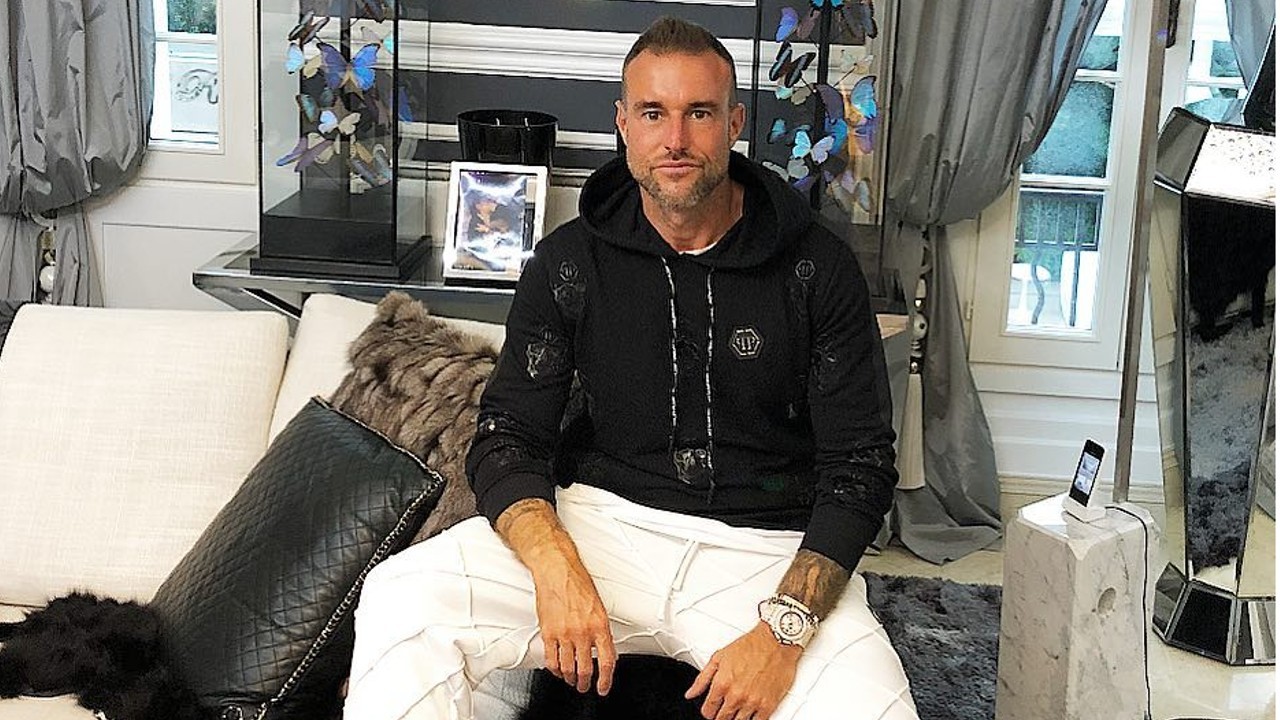
The polarising German designer, known for his garish, in-your-face outfits, has taken tacky excess to new heights in past nine years – but is not stopping there
On the terrace of Philipp Plein’s marble-clad aerie overlooking Cannes, a line of women snakes past the swimming pool showing off the German designer’s 2019 cruise collection of crystal-studded bikinis, thigh-high stilettos and leopard-print ball gowns.
Next comes a parade of men in dollar-bill-printed button-ups and blue python jackets winding around a fountain filled with bottles of Plein-logo Champagne and a fire-engine-red statue of a gorilla.
Mirrored lettering on the wall welcomes visitors to “the Jungle of the King”.
As master of a realm that is a world apart from established fashion royalty, Plein leaves little doubt as to who he thinks is king.
The iconoclastic entrepreneur has made tacky taste big business, barnstorming the fashion world with blazing spectacles featuring tuxedoed models on jet skis or a burlesque dancer writhing in a giant martini glass.
Philipp Plein is a brand that’s very polarising – you either hate it or you love it
While luxury brands such as Hermès or Louis Vuitton have spent more than a century honing their soft-leather-lined reputations, in the nine years since Plein opened his first boutique he has attracted a devoted following for his US$600 trainers, US$1,000 hoodie and a US$100,000 crocodile trench coat – a price that would make devotees of Balenciaga or Louis Vuitton blanch.
“Philipp Plein is a brand that’s very polarising – you either hate it or you love it,” the Munich-born designer says as he sits beside a long marble table on his terrace, where his handlers sip Coke Zero and the rapper Tyga has been summoned for a lunch of grilled chicken and cherry tomatoes.
Plein is targeting rapid expansion as other independent luxury houses have found it harder to grow in the shadow of LVMH and Kering.