Remembering I.M. Pei: 5 iconic buildings designed by legendary Chinese-American architect you must visit

Guangzhou-born innovator, who has died at 102, used modernism and cubism designs, such as the Pyramid at the Louvre, in Paris, and Hong Kong’s Bank of China Tower
Born in Guangzhou, raised in Hong Kong, and educated at the Massachusetts Institute of Technology and Harvard, the late Chinese-American architect, Ieoh Ming Pei, was, quite simply, legendary.
After completing his first Atlanta office building, in the United States in 1949, Pei developed an artistic signature that combined modernism, cubism, tradition and graceful geometry.
During his career with I.M. Pei & Associates, founded in 1955, which was renamed as I.M. Pei & Partners in 1966 and Pei Cobb Freed & Partners in 1989, he won numerous prizes and honours, including the Arnold Brunner Award, the AIA Gold Medal, the Royal Institute of British Architects’ Royal Gold Medal and the Pritzker Architecture Prize.
He died aged 102, on May 16, leaving behind one of the world’s great modern architectural legacies.
Check out arguably his most iconic buildings.
1989
Le Grand Louvre (the Pyramid), Paris
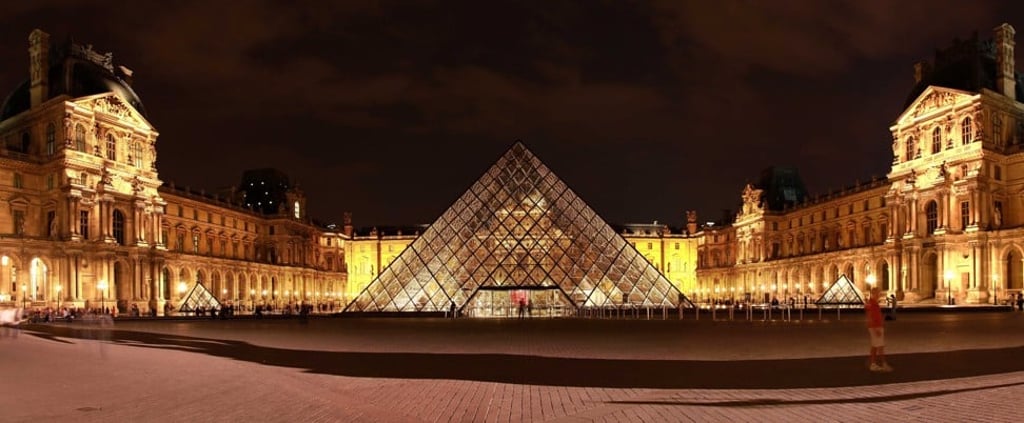
It is impossible to talk about Pei’s work without acknowledging the Pyramid, the aggressively modern glass and steel addition to the Louvre in Paris, that works as both an entrance and a skylight.
Once called an “atrocity” by the Parisian press and loathed by the public when the controversial design was initially revealed, it is perhaps one of the most recognisable structures on the globe and has become synonymous with the Musee du Louvre itself.