Airships revolutionise luxury travel, and companies target the Chinese market

Blimps are back, with Zeppelin already running 12 routes across Europe and targeting the Chinese market
Michael Schieschke is asked the same question every day: if they use hydrogen or helium, and whether helium can burn. “But I think most of the public understands that these aircraft are safe now, but it’s true that, as an industry, we still have to do a lot better on communications,” he says.
Schieschke is talking blimps – and as the chief operating officer of arguably the most famous name in airship history: Zeppelin. If that conjures up the airship’s pre-second-world-war glory days – long-distance luxury passenger travel, interspersed with PR disasters the likes of the crash of the Hindenburg and the R101 (aeroplane crashes proving, strangely, not so dissuasive) – then now Zeppelin is thinking smaller.
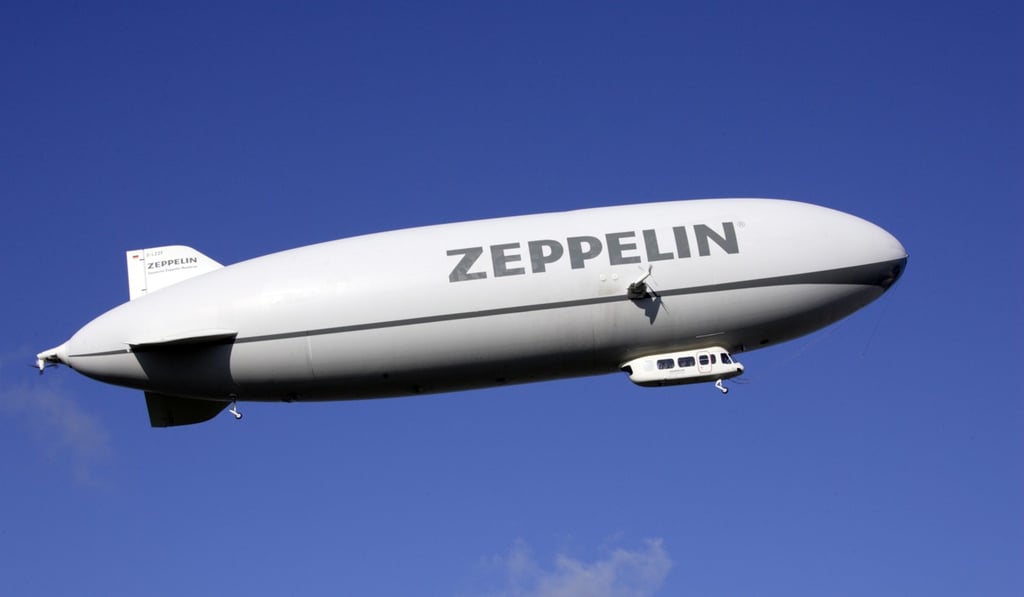
The company now runs 12 routes across Germany and Switzerland for short tourist trips. But demand is rocketing: it now carries some 21,000 passengers every season. It’s building an airship for Goodyear and, in the long term, is aiming at operating a fleet of some 10 airships worldwide, with maybe five operating across China alone.
“The fact is that Zeppelin is, once again, an airship manufacturer,” Schieschke says. “We’re not makers of prototypes anymore. And I think there’s a good chance that airships of some sort are about to make a serious return.” Nor does he mean just for sight-seeing either. Indeed, around the world several companies are in various stages of developing new forms of airship, each seeking to capitalise on this form of aircraft’s unique – and seemingly long forgotten – benefits.
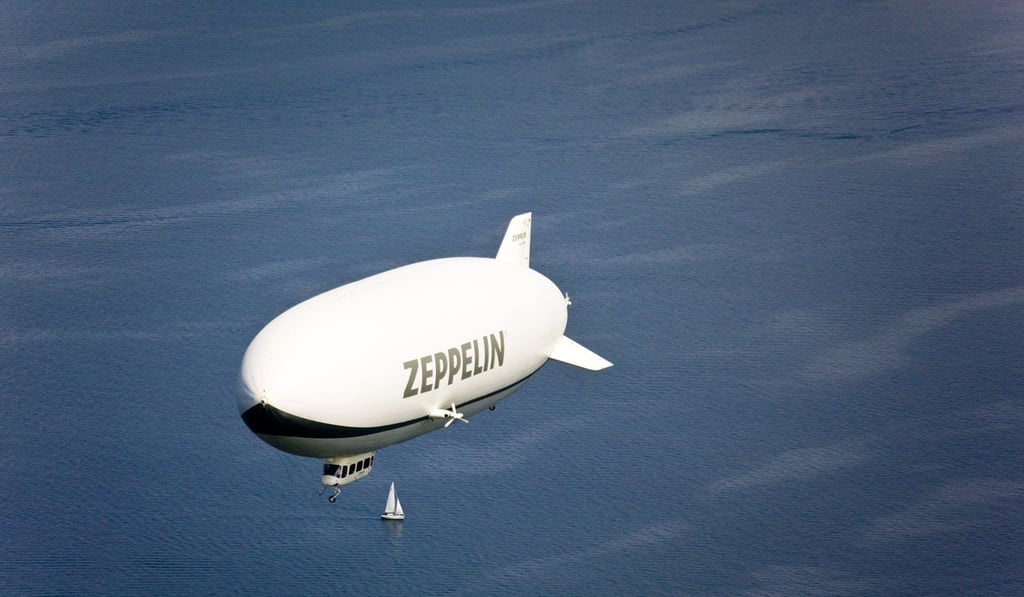
An airship, for one, can access remote areas without need for a runway; it can travel vast distances at low cost; its lifting capabilities are enormous; it’s low on fuel costs and emissions – with battery power potentially making it emissions-free – allowing it to be much more sustainable than jet-powered aircraft; it’s largely noiseless; and perhaps it might even be able to give back to air travel what it lost decades ago – a touch of romance.
“We live in an era when there is so much pressure to save time, to be on time, and airships are nothing about that,” Schieschke says. “But then people are longing to go slow again. And everything is slower in an airship.”
It’s an idea Chris Daniels appreciates – he calls the slowing down “one of the mega trends shaping the world now”. He notes how the public’s fascination with airships has long been fuelled by their association with all things futuristic, from Fritz Lang’s Metropolis to H.G. Wells’ The Shape of Things to Come, even while, at the same time, somehow condemning airships to the past.
Passenger flight in such a craft would be spectacular, but the biggest and most lucrative market will be carrying cargo, especially to places of limited access